Organizations engaging people around Israel and the Middle East are working in an increasingly complex environment. Their audiences may span generations, backgrounds, political perspectives, religious identities, levels of knowledge, professional roles, and relationships with Israel. And conversations about Israel and the Middle East rarely remain confined to a single program, classroom, department, or moment. They surface among students, professionals, educators, leaders, boards, families, community members, partners, and others.
For organizations navigating this environment, the question is increasingly not only what programs or educational opportunities should we offer, but how do we create meaningful education and engagement for people who may enter these conversations from very different places?
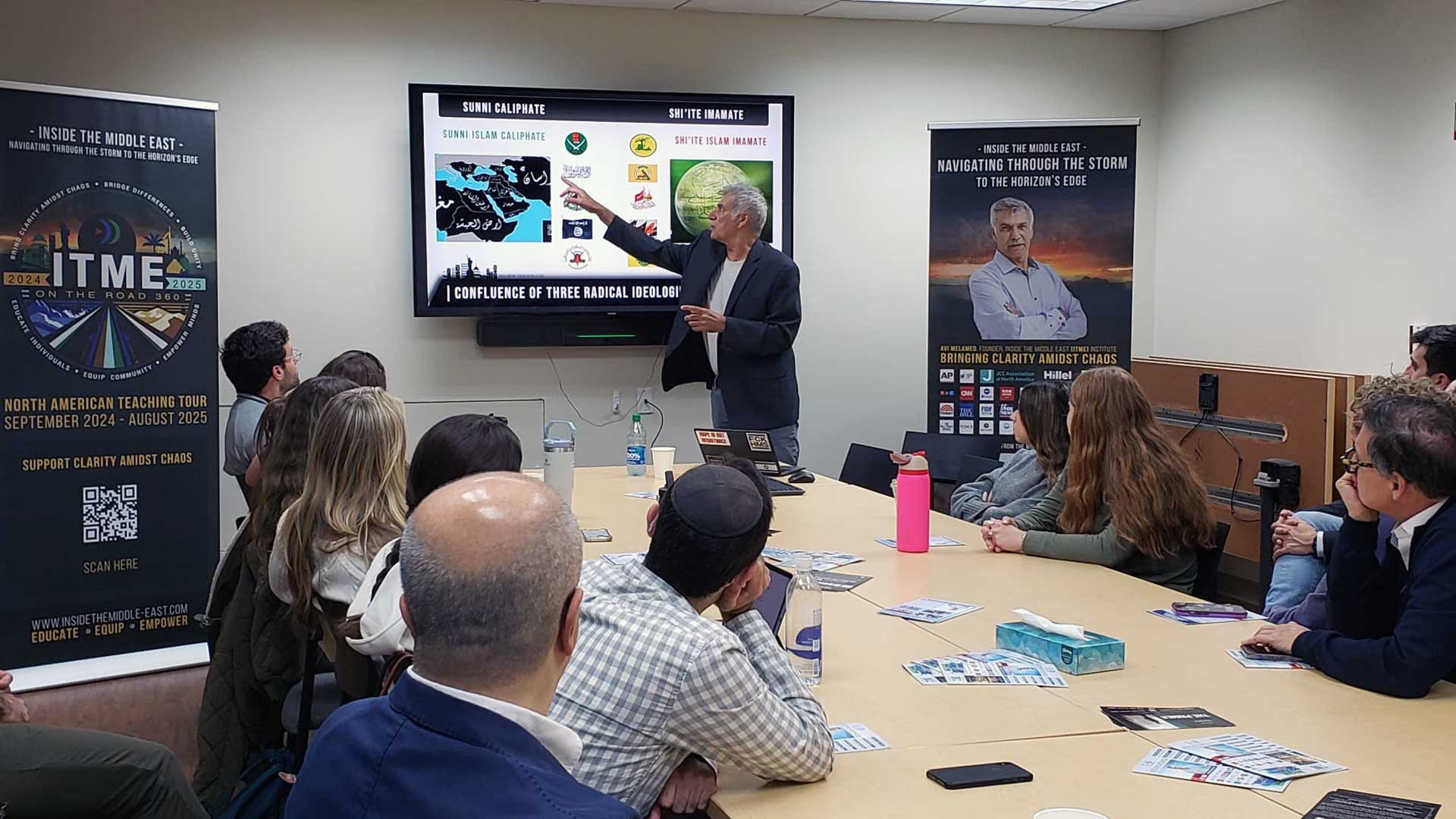
In this interactive session, Avi Melamed will introduce the educational framework at the heart of Inside The Middle East | ITME, grounded in the principle: To Understand Israel, the Israeli-Palestinian Conflict, and the Palestinians, We Must Understand The Middle East.
Participants will experience the framework in action through a focused mini-briefing on the Axis of Resistance, examining the gap between how the term “resistance” is often understood and portrayed in Western discourse and the actors, objectives, interests, and impact of “resistance” on the people and societies of the region.
Through this example, Avi will demonstrate how apolitical Middle East education, intelligence-based critical thinking and media literacy, and perspectives from regional experts and voices often absent from Western discourse can fundamentally change the way people understand Israel, the Israeli-Palestinian conflict, and the broader Middle East.
Drawing on ITME’s extensive experience educating diverse audiences across communal, educational, campus, professional, and leadership settings, the session will then examine why this approach works with people who do not necessarily begin with the same politics, knowledge, experiences, or relationship with Israel—and what that means for organizations thinking strategically about the people they serve.