






















































|
Getting your Trinity Audio player ready...
|
Day 11 of the Second Iran War: The Poker Game Continues | An article by Avi Melamed | Podcast version powered by Ai.
The war currently unfolding in the Middle East can be illustrated as a multi-player poker game.
This analysis focuses on the principal regional players involved in the conflict: Israel, the Arab Gulf states, and Iran together with its proxies.
A poker game is based on three central elements: identifying strong cards, identifying weak cards, and betting through calculated risk-taking at the edge.
In the current Middle Eastern war, the key “cards” are: the definition of a strategic objective, pressure levers, military and economic endurance, domestic consensus, the resilience of the civilian front, and manipulative risk-taking.
Let us examine how the regional actors are playing these cards as the war enters its eleventh day.
The Iranian Regime
The regime’s strong cards include a clear strategic objective: survival at any cost.
Another powerful card is its economic pressure capability, which includes the ability to disrupt the global energy market by physically targeting oil and gas infrastructure, and blocking maritime traffic in the Strait of Hormuz, one of the world’s most critical arteries for oil transport and trade. Such actions trigger sharp increases in global energy prices and, accordingly boost demand to end the war.
A further strong card is the regime’s ability to wage a war of attrition, based on three factors.
The first factor is the regime’s capacity to erode the civilian resilience of both the Arab Gulf states and Israel by applying military pressure on energy infrastructure while preserving its own military capabilities and long-term endurance.
The second factor is its ability to expand the war into additional arenas by activating regional proxies such as Hezbollah in Lebanon, Shiite militias in Iraq, and the Houthis in Yemen.
The third factor is that the regime does not prioritize the welfare of Iran’s civilian population and therefore places little importance on maintaining domestic consensus during wartime.
The regime’s weak card is the severe and cumulative damage inflicted on its military and governmental infrastructure.
This damage threatens the regime’s survival in three ways.
First, it undermines the regime’s deterrence image.
Second, it creates growing difficulties for the regime in rebuilding its military, economic, and governing infrastructure.
Third, it risks reigniting popular unrest inside Iran, particularly at a moment when the regime is significantly weakened.
At this stage, however, the regime appears to be betting that its strong cards still provide it with sufficient endurance. Thus, the regime as of now is raising the bet. Thus in Poker terminology- as of now – the regime is ‘All-In’.
The Arab Gulf States
The strong cards of the Arab Gulf states include defensive capabilities that currently provide them with a degree of strategic breathing space.
Another strong card is their ability to threaten the Iranian regime through two pressure levers.
The first lever is the offensive military capability of Gulf states—particularly the powerful air forces of Saudi Arabia and the United Arab Emirates -that can multiply the damage to the regime’s strategic assets.
The second lever is the ability to target Iran’s financial system, especially by freezing and potentially confiscating Iranian financial assets managed within Gulf financial systems as compensation for damages caused by the Iranian regime.
Another important strength card is domestic consensus.
However, the Gulf states also hold a significant weak card: the vulnerability of key assets such as energy infrastructure, maritime transport routes, and tourism industries.
Although Gulf states would welcome the disappearance of the current Iranian regime and the emergence of a peaceful and friendly government in Iran, they largely assess that such a scenario is more wishful thinking than realistic expectation.
Therefore, from the perspective of the Gulf states, the continuation of the war represents a high-risk gamble whose costs may outweigh its benefits.
For this reason, their preference is to end the war as soon as possible and return to negotiations, ideally with the Iranian regime significantly weakened. Thus, the Arab Gulf monarchies would like – in Poker terminology – to ‘showdown’.
Israel
Israel’s strong cards include military and intelligence superiority, enabling it to inflict significant damage on the regime’s military and governing infrastructure.
Another military strength is Israel’s highly effective interception capabilities, which allow it to neutralize a large portion of Iranian attacks.
A third strength is the domestic consensus and resilience of Israel’s civilian population.
Together, these factors give Israel a degree of advantage over one of Iran’s key cards: long-term endurance.
However, Israel also holds several weak cards.
The first is the absence of a clearly defined the war’s strategic objective, along with difficulty in defining the parameters required to achieve such an objective.
Another weakness is the potential gradual erosion of civilian resilience if Iran continues firing missiles at Israel over time—even at relatively low levels—as part of a strategy of attrition.
Another weak card for Israel is the need to divide resources and efforts due to the active front against Hezbollah in Lebanon, along with the possibility that the conflict could expand to additional arenas such as the Houthis in Yemen and Shiite militias in Iraq.
Another challenge lies in the differences between Israel’s strategic priorities and those of the United States and the Gulf states.
In practice, the decision regarding when and how the war will end is largely in the hands of the United States. Thus – in Poker language – Israel, like Iran, is ‘All In’.
And so, as the war reaches its eleventh day, the poker game continues.
This article is also available as a Podcast: the AiTME Podcast. This Podcast was written and created by Avi Melamed, Middle East Intelligence Analyst and Founder of Inside The Middle East [ITME], an institute dedicated to apolitical, non-partisan education about the Middle East.
“This podcast is made possible by supporters like you. ITME is an independent, nonprofit institute committed to apolitical, intelligence-based Middle East education.
To support our work, visit >> https://www.paypal.com/donate/
Day 11 of the Second Iran War: The Poker Game Continues | An article by Avi Melamed | Podcast version powered by Ai.
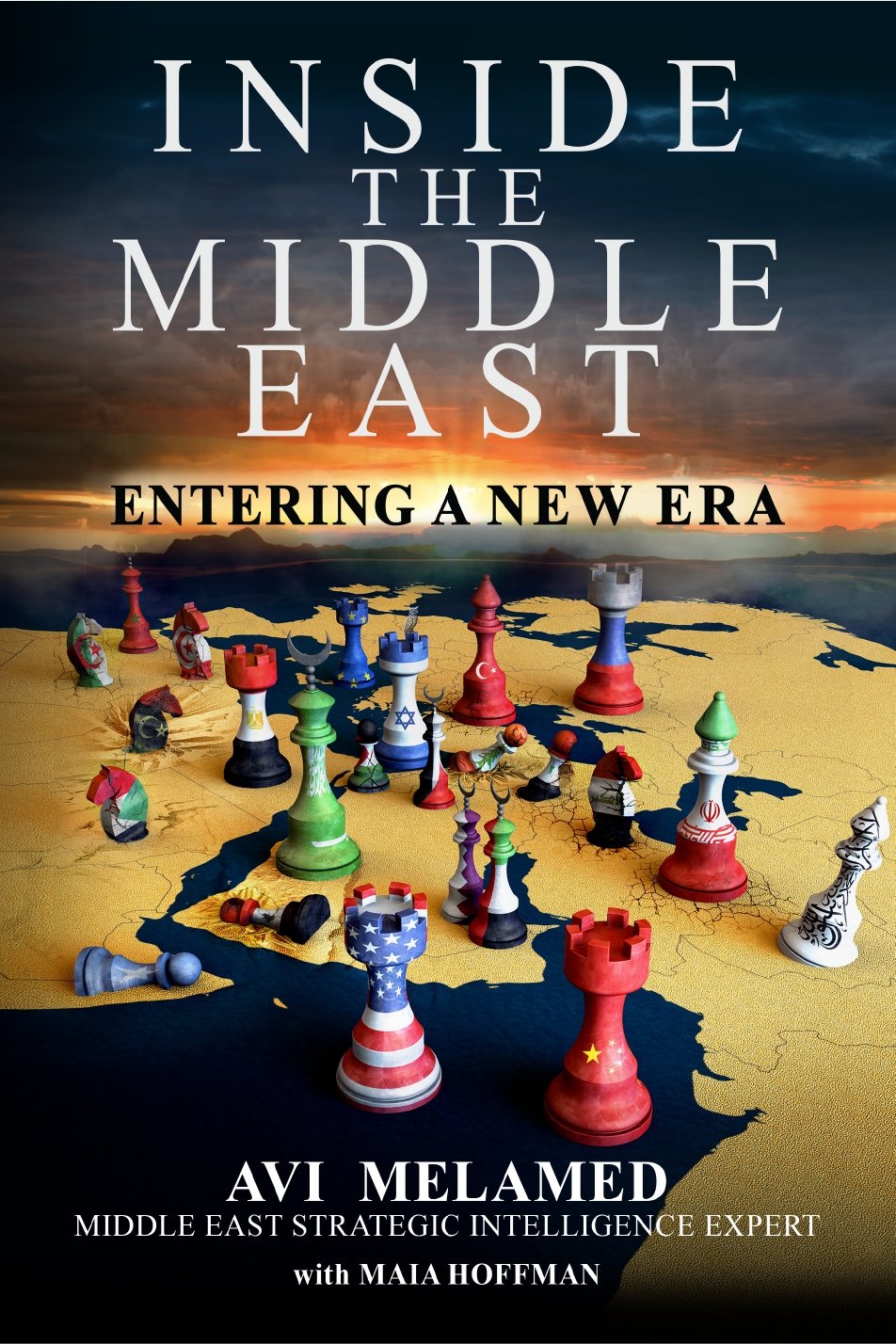
If you want to have a better understanding of the news and what really drives the unfolding events… Read the latest book of Avi Melamed, INSIDE THE MIDDLE EAST | ENTERING A NEW ERA, available now >>>
Follow me on Twitter @AviMelamed; Facebook @InsideTheMiddleEast; for more Videos on YouTube https://www.youtube.com/c/AviMelamed
I can always be reached at Av*@********ed.com