


























































|
Getting your Trinity Audio player ready...
|
Arab Commentators About the U.S.–Iran Memorandum of Understanding | #AiTME Ep32 | An article by Avi Melamed | Podcast version powered by Ai.
The flood of commentary surrounding the newly announced U.S.–Iran Memorandum of Understanding has produced a wide range of interpretations across the Arab world. While commentators differ in their political orientations and national perspectives, several common themes emerge repeatedly throughout the Arab discourse.
Amid the tremendous noise surrounding the U.S.–Iran MOU, I would like to highlight an insightful observation by Egyptian commentator Sameh Rashed, who writes: “Both sides, of course, are presenting the outcome as a victory. But ultimately, the agreement addresses only half of the issues, and each side is presenting only half of the truth.”
Taken together, these reactions offer valuable insight into how the region is interpreting the agreement—and what many believe comes next.
Not the End of the Story
Perhaps the most striking feature of the commentary is that very few analysts view the agreement as a historic breakthrough or a final settlement.
Instead, commentators repeatedly describe the memorandum as a temporary arrangement, using terms such as “truce,” “interim agreement,” “testing period,” “extended negotiation,” and “conditional stability.”
The prevailing assessment is that while the fighting may have stopped, the underlying conflict remains unresolved. Thus, one can detect an over whole sense of skepticism in Arab commentary.
The Most Important Issues Are the Ones Left Unresolved
A recurring observation among Arab commentators is that the true significance of the agreement lies not in what it contains, but in what it omits.
The core disputes that fueled tensions in the first place remain largely unresolved:
- Iran’s nuclear program
- Uranium enrichment
- Ballistic missiles
- Iran’s regional proxy network and particularly Hezbollah in Lebanon
- Freedom of navigation in the Strait of Hormuz
- Verification and enforcement mechanisms
For many observers, the agreement appears less like a resolution and more like a decision to postpone difficult decisions.
Iranian regime Is Widely Seen as Having Survived
There is a broad perception that the Iranian regime outlast the war.
In the eyes of many Arab analysts:
- Iran did not collapse.
- Iran did not surrender.
- Iran did not lose its regional standing.
- Iran remains a central actor whose interests must be taken into account in any future regional arrangement.
For some commentators, the very fact that Washington entered into negotiations with Tehran is itself evidence that Iran remains an indispensable regional power. In this context, it is important to note that, from the Iranian regime’s perspective, survival itself equals victory. The regime began advancing this narrative in the early stages of the war, after successfully absorbing the severe military shock delivered against it without suffering systemic collapse. For Tehran, enduring the assault and remaining standing became the first and most important measure of success.
Israel as the Main Psychological Loser
One of the most prominent narratives in Arab commentary concerns Israel’s position.
A number of commentators argue that:
- Israel failed to impose a decisive outcome.
- Israel ultimately had to accept American diplomatic intervention.
- The confrontation exposed limitations to Israeli power.
- Israel’s freedom of action has become more constrained than before.
Whether these assessments are accurate is less important than the fact that they appear repeatedly across the Arab media landscape. The discussion reflects an active search for evidence of erosion in Israeli deterrence and regional dominance.
Lebanon: The First Real Test
Lebanese commentators, almost without exception, identify Lebanon as the agreement’s most sensitive test case.
The central question is whether the new framework will preserve Hezbollah as an autonomous military force or generate growing pressure for its disarmament.
For many Lebanese analysts, this is not merely a security issue. It is fundamentally tied to Lebanon’s future identity as a sovereign state.
As a result, the future of Hezbollah may become one of the earliest indicators of whether the agreement is durable or merely temporary.
The Palestinian Perspective: A Different Lens
Palestinian commentators add an additional dimension to the discussion.
Unlike many Arab analysts who focus on the strategic balance between Washington, Tehran, and Jerusalem, Palestinians tend to assess developments through a different question: What does this mean for Palestine?
Several themes stand out.
First, Palestinian observers share the broader regional assessment that Iran survived the confrontation and remains a major regional actor.
Second, there is concern that once again the Palestinian issue may be pushed aside while regional and international actors focus on nuclear negotiations, sanctions, maritime security, and broader geopolitical arrangements.
Third, Palestinian commentators are paying close attention to what the agreement may mean for Hezbollah and the wider “Axis of Resistance.” In their view, the true test of the agreement may not be the nuclear file but rather its impact on Iran’s regional network of allies and partners.
Finally, Palestinian voices display the same skepticism found elsewhere in the Arab world regarding the durability of the agreement, viewing it as a framework for future negotiations rather than a final settlement.
The Emerging Strategic Consensus
Taken together, these reactions point to a significant shift in Arab thinking.
For years, regional debates often revolved around whether Iran could be isolated, contained, or fundamentally weakened.
That discussion is largely absent from the current commentary.
Instead, a different question has emerged:
Not whether Iran will be part of the regional order, but what kind of Iran will be part of that order.
Arab commentators are increasingly focused on issues such as:
- What limits will be placed on Iranian power?
- What will become of Iran’s regional proxies?
- Will Iran evolve into a more conventional state actor?
- What price will Israel, the United States, and Arab governments be required to pay in order to achieve regional stability?
This may be the most important conclusion emerging from the Arab discourse.
The debate is no longer centered on Iran’s existence as a regional power. It is increasingly centered on the terms under which Iran will be integrated into a new Middle Eastern order—and whether that order can be achieved without reigniting the conflicts the agreement seeks to contain.
At this point in time, the dominant message emerging from the region appears to be one of cautious skepticism and watchful waiting regarding what comes next.
The U.S.–Iran Memorandum of Understanding is not the end of the road. At most, it marks the beginning of a road shrouded in dense fog, with many of the most consequential questions still unanswered. The fighting may have paused, but the fundamental disputes that fueled it remain unresolved.
This article is also available as a Podcast: the AiTME Podcast. This Podcast was written and created by Avi Melamed, Middle East Intelligence Analyst and Founder of Inside The Middle East [ITME], an institute dedicated to apolitical, non-partisan education about the Middle East.
“This podcast is made possible by supporters like you. ITME is an independent, nonprofit institute committed to apolitical, intelligence-based Middle East education.
To support our work, visit >> https://www.paypal.com/donate/
Arab Commentators About the U.S.–Iran Memorandum of Understanding | #AiTME Ep32 | An article by Avi Melamed | Podcast version powered by Ai.
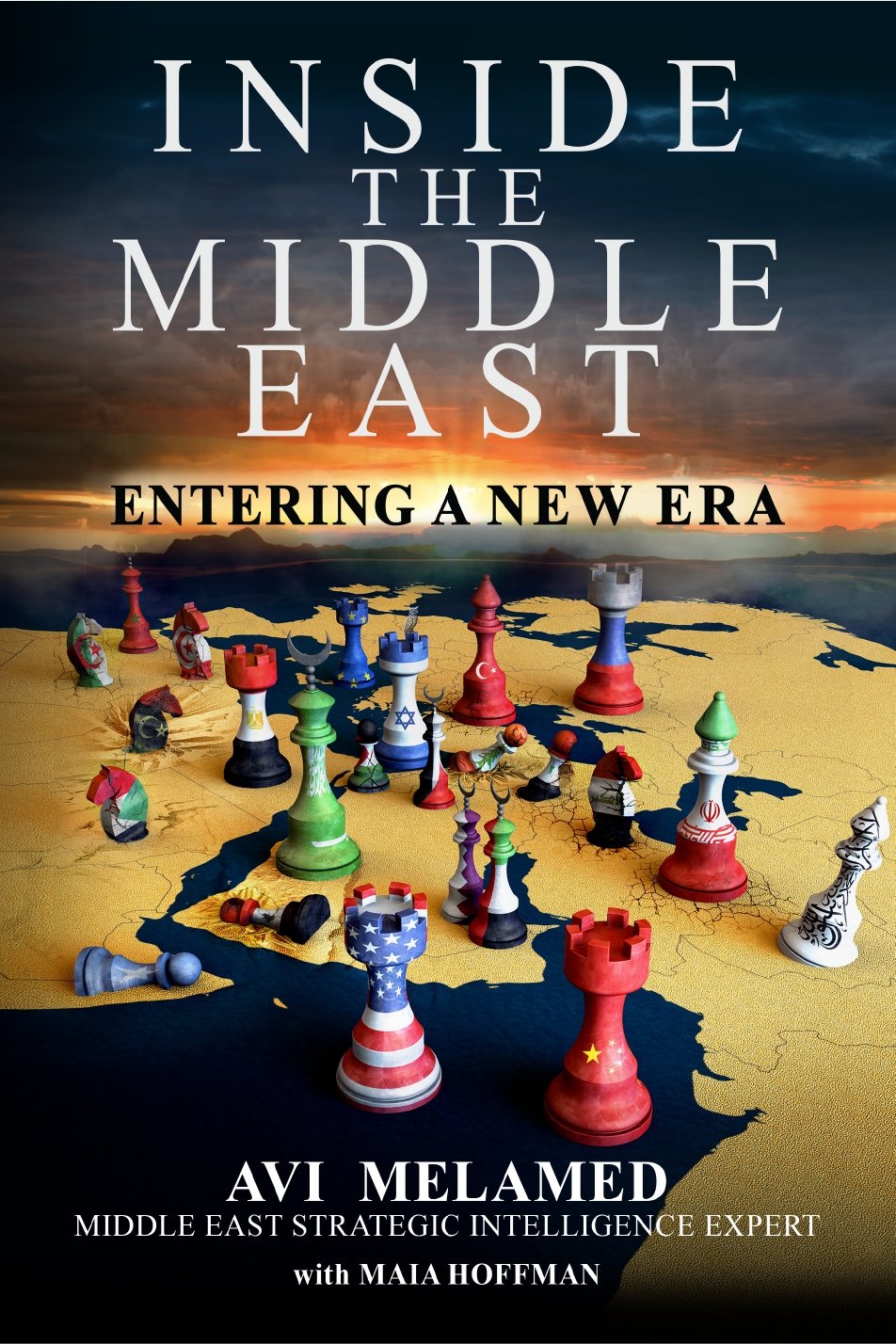
If you want to have a better understanding of the news and what really drives the unfolding events… Read the latest book of Avi Melamed, INSIDE THE MIDDLE EAST | ENTERING A NEW ERA, available now >>>
Follow me on Twitter @AviMelamed; Facebook @InsideTheMiddleEast; for more Videos on YouTube https://www.youtube.com/c/AviMelamed
I can always be reached at Av*@********ed.com