




















































|
Getting your Trinity Audio player ready...
|
Let Others Do the Dirty Work: Saudi Arabia’s Defense of Staying Out of the War | An article by Avi Melamed.
Against the backdrop of reports that the United States and Iran are nearing an agreement to end the war, Avi Melamed points to a carefully craftedSaudi media campaign designed to justify Saudi Arabia’s conduct during the conflict. What was Saudi Arabia’s position? Why does Riyadh feel the need to justify it? And how is the Saudi media campaign preparing Arab public opinion to understand—and perhaps even legitimize—the Saudi stance?
Avi Melamed offers an intriguing perspective that helps answer these questions.
The Iranian regime is the most bitter and dangerous rival of the Saudi monarchy. Their rivalry is rooted in religious, ethnic, political, economic, and geopolitical factors. Even before the war, Iran directly targeted Saudi Arabia and, through its proxies—most notably the Houthis in Yemen—launched missiles and drones against Saudi cities and critical oil infrastructure. Saudi leaders repeatedly and publicly identified Iran as a threat not only to the region but to global stability, and consistently called for the Iranian regime to be restrained.
To counter the Iranian threat, Saudi Arabia invested heavily in advanced Western weaponry, particularly from the United States. Given this reality, one might have expected Riyadh to join the military campaign led by the United States and Israel against Iran—a campaign that, even if it failed to bring down the regime, would at least significantly weaken it and thereby serve a paramount Saudi strategic interest.
In practice, however, Saudi Arabia chose to avoid direct involvement. Riyadh stays on the sidelines while the United States, Israel, Arab Gulf countries and particularly the USAE bore the costs of confronting Iran. This remained true even after the kingdom itself was targeted by Iran during the war.
Within the private corridors of the Arab world, there is quiet puzzlement over Saudi Arabia’s conduct. Yet, Avi Melamed notes, one should not expect such questions to be voiced publicly. Most Arab leaders have little interest in risking a confrontation with Riyadh. The only Arab state that has openly expressed criticism is the United Arab Emirates—and for good reason.
The UAE was subjected to thousands of Iranian missiles and drones during the conflict—more than any other country involved in the war, including Israel. Emirati leaders expected, and reportedly urged, Saudi Arabia to take a more active role. Riyadh declined. The Trump administration is also believed to be disappointed with Saudi Arabia’s position, though it has avoided expressing that disappointment openly and unequivocally.
Against this backdrop, Saudi media outlets have launched a campaign aimed at deflecting both overt and implicit criticism while preparing Arab audiences to better understand—and perhaps justify—the kingdom’s conduct.
In an article titled “What Remains of the Iranian Empire?”, prominent Saudi commentator Abdulrahman Al-Rashed describes the devastation that the Iranian regime has brought upon the region, particularly the Arab world. Al-Rashed writes:
“No state has ever succeeded in implementing its regional hegemonic project as effectively as the Iranian regime did for three decades—up until October 7.”
He goes on to describe how, since October 7, the Iranian regime has suffered setback after setback: the fall of the Assad regime in Syria, Hezbollah’s defeat in its war with Israel, the severe military blow Iran sustained during the conflict, and the growing economic pressure facing Tehran as a result of American actions affecting the Strait of Hormuz.
However, as Avi Melamed observes, the accumulation of these facts is intended to lead readers toward a subconscious conclusion: Saudi Arabia’s decision not to intervene was both rational and justified because others ultimately did the “dirty work” on its behalf.
Or, as Al-Rashed himself stated explicitly:
“Saudi Arabia preferred not to intervene in the war between the three (Israel, USA and Iran), regardless of its outcome.”
A second tactic can be seen in an article by another senior Saudi media person Mashari Althaydi titled “Israeli Control Over America Is an Illusion.” The author argues that the common narrative claiming that Israel—or Jews—control American policy is fundamentally mistaken. He correctly notes that despite the unique and historic relationship between the two countries, the United States ultimately prioritizes its own interests, even when doing so comes at Israel’s expense. Washington, he argues, does not hesitate to impose its preferences and requirements on Jerusalem when necessary.
Avi Melamed contends that the article’s subtext reveals another Saudi strategy for deflecting criticism.
How does the article’s subtext serve that purpose?
According to Melamed, the article implicitly reinforces a central theme in Arab political discourse: the notion that the United States is not a partner that can be trusted unconditionally. The author advances this argument through the example of Israel.
In fact, Melamed suggests, one could replace the word “Israel” throughout the article with the word “Saudi Arabia” without changing the underlying message.
In doing so, the author subtly guides readers toward another subconscious conclusion: Saudi Arabia’s decision during the war was prudent and justified because, ultimately, the United States cannot be relied upon blindly.
The Saudis are unlikely to communicate this message openly to the Trump administration. Nevertheless, Melamed argues that Washington should pay close attention to the media line being advanced in Saudi Arabia. In its effort to deflect criticism, Riyadh is effectively shifting part of the responsibility onto the United States and implicitly questioning the reliability of American commitments.
This article is also available as a Podcast: the AiTME Podcast. This Podcast was written and created by Avi Melamed, Middle East Intelligence Analyst and Founder of Inside The Middle East [ITME], an institute dedicated to apolitical, non-partisan education about the Middle East.
“This podcast is made possible by supporters like you. ITME is an independent, nonprofit institute committed to apolitical, intelligence-based Middle East education.
To support our work, visit >> https://www.paypal.com/donate/
Let Others Do the Dirty Work: Saudi Arabia’s Defense of Staying Out of the War | An article by Avi Melamed.
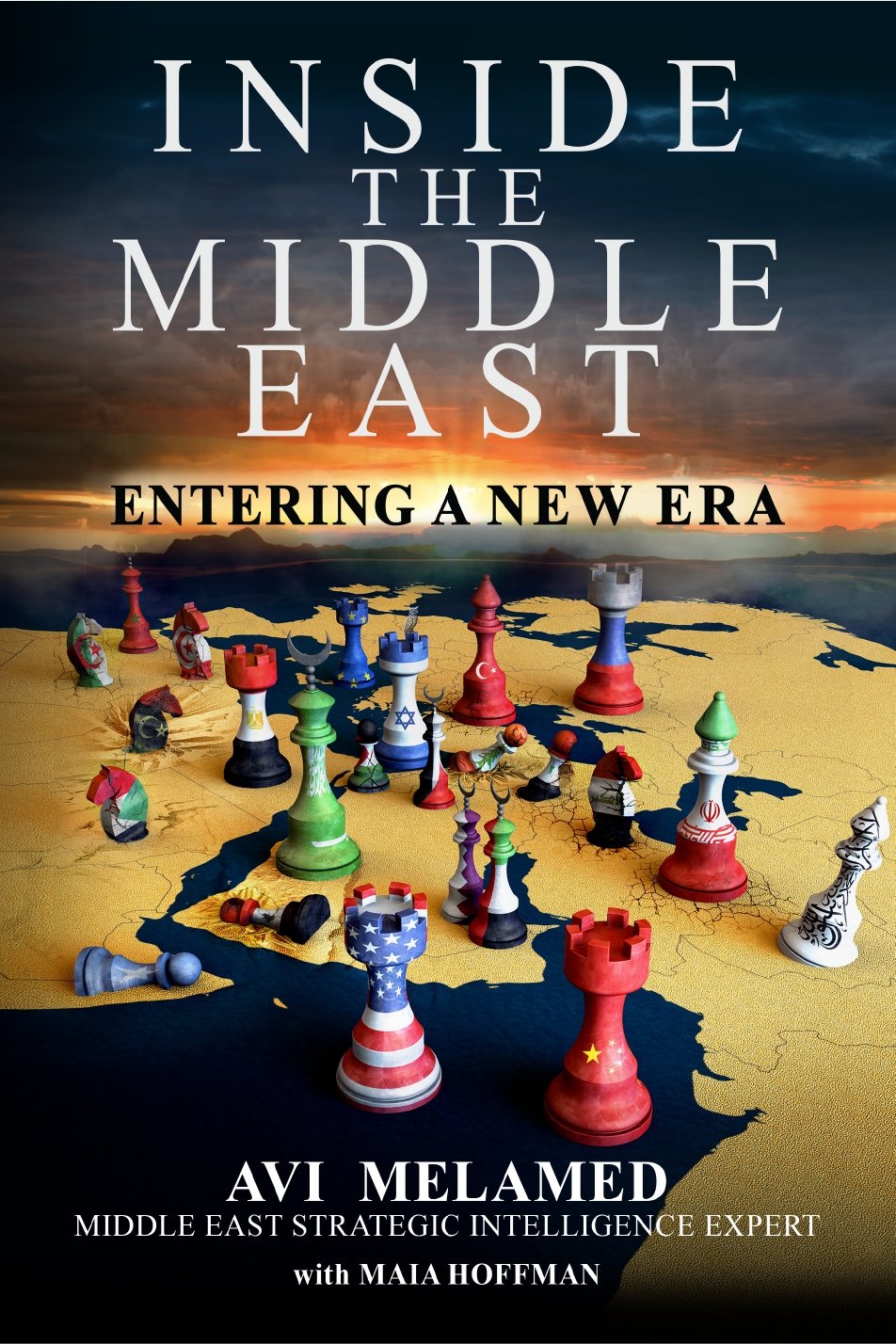
If you want to have a better understanding of the news and what really drives the unfolding events… Read the latest book of Avi Melamed, INSIDE THE MIDDLE EAST | ENTERING A NEW ERA, available now >>>
Follow me on Twitter @AviMelamed; Facebook @InsideTheMiddleEast; for more Videos on YouTube https://www.youtube.com/c/AviMelamed
I can always be reached at Av*@********ed.com