





























































|
Getting your Trinity Audio player ready...
|
Umm Kulthum: The Greatest Arab Singer and Israel | An original article by Avi Melamed.
Every culture has its own symbols and icons. One of the greatest cultural icons of the Arab world is the legendary Egyptian singer Fatima Ibrahim al-Sayyid al-Beltagi, better known by her stage name Umm Kulthum—literally, “Mother of every mouth”, a traditional Arabic honorific.
It is difficult to overstate her place in Arab culture. Reverently known as “The Star of the East” and “The Lady of Arabic Song,” Umm Kulthum remains one of the most influential figures in the modern cultural history of the Middle East.
She died in 1975 at the age of 77. Yet, fifty years later, children across the Arab world can still recite lines from her songs. Avi Melamed recalls meeting a young Bedouin boy in the Sinai Peninsula who was able to quote entire verses from one of her performances—a remarkable feat considering that Umm Kulthum’s songs often stretched to two hours or more. In Egypt, an entire museum is dedicated to preserving her legacy and celebrating her extraordinary career.
Saudi columnist Sarah Matar recently published a lengthy article titled, “Why Do Egyptians Love Umm Kulthum?” In it, she explores Umm Kulthum’s central place in Egyptian—and more broadly Arab—identity, offering a nuanced answer to the question posed in the title.
Umm Kulthum, wrote Matar, is Egypt’s collective memory. Her voice evokes personal and national memories that span generations. She embodies Egyptian identity. Listening to Umm Kulthum is not merely a musical experience but a reaffirmation of what it means to be Egyptian. She provides emotional continuity. In a rapidly changing world, her songs remain a constant source of comfort, nostalgia, and belonging. She transcends politics and generations. Egyptians with different political views and from different age groups continue to regard her as a shared cultural icon. She became a “spiritual home.”
As Matar writes, “A beautiful voice pleases the ear, but Umm Kulthum’s voice awakened memory.” Elsewhere she suggests that “Umm Kulthum’s voice carries the memory, longing, and identity of Egyptians. Her songs have become a spiritual home passed down from one generation to the next.”
Yet alongside Matar’s admiration stands a sharply different view. A tweet published in X account of Dr. Mohamed Hnid, a Tunisian professor teaching at the Sorbonne University in France, offers a striking critique of Umm Kulthum. His explanation is both provocative and unexpected.
Referring to Umm Kulthum, Hnid writes – ‘This deviant woman intoxicated an entire generation of Arab youth with her sighs, longing, and heartbreak.’
His insulting statement stands in sharp contrast to Matar’s observation. What fueled his fury? What made his express such disrespectful attitude towards such Arab icon?
The answer is in the rest of his statement. It is surprising because unexpectedly Hind connects it to Israe. This is what wrote ‘ While the Zionist engineer was calculating the balance of atoms inside a uranium centrifuge, the Arab engineer was writhing in bed, captivated by Umm Kulthum’s passionate laments. He concludes sarcastically that ‘She was such a great “resistance fighter” that the Zionists rewarded her by naming a street after her—in recognition of her outstanding services.’
Indeed, several Israeli cities with large Arab populations—including Jerusalem and Haifa—have streets named after Umm Kulthum, a testament to her stature as perhaps the greatest female singer in the history of the Arab world.
Umm Kulthum: An Arab Icon, Israel, and an Unexpected Debate
Every culture has its own symbols and icons. One of the greatest cultural icons of the Arab world is the legendary Egyptian singer Fatima Ibrahim al-Sayyid al-Beltagi, better known by her stage name, Umm Kulthum.
It is difficult to overstate her place in Arab culture. Reverently known as “The Star of the East” and “The Lady of Arabic Song,” Umm Kulthum remains one of the most influential cultural figures in the modern history of the Middle East.
She died in 1975 at the age of 77. Yet, half a century later, children across the Arab world can still recite lines from her songs. Avi Melamed says that he once met a young Bedouin boy in Egypt’s Sinai Peninsula who effortlessly quoted entire verses from one of her performances—a remarkable feat considering that Umm Kulthum’s songs often lasted two hours or more. In Egypt, an entire museum is dedicated to preserving her legacy and celebrating her extraordinary career.
Recently, Saudi columnist Sarah Matar published a thoughtful article titled “Why Do Egyptians Love Umm Kulthum?” In it, she explores Umm Kulthum’s central place in Egyptian—and more broadly Arab—identity, offering a nuanced explanation for her enduring appeal.
According to Matar, Umm Kulthum is Egypt’s collective memory. Her voice evokes both personal and national memories that span generations. She embodies Egyptian identity. Listening to Umm Kulthum is not merely a musical experience; it is a reaffirmation of what it means to be Egyptian.
In a rapidly changing world, her songs provide continuity, comfort, nostalgia, and a profound sense of belonging. She transcends politics, ideology, and generations. Egyptians of different ages and political persuasions continue to embrace her as a shared cultural icon. In Matar’s words, Umm Kulthum became a “spiritual home.”
As she beautifully writes:
“A beautiful voice pleases the ear, but Umm Kulthum’s voice awakened memory.”
Elsewhere she adds:
“Umm Kulthum’s voice carries the memory, longing, and identity of Egyptians. Her songs have become a spiritual home passed down from one generation to the next.”
Yet alongside Matar’s admiration stands a remarkably different voice.
In a post on X, Dr. Mohamed Hnid, a Tunisian professor at the Sorbonne University in France, offered a provocative—and deeply controversial—critique of Umm Kulthum.
Referring to her, he wrote:
“This deviant woman intoxicated an entire generation of Arab youth with her sighs, longing, and heartbreak.”
His dismissive tone stands in stark contrast to Matar’s portrayal of Umm Kulthum as Egypt’s collective memory. What could provoke such hostility toward one of the Arab world’s most revered cultural icons?
The answer lies in the rest of his post.
Unexpectedly, Hnid links his criticism to Israel.
He writes:
“While the Zionist engineer was calculating the balance of atoms inside a uranium centrifuge, the Arab engineer was writhing in bed, captivated by Umm Kulthum’s passionate laments.”
He concludes with biting sarcasm:
“She was such a great ‘resistance fighter’ that the Zionists rewarded her by naming a street after her—in recognition of her outstanding services.”
The irony rests on real fact. Several Israeli cities with large Arab populations—including Jerusalem and Haifa—have streets named after Umm Kulthum, reflecting her extraordinary stature among Arabic-speaking communities.
Whether one agrees with Hnid or not, his argument is not about Umm Kulthum.
Rather, he uses her as a symbol to express a broader frustration with what he sees as one of the Arab world’s enduring dilemmas: while others invested in science, technology, and innovation, Arab societies became absorbed in nostalgia, romance, and emotionalism.
His criticism is therefore less about music than about civilization itself.
The striking contrast between Sarah Matar’s admiration and Mohamed Hnid’s condemnation illustrates how a single cultural icon can embody two profoundly different visions of the Arab world. For one, Umm Kulthum represents memory, identity, and emotional continuity. For the other, she symbolizes a culture that looked backward while others looked forward.
Perhaps that is the greatest testament to her enduring influence: fifty years after her death, Umm Kulthum remains not only the voice of the Arab world—but also a mirror reflecting its deepest debates about identity, culture, and the path to the future.
This article is also available as a Podcast: the AiTME Podcast. This Podcast was written and created by Avi Melamed, Middle East Intelligence Analyst and Founder of Inside The Middle East [ITME], an institute dedicated to apolitical, non-partisan education about the Middle East.
“This podcast is made possible by supporters like you. ITME is an independent, nonprofit institute committed to apolitical, intelligence-based Middle East education.
To support our work, visit >> https://www.paypal.com/donate/
Egypt vs. Argentina Through the Lens of Middle Eastern Discourse | An original article by Avi Melamed.
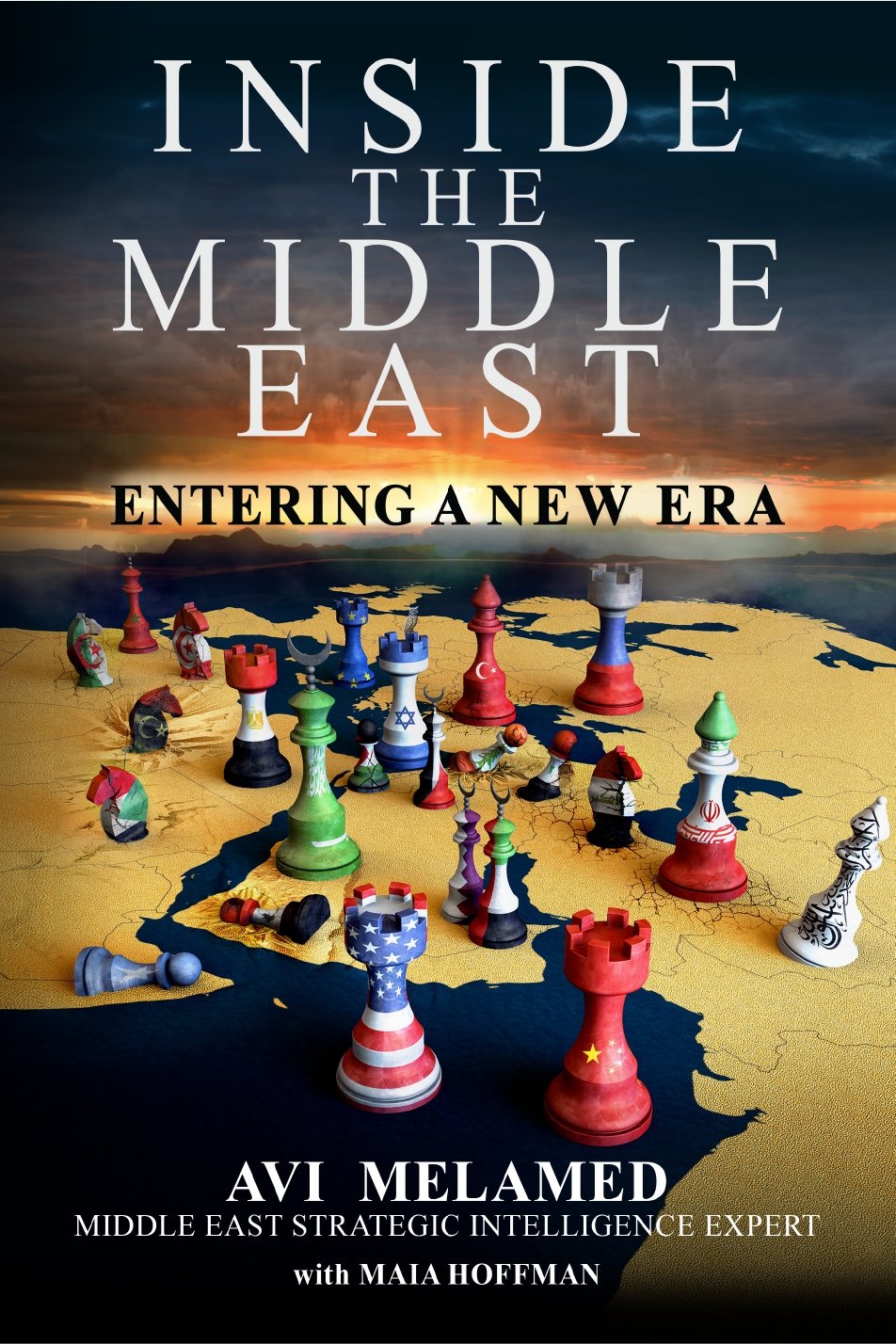
If you want to have a better understanding of the news and what really drives the unfolding events… Read the latest book of Avi Melamed, INSIDE THE MIDDLE EAST | ENTERING A NEW ERA, available now >>>
Follow me on Twitter @AviMelamed; Facebook @InsideTheMiddleEast; for more Videos on YouTube https://www.youtube.com/c/AviMelamed
I can always be reached at Av*@********ed.com