





























































|
Getting your Trinity Audio player ready...
|
Gaza And The Politics Of Ambiguity | #AiTME Ep30 | An article by Avi Melamed | Podcast version powered by Ai.
Avi Melamed shares an article by Arab journalist Tawfiq al-Razin titled: “When Truth Becomes Unrecognizable: Gaza and the Collapse of the Global Order of Language.”
In his article, al-Razin argues that the discourse surrounding the reality in Gaza has evolved into a kind of “laundering of language” that prevents people from calling things by their proper names and thereby paralyzes the ability to recognize facts as they are. Thus, he argues, a reality of “starvation” is reframed as a mere “logistical challenge in distributing humanitarian aid,” while forced displacement is presented as “voluntary migration.”
Power, says al-Razin, no longer needs to conceal reality. Instead, it distorts the language through which reality is interpreted, creating an endless flood of justifications, explanations, and competing narratives. The result is that describing reality accurately becomes nearly impossible. The goal, he concludes, is not necessarily to convince people of a particular narrative, but rather to make them lose faith in the very possibility of uncovering the truth.
Al-Razin provides several examples to support his argument. For instance, the claim that Gaza’s Shifa Hospital also served as a Hamas command center was enough according to him to trigger a debate that undermined the legal immunity traditionally granted to hospitals. Another example he cites concerns Gazans who operated as journalists and were killed yet were not classified as civilian victims because they allegedly functioned as part of a military system.
Between the lines, the article contains criticism of the international system responsible for enforcing international law. According to al-Razin, the international system has not only struggled to articulate a clear and unequivocal position that calls things by their proper names but has itself become subordinate to political considerations.
Avi Melamed identifies a dual layer within the article.
On one level, he argues, al-Razin raises a legitimate point. Indeed, within international legal and media discourse there are — alongside forceful positions — also manifestations of ambiguity regarding the reality in Gaza.
On another level, however, Melamed argues that al-Razin turns a blind eye to a central issue. The ambiguity al-Razin criticizes stems largely from the fact that Hamas’s rule over Gaza creates profound difficulties in addressing the situation in clear legal and political terms.
Hamas, which originated in Gaza, violently seized control of the Strip in 2007 while simultaneously insisting that Gaza remains “occupied territory.” Hamas governs Gaza while at the same time claiming it bears no responsibility for the welfare of its residents. Hamas transformed Gaza into a base for violent activity against Israel, and as an integral part of its operational doctrine, Gaza’s civilian infrastructure became embedded within Hamas’s military system. Civilian homes became weapons depots. Hospitals — including Shifa Hospital — housed Hamas command centers. Individuals killed and described as “journalists” were, in some documented cases, military operatives employed and paid by Hamas rather than civilians. Yet Hamas simultaneously accuses Israel of deliberately targeting civilians.
The reality created in Gaza under Hamas rule challenges international legal and media discourse and presents a series of difficult dilemmas: questions of proportionality in the use of military force; the legal status of individuals categorized as civilians while simultaneously functioning within military structures; and the immunity traditionally granted to public institutions that are used for military purposes — such as hospitals housing command centers or mosque courtyards and schools used to launch rockets.
The operational methods of Hamas in Gaza, and similarly Hezbollah in Lebanon, are based in part on the deliberate use of civilian environments both as protective shields and as launching grounds for attacks against Israel. One of the central motivations behind this tactic is the expectation that Israel’s military responses will inevitably harm civilians and civilian infrastructure from within which Hamas or Hezbollah operate — thereby placing Israel in the dock of international legal, political, and media discourse. To a significant extent, Melamed argues, this tactic has indeed served Hamas and Hezbollah effectively.
At the same time, Melamed points out that this tactic also contributes to growing ambiguity within Western discourse regarding the reality in Gaza — or in Lebanon regarding Hezbollah. Why? Because the continued tendency to direct blame solely at Israel while ignoring evidence of Hamas’s or Hezbollah’s deliberate use of civilian environments undermines the credibility and authority of the international legal and media systems themselves. As a result, those systems increasingly retreat into ambiguity when describing reality.
Melamed offers two broader insights.
The first is that the ambiguity in Western discourse identified by al-Razin reflects an emotional and intellectual difficulty in addressing the connection between the harsh reality in Gaza — which reinforces the Palestinian victimhood narrative — and Hamas’s responsibility for creating that reality.
The second is that, unlike Western discourse, Arab discourse regarding Gaza often contains far less ambiguity. In Arab discourse, there is frequently a clearer willingness to address the connection between the harsh reality in Gaza — which reinforces the Palestinian victimhood narrative — and Hamas’s responsibility for creating that reality.
Melamed points to numerous examples from Arab voices.
Ahmed Abdel Wahab, deputy editor-in-chief and head of commentary at the Arabic news platform BAWABAT AL AKHBAR, writes in an article titled “Hamas Is Losing the Trust of the Street”:
“After years of Hamas rule and promises of ‘victory’ and the slogans of ‘resistance,’ Gazans now stand before a grim reality of destruction and despair. Criticism of Hamas is growing because the massive external aid that flowed into Gaza never truly reached ordinary Gazans but was diverted to serve Hamas’s governing interests. As always, Hamas responds by portraying criticism as a ‘conspiracy’ or by attributing all the failures it brought upon Gaza to the ‘siege’ or to the ‘Israeli enemy.’”
Another commentator, Ibrahim Nour al-Din, writes in his article “The Uprising in Gaza: Speaking the Truth” writes ‘anti-Hamas demonstrations in Gaza express the anger of Gazans and their desire to rid themselves of Hamas rule — a leadership that hides in hospitals and schools while ordinary Gazans die’.
Egyptian media personality Ibrahim Issa delivered a sharp monologue condemning Hamas for building tunnels throughout Gaza to protect its operatives while failing to provide shelters or protection for civilians, thereby knowingly exposing the population to danger.
By sharing al-Razin’s article, Avi Melamed offers Western audiences’ significant food for thought regarding the interplay between emotion and intellect in shaping narratives and perceptions of reality.
This article is also available as a Podcast: the AiTME Podcast. This Podcast was written and created by Avi Melamed, Middle East Intelligence Analyst and Founder of Inside The Middle East [ITME], an institute dedicated to apolitical, non-partisan education about the Middle East.
“This podcast is made possible by supporters like you. ITME is an independent, nonprofit institute committed to apolitical, intelligence-based Middle East education.
To support our work, visit >> https://www.paypal.com/donate/
Gaza And The Politics Of Ambiguity | #AiTME Ep30 | An article by Avi Melamed | Podcast version powered by Ai.
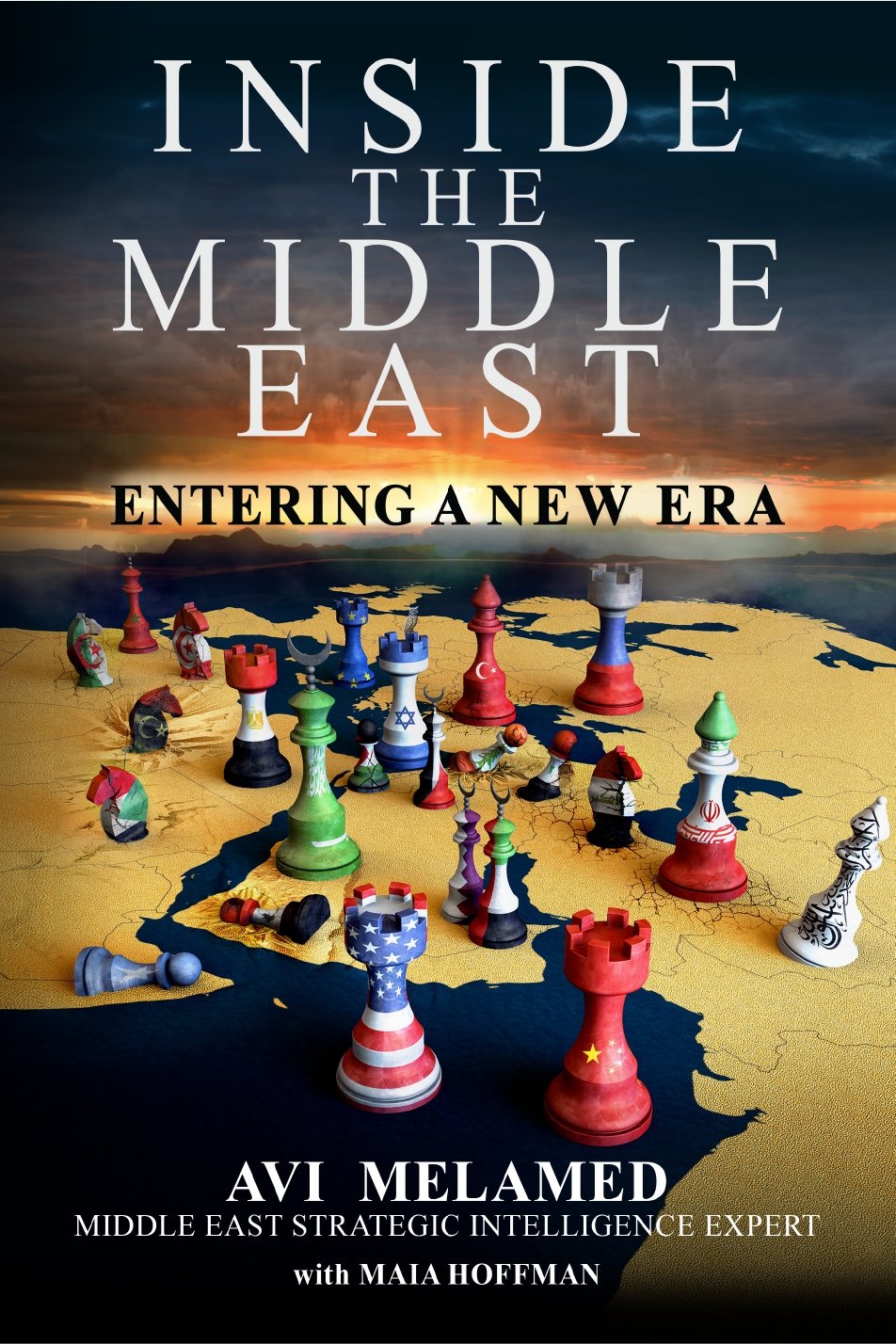
If you want to have a better understanding of the news and what really drives the unfolding events… Read the latest book of Avi Melamed, INSIDE THE MIDDLE EAST | ENTERING A NEW ERA, available now >>>
Follow me on Twitter @AviMelamed; Facebook @InsideTheMiddleEast; for more Videos on YouTube https://www.youtube.com/c/AviMelamed
I can always be reached at Av*@********ed.com