



























































|
Getting your Trinity Audio player ready...
|
ONE ELECTION, COMPETING REALITIES, How the Arab World Is Interpreting America’s Political Shift | An original article by Avi Melamed.
The American elections are over, but across the Middle East, another debate is unfolding: What do the results actually mean, who stands to gain, and what might change?
An examination of commentary from Saudi Arabia, Kuwait, Egypt, Morocco, Lebanon, and Palestinian analysts reveals a fascinating spectrum of interpretations. While some celebrate the election results as a strategic defeat for Donald Trump, Israel, and their regional allies, others caution against premature conclusions. Some see a historic transformation in American politics, while others believe the fundamentals of U.S. foreign policy will remain largely unchanged.
What makes this discussion particularly revealing is not only the diversity of perspectives but also the striking contradictions between them.
The same electoral outcome is being portrayed as a victory for Iran, a potential threat to Iran, a defeat for Israel, an opportunity for Arab and Muslim political empowerment, and a warning about the dangers of identity politics.
These contrasting readings offer a window into the competing political and ideological currents shaping the contemporary Arab discourse.
1. Iran: Strategic Victory or Dangerous Miscalculation?
One of the most striking divisions concerns the implications of Trump’s electoral defeat for Iran.
Palestinian commentator Rajab Abu Sariya presents the results as a victory for Tehran, arguing that Iran has effectively defeated Trump on his home turf. Yet he also anticipates that the Trump administration may pursue a diplomatic arrangement with Iran in an effort to secure a tangible achievement.
This interpretation presents an interesting paradox: Iran is simultaneously credited with defeating Trump and positioned as a potential partner in a diplomatic deal that could offer him a political accomplishment.
A very different assessment comes from Saudi commentator Khaled Saif and Dr. Abdulaziz Aluwaisheg, a senior Gulf Cooperation Council official.
Their warning is that Trump’s defeat could actually make him more dangerous to Tehran.
Aluwaisheg argues that a hardening of Iran’s position following the elections could lead the Iranian leadership to make a serious strategic miscalculation. Rather than accepting defeat and withdrawing from confrontation, Trump could choose a dramatic military action against Iran.
The contrast is fundamental.
One perspective sees Trump’s defeat as evidence of Iran’s growing leverage. The other sees that same defeat as a possible catalyst for American escalation.
Kuwaiti commentator Ahmed Al-Zaidi offers a third interpretation. He argues that the election results effectively eliminate the possibility of renewed war with Iran. In his view, the United States will have to absorb the consequences of its earlier military adventure and avoid initiating another conflict for years to come.
We therefore encounter three competing assessments:
- Iran has gained the upper hand, potentially creating an opportunity for a diplomatic agreement.
- Iran faces heightened danger, as Trump may pursue a dramatic military response.
- The United States has been strategically constrained, making further military confrontation unlikely.
Each interpretation begins with the same electoral outcome but arrives at a different conclusion.
The deeper issue is whether American political setbacks translate into strategic restraint, diplomatic compromise, or potentially greater military unpredictability.
2. The Resistance Camp: When Every Outcome Becomes a Victory
Lebanese commentator Jad Al-Akhawi approaches the election results from an entirely different angle.
In a sharply sarcastic article, he challenges the tendency of the Iran-backed “Resistance Camp” to portray virtually every political development as evidence of its own success.
According to Al-Akhawi, the camp has interpreted Trump’s electoral defeat as an Iranian victory, effectively claiming that the Islamic Republic and its allies helped determine the outcome of an American election.
He sarcastically suggests that American voters would be astonished to discover that their ballots were actually votes of support for Iran’s Islamic Revolutionary Guard Corps. Even a newly elected Democratic politician, he jokes, might be surprised to learn that he had effectively become a member of the IRGC.
Behind the humor lies a serious critique.
Al-Akhawi challenges a political narrative in which every development, regardless of its actual causes or consequences, is retroactively incorporated into a story of resistance and victory.
This raises an important analytical question:
When a political movement interprets every outcome as confirmation of its own success, how can it distinguish genuine strategic achievements from rhetorical victories?
It also exposes a broader contradiction within the regional discourse.
While some analysts seriously examine how the elections might reshape American foreign policy, others attribute the results to the influence and achievements of Middle Eastern actors themselves.
The difference is between assessing the regional implications of an American election and claiming political ownership of that election.
3. Israel: Immediate Defeat or Gradual Political Transformation?
Another prominent theme concerns the future of U.S.–Israel relations.
Kuwaiti commentator Ahmed Al-Zaidi presents the election results as a significant blow to the pro-Israel lobby in the United States.
In his interpretation, American voters are beginning to free themselves from the lobby’s political influence. He also views the results as a defeat for Islamophobia, which he argues has been deeply embedded in American political culture for decades.
Moroccan commentator Adel Al-Oufi goes significantly further.
He views the emergence of a younger political generation in the United States, particularly the electoral success of candidates of Arab and Muslim background, as part of a long-term process that could ultimately lead to Israel’s disappearance.
His interpretation reflects a broader ideological reading of demographic and political change in America.
Palestinian analyst Mohammed Yaghi, a research fellow at the Washington Institute, offers a more specific political forecast.
He argues that American support for Israel is declining and anticipates that this trend could eventually lead Washington to impose sanctions on Israel because of its regional policies and treatment of the Palestinians.
Yet not all commentators accept the assumption that electoral change will translate into a fundamental realignment of American foreign policy.
Egyptian commentator Mohammed Zuweil specifically cautions against concluding that the electoral achievements of Muslim and Arab candidates will necessarily produce changes in Washington’s policies toward Israel, the Israeli-Palestinian conflict, or the wider Middle East.
Egyptian commentator Karam Gabr similarly expects continuity rather than a dramatic shift.
These positions reveal an important distinction between three different phenomena:
Changing public attitudes, changing political representation, and changing government policy.
They may be connected, but they are not interchangeable.
The emergence of new political voices does not automatically mean that those voices will determine national foreign policy. Nor does growing criticism of Israeli policies necessarily imply the disappearance of America’s strategic relationship with Israel.
The debate therefore reflects a deeper disagreement over whether the elections represent a decisive turning point or another stage in a longer, more gradual transformation.
4. Arab and Muslim Political Success: A Source of Pride, a Lesson in Democracy, or a Threat?
Perhaps the richest and most revealing debate concerns the political achievements of Arab and Muslim Americans.
For some commentators, these results are a source of pride and inspiration.
Moroccan commentator Adel Al-Oufi argues that the successes of candidates of Arab and Muslim background resonate deeply with people living under authoritarian regimes in the Arab world.
For those who experience political exclusion at home, the election of Arab and Muslim representatives in the United States can feel like a personal victory.
But Egyptian commentator Mohammed Zuweil takes the discussion in a different direction.
Rather than focusing primarily on identity or geopolitical implications, he asks what these electoral achievements reveal about the contrasting political realities of the United States and the Arab world.
How is it that Arab and Muslim minorities can acquire meaningful political influence in America while political participation and representation remain restricted across much of the Arab world?
Why has ideological and political pluralism become a source of strength in Western democracies, while differences of opinion so often generate division, hostility, exclusion, and intolerance in Arab political life?
And why have democratic institutions struggled to take root across so many Arab states?
For Zuweil, the central lesson is not that Arab and Muslim candidates have won elections. It is that a political system has enabled minorities to organize, compete, build coalitions, and acquire political influence through democratic processes.
He identifies five lessons particularly relevant to Arab societies:
- The primacy of citizenship and equal civic rights.
- The importance of strong political, organizational, and academic institutions.
- Free elections that offer voters genuine alternatives.
- Coalition-building and the development of civil society organizations.
- Recognition of political and ideological pluralism as a source of strength rather than a threat.
His argument shifts the discussion from who won to what political conditions made those victories possible.
This stands in direct contrast to commentators who interpret Arab and Muslim electoral success primarily through the lens of ethnic or religious identity.
And it is here that another striking disagreement emerges.
Lebanese commentator Maria Maalouf expresses concern about the implications of a newly elected politician’s declaration that Michigan is America’s Arab capital.
For Maalouf, the statement raises questions about the growing influence of ethnic and religious identity politics at the expense of citizenship as a shared political foundation.
Meanwhile, Saudi commentator Abdullah Al-Otaibi rejects the assumption that elected Arab and Muslim Americans necessarily represent the interests of the Arab world.
On the contrary, he argues that some belong to ideological and political movements hostile to existing Arab governments and potentially threatening to their stability.
He specifically criticizes the alliance between elements of the progressive left and political Islam, which he regards as harmful to the Middle East.
The contrast could hardly be sharper.
For Al-Oufi, the rise of Arab and Muslim politicians is a source of collective pride.
For Zuweil, it demonstrates the possibilities created by citizenship, pluralism, and democratic institutions.
For Maalouf, it raises concerns about the displacement of civic identity by ethnic and religious affiliation.
And for Al-Otaibi, it may strengthen ideological movements whose agendas conflict with the interests of Arab states.
The central disagreement is whether political identity should be understood through shared ethnicity and religion, shared citizenship, or competing ideological and national interests.
These are fundamentally different ways of interpreting the same political development.
5. America and the Middle East: Change Without Transformation?
Beyond the disputes over Iran, Israel, and political identity, one perspective stands apart for its emphasis on strategic continuity.
Egyptian commentator Karam Gabr argues that regardless of which party wins American elections, Middle Eastern countries should not place excessive trust in Washington.
He anticipates that Democrats will favor diplomatic engagement with Iran, prioritize Gaza’s reconstruction and a two-state framework, and maintain strategic partnerships with Gulf countries.
However, he does not expect a dramatic transformation in American foreign policy.
Instead, he sees U.S. policy continuing to evolve through competition between political forces and ideological camps, within the broader boundaries of established American interests.
To reinforce his warning about dependence on Washington, Gabr invokes the famous observation attributed to Henry Kissinger: “It may be dangerous to be America’s enemy, but to be America’s friend is fatal.”
This perspective introduces a crucial distinction between political change in Washington and changes in America’s strategic interests.
Presidents, parties, and political coalitions change. But regional alliances, security arrangements, economic interests, and institutional constraints may produce considerable continuity.
His analysis therefore challenges both those celebrating an imminent strategic transformation and those fearing a complete reversal of existing American commitments.
6. What Do These Contradictions Tell Us?
Taken together, these commentaries reveal several recurring patterns in the Arab discourse.
First, the same event can generate diametrically opposed strategic conclusions.
Second, commentators disagree over whether political symbolism translates into strategic power.
Third, there is a profound disagreement over the meaning of Arab and Muslim political identity.
Fourth, the debate exposes differing attitudes toward political pluralism and democracy.
Finally, the commentaries illustrate the tension between ideological expectations and strategic analysis.
Conclusion: One America, Many Middle Eastern Realities
The Arab responses to the American elections are not a single narrative. They are a collection of competing interpretations shaped by different political experiences, ideological commitments, regional interests, and visions of the future.
A Saudi commentator sees a warning for Tehran where a Palestinian commentator sees an Iranian victory.
A Moroccan writer celebrates Arab and Muslim electoral achievements as evidence of a profound geopolitical transformation, while an Egyptian analyst sees a lesson in democratic citizenship and institutional pluralism.
A Lebanese commentator questions the expansion of identity politics, while a Saudi commentator warns that politicians sharing an Arab or Muslim background do not necessarily share the interests of Arab countries.
And while some anticipate dramatic changes in America’s approach to Israel and Iran, others expect the enduring logic of American strategic interests to prevail.
What emerges is not simply a debate about American politics.
It is a debate about the Middle East itself: its competing ideological movements, its political institutions, its relationships with the United States, and its unresolved questions about citizenship, identity, democracy, and regional power.
Perhaps the most revealing lesson is that the election results tell us as much about those interpreting them as they do about America.
Understanding these competing perspectives is essential to understanding how political developments in Washington are received, interpreted, and potentially acted upon across the Middle East.
And that distinction matters.
Because interpreting an event is not the same as understanding it.
Editorial note: This analysis is based on the supplied collection of Hebrew summaries of Arab commentary. It presents the commentators’ interpretations and predictions, not independently verified election outcomes or forecasts. The source material does not include original article links or publication dates.
This article is also available as a Podcast: the AiTME Podcast. This Podcast was written and created by Avi Melamed, Middle East Intelligence Analyst and Founder of Inside The Middle East [ITME], an institute dedicated to apolitical, non-partisan education about the Middle East.
“This podcast is made possible by supporters like you. ITME is an independent, nonprofit institute committed to apolitical, intelligence-based Middle East education.
To support our work, visit >> https://www.paypal.com/donate/
ONE ELECTION, COMPETING REALITIES, How the Arab World Is Interpreting America’s Political Shift | An original article by Avi Melamed.
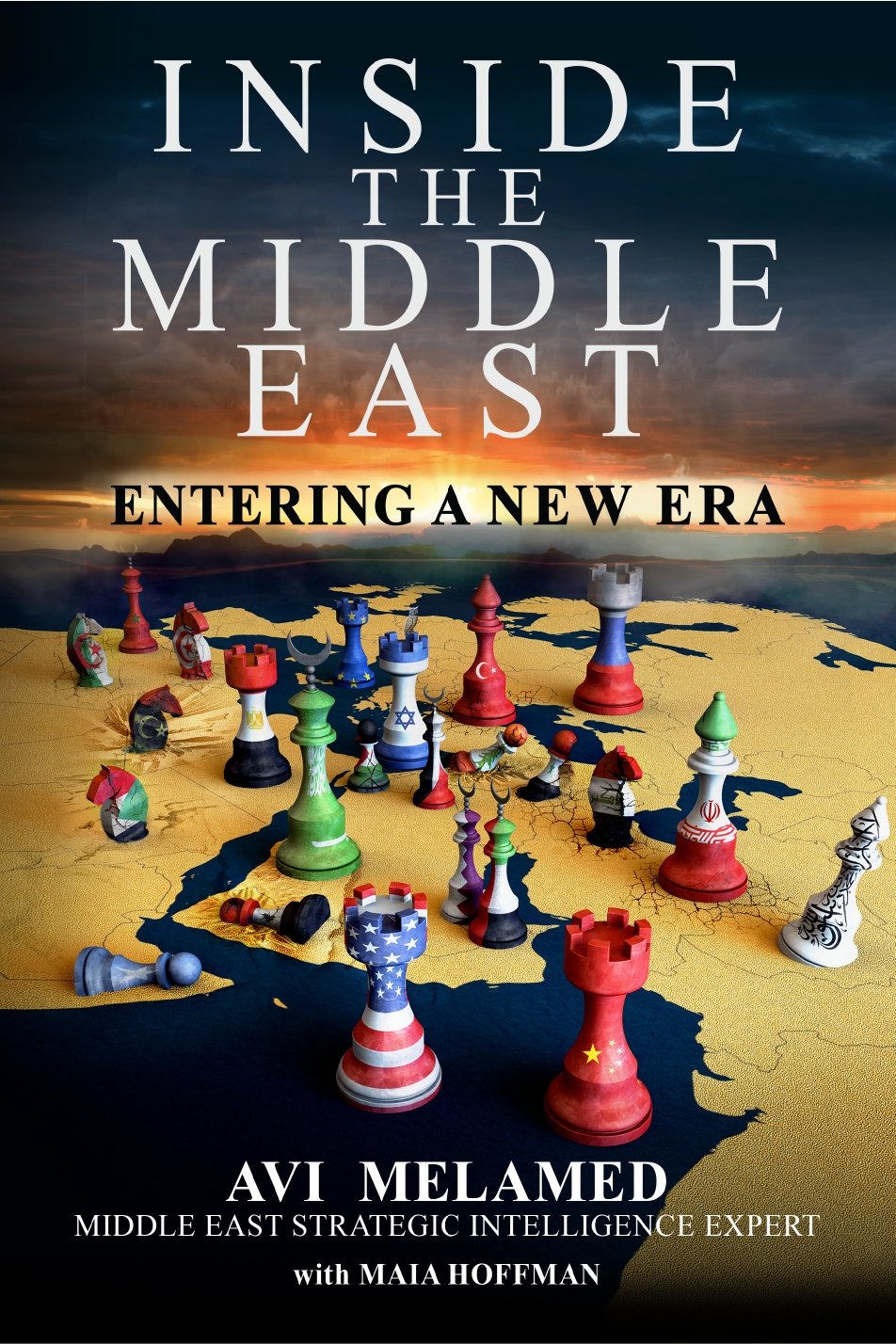
If you want to have a better understanding of the news and what really drives the unfolding events… Read the latest book of Avi Melamed, INSIDE THE MIDDLE EAST | ENTERING A NEW ERA, available now >>>
Follow me on Twitter @AviMelamed; Facebook @InsideTheMiddleEast; for more Videos on YouTube https://www.youtube.com/c/AviMelamed
I can always be reached at Av*@********ed.com