































































|
Getting your Trinity Audio player ready...
|
The Israel-Iran War will have major consequences. What can we expect? | Avi Melamed special to the USA TODAY Network | This article has already published in more that 227 other media and newspapers.
3-minute read
A fragile ceasefire has ended twelve days of war between Israel and Iran, a war that also saw the United States strike key Iranian nuclear facilities. This moment demands a deeper look at the potential long-term consequences for the region’s geopolitical future.
The end of a chapter
The Israel–Iran war marks the close of one of the most consequential chapters in modern Middle Eastern history: Iran’s aspiration for regional hegemony, driven by its Shi’ite clerical regime that came to power in 1979.
For decades, Iran pursued regional domination, entrenching itself in Gaza, Iraq, Lebanon, Syria, the West Bank and Yemen through violent proxies that left devastation and instability in their wake. Cloaking its ambitions in the rhetoric of “resistance” and claiming to defend the Palestinian cause, Iran exploited a powerful narrative to justify its interventions, even as it undermined Arab sovereignty and inflicted widespread harm across the region.
The success of Iran’s strategy can be attributed in large part to the weakness of Arab regimes and the West’s reluctance to confront Tehran’s growing aggression.
The collapse of Iran’s deterrence triangle
Iran’s strategy for regional domination relied on a three-part deterrence structure: its missile and drone arsenal, its network of proxies including Hamas, Hezbollah, the Houthis, Islamic Jihad, and Iraqi Shi’ite militias and its nuclear program. Together, these elements shielded one another and gave the regime a sense of immunity as it expanded its influence through violence.
That architecture began to unravel after the Oct. 7 Hamas-led massacre, an Iranian-backed attack meant to boost Tehran’s regional leverage. Instead, it triggered a war in which Israel dealt heavy blows to Hamas and Hezbollah and exposed Iran’s air defense vulnerabilities. For the first time since the 1980s, the regime came under direct major military attack at home, shattering its image of deterrence.
The fallout included the collapse of the Assad regime in Syria, one of Iran’s most strategic assets, and marked the dramatic collapse of Iran’s regional ambitions.
Internal fractures and the growing threat to regime stability
The collapse of Iran’s strategy, the regime’s humiliating defeat in the war, the succession battle over the next Supreme Leader, combined with the country’s deep economic, environmental, and social crises, are expected to intensify internal tensions and power struggles within the regime.
Under these conditions, a renewed outbreak of civil unrest is possible, including violent uprisings in regions with a long-standing tradition of armed resistance to the regime, such as Baluchistan, Iranian Kurdistan, and Khuzestan.
Such developments could pose a serious threat to the regime’s survival.
A window of opportunity for regional stability
As Iran’s vision of regional hegemony collapses, Israel is solidifying its position as the leading regional power. This shift creates a rare and critical window of opportunity. This moment could usher in a new era led by states whose agendas are no longer dictated by hegemonic ambitions rooted in radical ideologies or advanced by semi-state actors serving those aims.
However, a critical condition for the realization of this window of opportunity is that any agreement between the West — led by the United States — and the Iranian regime must fulfill the conditions set forth by the U.S. President, foremost among them: a ban on uranium enrichment within Iranian territory, limitations on Iran’s missile program, and the inclusion of a strict and rigorous enforcement mechanism.
Several developments illustrate the potential of this new chapter:
- Progress in normalization between Israel and Saudi Arabia, framed within a broader regional alignment led by Egypt, Israel, Saudi Arabia, and the United Arab Emirates, working in concert to build a stable Middle East.
- A constructive approach to the Israeli–Palestinian conflict, enabled by the weakening of Iranian influence and supported by pragmatic Arab actors providing a regional scaffold for gradual agreements.
- Agreements or red-line understandings between Israel and Lebanon or Syria, which could help defuse tensions and lay the groundwork for future diplomatic relations.
- The decline of Iranian-backed semi-state actors, who operate within national borders while serving external agendas. This shift coincides with a growing recognition of the principle that military power must be solely in the hands of sovereign states.
Breaking the grip: The unspoken paradox
There is a profound paradox at the heart of this moment.
For years, much of the Arab world publicly portrayed Israel as the region’s greatest threat, despite knowing full well that it was Iran, through its violent proxies, that was steadily seizing Arab capitals and undermining Arab sovereignty. Yet too weak and too afraid to confront Tehran, the Arab world effectively came to terms with Iran’s growing grip.
Long vilified in Arab discourse, it is Israel, through the blood of its soldiers and the suffering of its civilians, that now offers the Arab world a historic opportunity to free itself from Iran’s suffocating grip.
That reality should not be ignored. Nor should its irony be lost.g power under a different flag — will determine whether the country rebuilds or remains trapped in endless bloodshed.
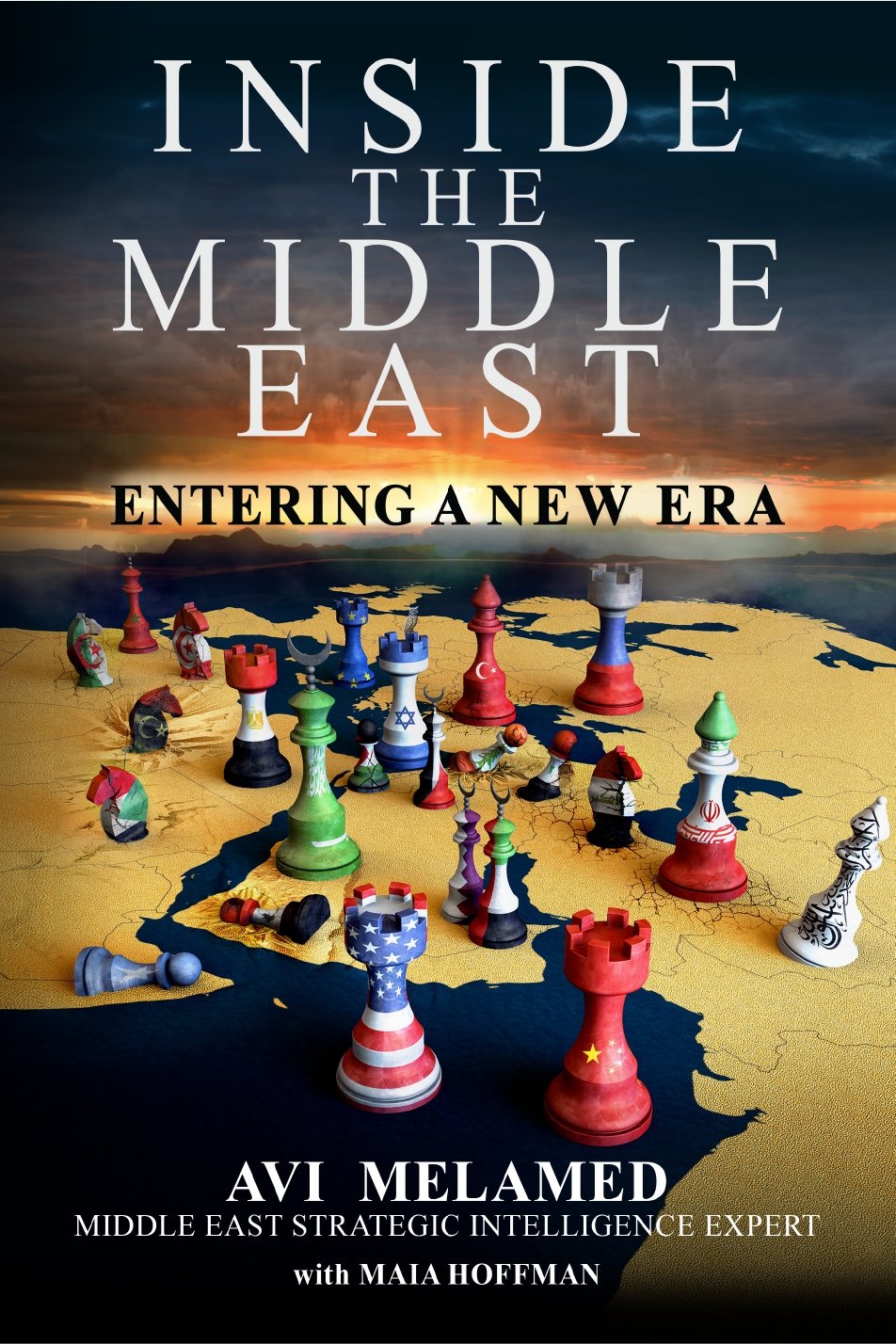
Avi Melamed is a former Israeli intelligence official who went on to serve as deputy and then as senior Arab affairs adviser to Jerusalem Mayors Teddy Kollek and Ehud Olmert, operating as a negotiator during the first and second intifadas. He is the author of “Inside The Middle East: Entering A New Era,” and his latest docuseries, “The Seam Line,” available on the Izzy streaming platform, focuses on Jerusalem’s flashpoints and his work during the intifadas.
The Israel-Iran War will have major consequences. What can we expect? | Avi Melamed special to the USA TODAY Network | This article has already published in more that 227 other media and newspapers.
If you want to have a better understanding of the news and what really drives the unfolding events… Read the latest book of Avi Melamed,
INSIDE THE MIDDLE EAST | ENTERING A NEW ERA, available now >>>
Follow me on Twitter @AviMelamed; Facebook @InsideTheMiddleEast; for more Videos on YouTube https://www.youtube.com/c/AviMelamed
I can always be reached at Av*@********ed.com