































































|
Getting your Trinity Audio player ready...
|
Israel-Syria, Normalization or Tactical Pragmatism | An article by Avi Melamed.
Israel–Syria Normalization in the Era of President Ahmad al-Shara (Abu Muhammad al-Joulani)
3-minute read
Introduction
The prospect of normalization between Israel and Syria has long been fraught with structural, ideological, and geopolitical obstacles. As of 2025, even with the dramatic ascent of Ahmad al-Shara (better known as Abu Muhammad al-Joulani, former leader of Hay’at Tahrir al-Sham) to the Syrian presidency, these challenges remain deeply entrenched. This article reviews the principal barriers to normalization, considers the regional and ideological context, and addresses whether a pragmatic shift under al-Shara’s leadership could reshape the future.
1. Structural and Ideological Barriers
Arab commentators and regional analysts consistently agree:
The obstacles to Israel–Syria normalization are not simply products of Assad’s rule but are deeply structural and ideological. Core unresolved issues—the Palestinian question and the status of the Golan Heights—constitute “red lines” for both Syrian and broader Arab public opinion.
Arab Center for Research and Policy Studies (ACRPS) Survey, 2025:
84% of Arabs reject normalization with Israel.
76% regard the Palestinian issue as a pan-Arab cause.
We need to be carefull with these results, this survey is done by a Qatari base institute and the CEO of that institute is M Azmi Beshaara, former israeli arab parlament member who fled Israel after espionnage accusations. He is know as an anti-israeli commentator.
Normalization is seen as the exception, not the rule:
Even after Assad, and despite changes in leadership, normalization with Israel is widely perceived as unnatural—only possible through rare, externally imposed circumstances.
2. Regional and Political Dynamics
No “Magic Solution” After Assad:
Commentators like Ahmad Qasem Hussein and Bashir al-Bakr stress that the fall of Assad (or any regime change) does not “solve” the obstacles to normalization. As long as Israel does not address Palestinian statehood and withdraw from the Golan, any Syrian leader would face severe opposition—both elite and popular—if normalization was pursued.
Bashir al-Bakr: “The Abraham Accords brought no Palestinian progress and harsher Israeli policies… for Syria, the most that can be discussed is returning to the 1974 disengagement line; full normalization is unrealistic without Israeli concessions.”
Normalization as Treason:
Among Arab intellectuals and political actors, normalization—absent significant Israeli concessions—is seen as surrender or betrayal, irrespective of who rules Syria.
3. The Influence of President Ahmad al-Shara’s Ideology
Background of Ahmad al-Shara (Abu Muhammad al-Joulani):
Previously the leader of Hay’at Tahrir al-Sham (HTS), al-Shara’s rise to power is rooted in a Salafi-jihadist worldview. He has a history of vehement opposition to Israel, branding it an illegitimate and occupying state, and rejecting any peace or normalization efforts.
Key Elements of His Ideology:
- Salafi-jihadism, emphasizing armed resistance to secular regimes and foreign influence.
Strong anti-Israel rhetoric, using the Palestinian cause as a rallying cry.
Past identification with global jihadist networks (al-Qaeda, Jabhat al-Nusra), before shifting focus to local Syrian issues.
Yet, signs of pragmatism have emerged:
Al-Shara’s recent behavior, particularly since HTS’s pivot toward local governance and attempts to shed its “terrorist” label, suggest a willingness to adapt—prioritizing the survival of his regime and local consolidation over confrontational global jihad.
He has focused on internal stability, humanitarian access, and engagement with international organizations, signaling some practical flexibility.
4. Could Pragmatism Outweigh Ideology?
Despite his Salafi-jihadist roots, several arguments support the possibility of a more pragmatic approach by al-Shara regarding Israel:
Survival and Consolidation:
Al-Shara’s primary goal may now be the maintenance of his rule and the security of Syrian territory under his control. Avoiding direct conflict with Israel could serve these interests.
Desire for Legitimacy:
By presenting himself as a pragmatic local ruler rather than a global jihadist, al-Shara may hope to gain a degree of international acceptance, especially by not provoking Israel.
Prioritizing Local Threats:
The Assad regime, Iranian militias, and rival Islamist factions remain his immediate concerns—potentially leading him to adopt a quiet, non-confrontational posture vis-à-vis Israel.
Historical Precedent:
There is precedent for de facto non-aggression or quiet understandings between non-state actors and Israel in the region, especially when both parties’ strategic interests align.
However:
Any form of overt or public normalization is still extraordinarily unlikely.
Even tactical pragmatism would likely manifest as “non-engagement” or a pragmatic status quo, rather than formal agreements.
5. Public and Elite Opposition Remains Strong
No matter who leads Syria, deep-seated opposition among both the public and political elites to normalization with Israel is expected to persist. This is fueled by:
The unresolved Palestinian issue.
Israel’s continued hold on the Golan Heights.
The “resistance” narrative still dominant in Arab political and intellectual discourse.
Normalization would thus carry major political risk, possibly destabilizing any government—even one led by a figure as radical-turned-pragmatic as Ahmad al-Shara.
Conclusion
The prospects for Israel–Syria normalization under President Ahmad al-Shara remain extremely slim.
Obstacles are not merely personal or tied to a specific regime but are deeply rooted in Arab public opinion, regional politics, and the ideological context—now reinforced by al-Shara’s own history and the enduring power of the “resistance” narrative. While tactical pragmatism and quiet understandings may emerge in specific contexts, meaningful normalization will remain out of reach unless core disputes—Palestine and the Golan Heights—are addressed.
This article is also available as a Podcast: the AiTME Podcast. This Podcast was written and created by Avi Melamed, Middle East Intelligence Analyst and Founder of Inside The Middle East [ITME], an institute dedicated to apolitical, non-partisan education about the Middle East.
“This podcast is made possible by supporters like you. ITME is an independent, nonprofit institute committed to apolitical, intelligence-based Middle East education.
To support our work, visit >> https://causematch.com/itme-on-the-road-360
Israel-Syria, Normalization or Tactical Pragmatism | An article by Avi Melamed.
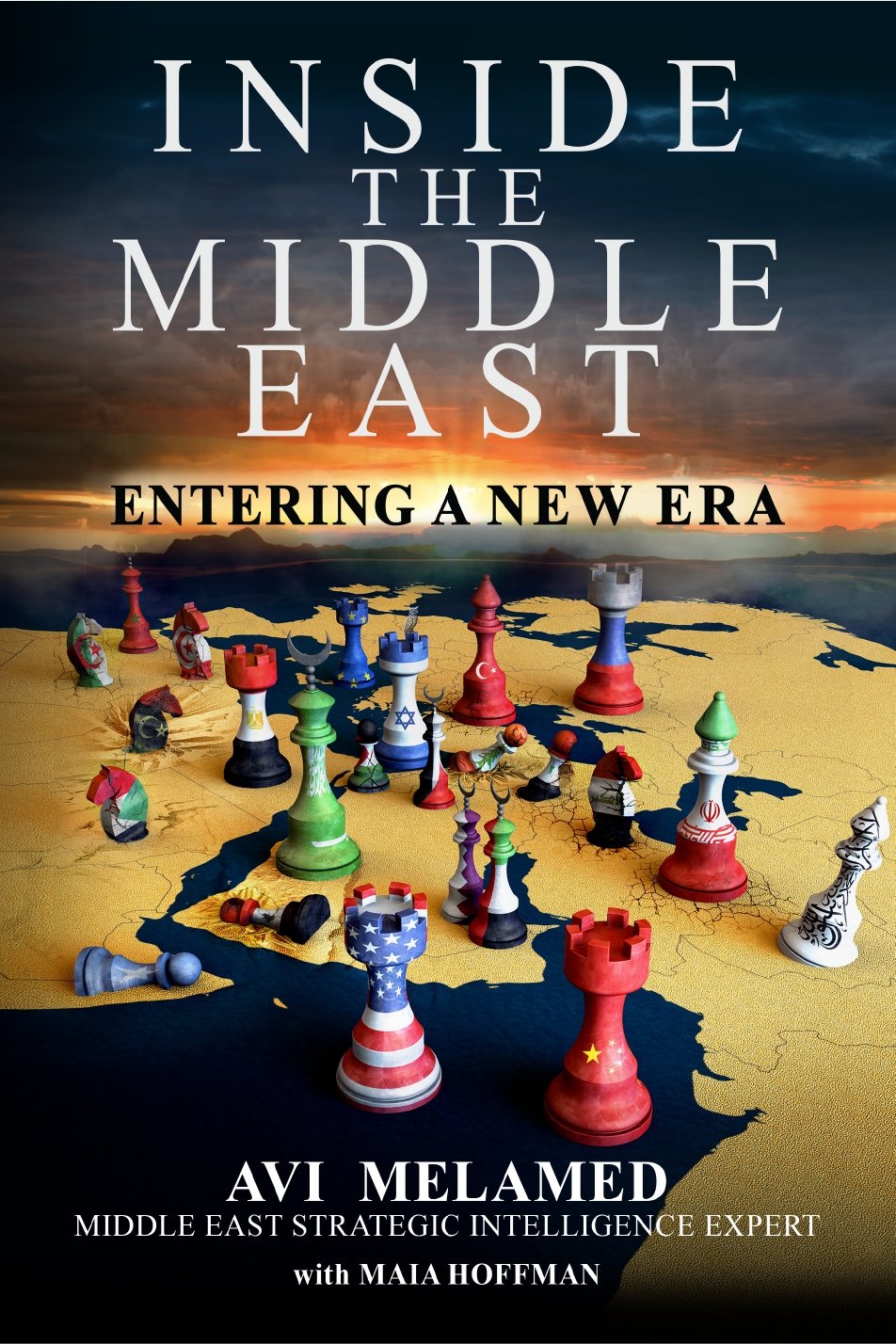
If you want to have a better understanding of the news and what really drives the unfolding events… Read the latest book of Avi Melamed,
INSIDE THE MIDDLE EAST | ENTERING A NEW ERA, available now >>>
Follow me on Twitter @AviMelamed; Facebook @InsideTheMiddleEast; for more Videos on YouTube https://www.youtube.com/c/AviMelamed
I can always be reached at Av*@********ed.com