





























































|
Getting your Trinity Audio player ready...
|
Israel More Doubtful About Saudi Accord After Strategic Shifts | BLOOMBERG | Avi Melamed’s insights quoted in the article by Ethan Bronner for BLOOMBERG.
Israel is increasingly doubtful it can normalize relations with Saudi Arabia any time soon, dismayed by what it sees as hostile moves by the kingdom to expand its defense ties and confront the United Arab Emirates, an Israeli ally.
Israeli officials are weighing whether the shifts are temporary or Saudi Arabia is permanently redrawing the balance of power in the region in a way that would make normalization impossible. While little has been said publicly inside Israel, a confidant of Prime Minister Benjamin Netanyahu and an Israeli diplomat both said the concern is real. Both asked not to be identified discussing what is a sensitive subject.
The odds of normalization, seen by some as tantalizingly close before the war in Gaza, were in any case lengthening after both sides set seemingly incompatible red lines. Saudi Arabia has said it can’t normalize without the establishment of an independent Palestinian state. The current Israeli administration has said it has no intention of ever letting that happen.
From Israel’s perspective, “MBS has withdrawn completely from the idea of normalization,” said Oded Ailam, a former Israeli intelligence officer and researcher at the Jerusalem Center for Security and Foreign Affairs, referring to Crown Prince Mohammed bin Salman, the kingdom’s de facto ruler. “The Saudis are in a delicate phase and putting their finger to the wind. It’s a huge setback for Israel.”
Saudi Arabia signed a defense alliance with nuclear-armed Pakistan in September, and Turkey confirmed last month that it was in talks to join the regional pact. Simultaneously, tensions between Saudi Arabia and the UAE erupted into the open in December when the kingdom gave Emirati forces 24 hours to withdraw from Yemen. Saudi media has since escalated the rhetoric against its neighbor, which normalized relations with Israel in 2020.
While Saudi commentators agree the kingdom’s stance has shifted, they disagree with the Israeli interpretation of the causes. They point instead to a clash of Saudi and Emirati foreign policy objectives in countries such as Somalia, Yemen and Sudan, and what they perceive to be Israel’s support for the UAE.
“Riyadh is trying to stabilize those fragile states,” said Ali Shihabi, a Saudi author and commentator. “That’s the core of the tension.”
Saudi Arabia “remains open to normalization with Israel provided a path to Palestinian statehood is assured,” the government said in a statement. “Rejecting the two-state solution undermines this historic opportunity and perpetuates the conditions for continued violence and suffering.”
A spokesman for the UAE government said the nation’s policy is guided by respect for the sovereignty of all countries and peaceful coexistence. Israeli officials didn’t respond to requests for comment.
At a press conference last week where he was asked about Saudi Arabia, Netanyahu referred obliquely to the kingdom’s growing ties with countries Israel views as hostile.
“We expect from anybody who wants normalization or peace with us that they not participate in efforts steered by forces or ideologies that want the opposite of peace,” he said. Such efforts “reject the legitimacy of the State of Israel, and nurture all kinds of forces that attack the State of Israel.”
The Gaza war, triggered by Hamas’s assault on Israel in October 2023, radically altered the regional narrative on normalization with the Jewish state. More than two years of fighting has left the enclave mostly in ruins, displaced most of its population and killed tens of thousands. It led most Arab states and Turkey to distance themselves from Israel, outraged at the suffering of Palestinians and concerned about the Israeli military’s attacks on Iran, Lebanon, Syria and Qatar.
That last attack in September, when Israel targeted Hamas officials by bombing Doha, a key US ally, particularly incensed Arab governments.
Israel viewed the regional scramble as tilted in its favor, with Iran weakened and its proxy militias and allies in Lebanon, Gaza, Syria and Yemen defeated or deterred. It expected Riyadh to restart talks on normalization, joining the UAE and Bahrain as Abraham Accords signatories. The accords were signed in 2020 and viewed by Trump as one of his main foreign-policy successes during his first term. He regularly talks about expanding them and including Saudi Arabia.
Andreas Krieg, a senior lecturer at the School of Security Studies at King’s College London, said Saudi Arabia is shifting for many reasons, reacting to complex forces around it.
“There’s also frustration that Washington will not deliver a treaty-grade defense guarantee, a more explicit hedging strategy via Turkey and Pakistan, a momentary reduction in a perceived Iran risk, and tighter fiscal space at home,” he said. “None of that means Saudi has decided Israel is an enemy; it means normalization is easier to postpone and harder to sell.”
Some Israeli analysts say the Saudi shift is an unintended consequence of last June’s 12-day war with Iran in which Israel and the US degraded Tehran’s nuclear facilities. Concern that Iran would acquire nuclear weapons was one of the reasons Saudi Arabia was drawn to normalization with Israel and now that’s less of an issue.
Adding to Israel’s concerns are what some see as an increasingly anti-Israeli tone from Saudi Arabia. The Anti-Defamation League in New York last month said it was “alarmed by the increasing frequency and volume of prominent Saudi voices — analysts, journalists, and preachers — using openly antisemitic dog whistles and aggressively pushing anti-Abraham Accords rhetoric.”
Others remain hopeful that Saudi Arabia will eventually make a deal with Israel.
“Normalization with Israel isn’t out of the question, just on the shelf for now,” said Avi Melamed, a former Israeli intelligence official who founded Inside the Middle East Institute.
Israeli Energy Minister Eli Cohen said in an interview last week that much depends on Washington.
“Ultimately, the Saudis will need a US umbrella in the region,” he said. “I believe that if President Trump is determined to expand the Abraham Accords, he will achieve it.”
Israel More Doubtful About Saudi Accord After Strategic Shifts | BLOOMBERG | Avi Melamed’s insights quoted in the article by Ethan Bronner for BLOOMBERG.
If you want to have a better understanding of the news and what really drives the unfolding events…
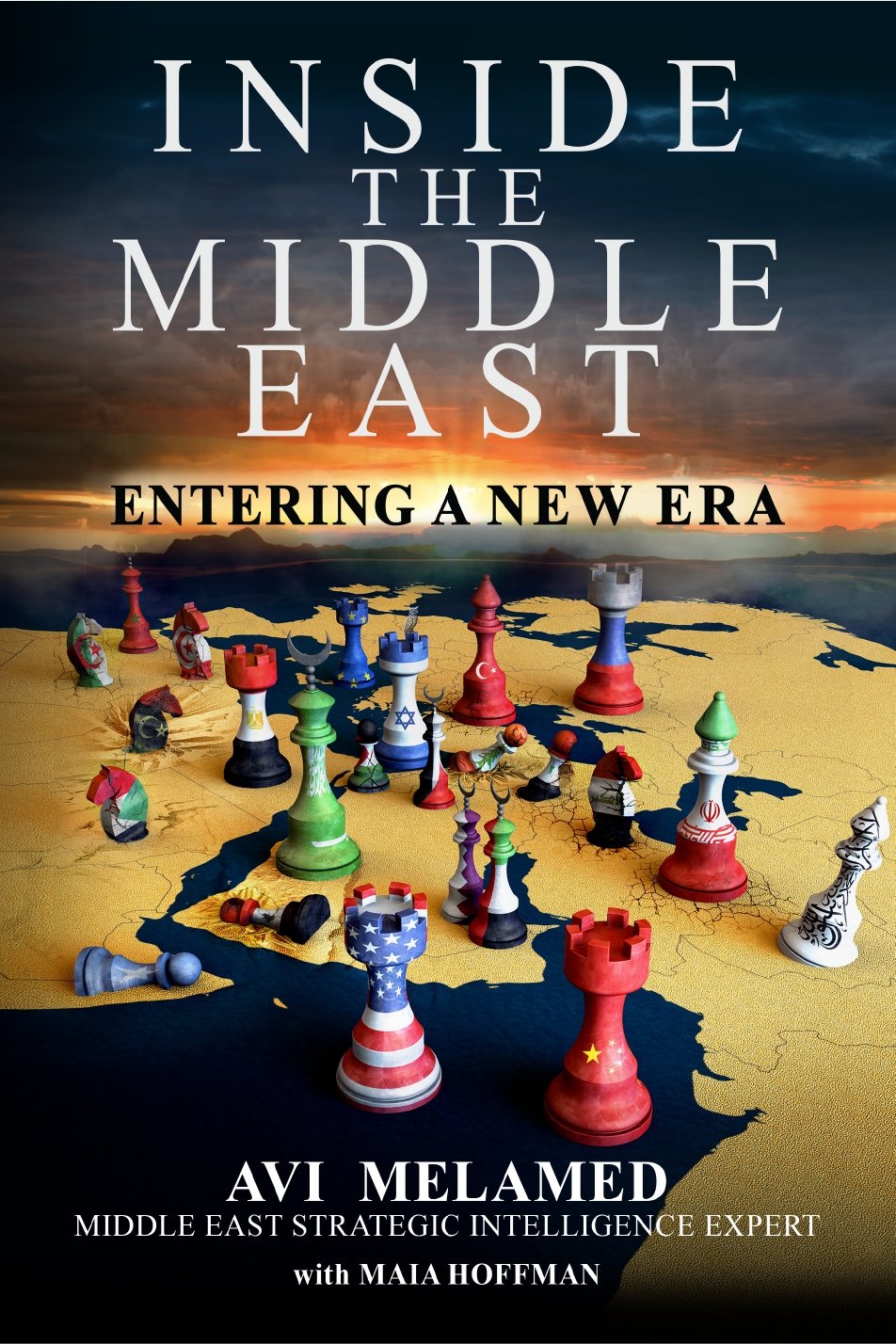
Read the latest book of Avi Melamed,
INSIDE THE MIDDLE EAST | ENTERING A NEW ERA, available now >>>
Follow me on Twitter @AviMelamed; Facebook @InsideTheMiddleEast; for more Videos on YouTube https://www.youtube.com/c/AviMelamed
I can always be reached at Av*@********ed.com