




























































|
Getting your Trinity Audio player ready...
|
The end of Iran’s hegemonic vision will ripple across the Middle East in 2025 | Avi Melamed special to the USA TODAY Network | This article has already published in more that 227 other media and newspapers.
3-minute read
In 2025, the Middle East will be profoundly transformed by the collapse of Iran’s 45-year quest to dominate the region. For decades, Iran’s “Axis of Resistance” — its network of proxy militias and allied governments — shaped the region’s geopolitics, fueling instability and conflict. With Tehran’s influence unraveling, the region faces a new chapter marked by turbulence but also the potential for a more hopeful and constructive future.
Iran’s regional ambitions, realized through proxies like Hezbollah in Lebanon, the Assad regime in Syria, the Houthis in Yemen and various militias in Iraq, have long been a source of regional instability. Tehran’s support for groups like Hamas and Islamic Jihad further escalated the Israeli-Palestinian conflict, while Iran’s growing maritime influence, including the Houthis in Yemen, threatened global security. However, with the collapse of the Islamic Republic’s hegemonic project, the Middle East is poised for significant changes.
What will the immediate fallout be?
The immediate fallout will be most visible in Lebanon, Syria and Iraq, where Iran’s influence has been most entrenched.
Lebanon: In Lebanon, Hezbollah’s defeat by Israel in 2024 has severely weakened Iran’s grip on the country. Hezbollah, once a dominant force, has suffered significant military losses, and its political influence has sharply declined allowing Lebanon to reclaim its sovereignty. This shift enables a resurgence of national identity, which had been undermined by decades of Iranian intervention.
Syria: In Syria, the fall of Assad’s regime marks the end of Iran’s influence in the country and the loss of a key pillar of Tehran’s strategy to control a land corridor stretching from Iran to the Mediterranean. Syria will now need to rebuild its fractured political system and while the process will be difficult, it brings the opportunity for change.
Iraq: Iraq’s situation is more complex. The weakening of Iran’s influence in Syria and Lebanon offers a path toward greater Iraqi sovereignty, but deep divisions remain. Iraq has long been an economic lifeline for Iran, and many political factions in Iraq, particularly within the Shi’ite community, remain loyal to Tehran. A rivalry between pro-Iran Shi’ite groups and nationalist Shi’ite factions pushing for greater independence from Tehran could fuel existing tensions between the camps, potentially reigniting violence. The challenge in Iraq will be navigating these competing interests while avoiding a return to civil conflict.
Iran: The ripple effects of the collapse of Tehran’s hegemonic plan are also being felt within Iran itself. Years of economic mismanagement, political repression, and the cost of supporting proxy groups abroad have led to growing disillusionment. Public anger over the regime’s wasted billions on foreign military campaigns, combined with rising economic hardship and political repression, has fueled unrest. This growing dissatisfaction, combined with the threat of new U.S. sanctions, places the regime in its most vulnerable position since the Iran-Iraq War of the 1980s.
Israel and Palestine: The Israeli-Palestinian conflict, long exacerbated by Iranian support for Hamas and Islamic Jihad, will undergo its own transformation. While Hamas’s military capabilities and governance of Gaza were decimated and dismantled in 2024, it will remain a relevant factor within Palestinian society and politics. In 2025, Palestinians will likely face their own internal reckoning, and it’s likely the U.S. and Arab states like Saudi Arabia, the UAE, Egypt, and Qatar, will play a significant role in helping to shape a new path forward for Gaza. This regional engagement, which was largely absent during President-elect Donald Trump’s first term, marks a shift in Arab states’ willingness to confront the realities of the Israeli-Palestinian conflict and find a more sustainable solution.
How will Donald Trump address the situation in the Middle East?
The shifting regional dynamics present Trump with an opportunity to pursue two key objectives in 2025: using stricter sanctions, instead of miliary strikes to curb Iran’s nuclear program and reviving his “Peace to Prosperity” initiative with a more balanced approach toward the Palestinians, leveraging the weakening of Iran’s influence and increased Arab involvement to build broader support. The growing cooperation between Arab states and the U.S. could facilitate a potential breakthrough in Israeli-Palestinian relations, with the strong possibility of a normalization agreement between Israel and Saudi Arabia.
For Israel, the end of Iran’s hegemonic project represents a strategic victory, but the country faces its own domestic challenges, particularly with the ongoing trial of Prime Minister Benjamin Netanyahu. A 2025 conviction for Netanyahu could trigger a new round of elections and a shift in Israeli politics, bringing a pragmatic government to power, one centered on pragmatic Zionist parties instead of the current right wing ultra-nationalist government.
At the same time, the collapse of Iran’s influence is creating a vacuum for Turkey to assert its own regional ambitions, possibly fueling tensions between Turkey and regional players. President Erdoğan’s increasing assertiveness, especially in northern Syria, already set Turkey and Iran on conflicting path. In addition, Turkey’s momentum could resume tensions with key Arab states like Saudi Arabia, Egypt, and the UAE, all are resentful of his desire to lead the Sunni camp. Erdogan likely exploits Israel’s rule on the Golan Heights to harvest political points. One thus should expect increasing tension between Turkey and Israel. Moreover, his military operations against Kurdish forces in Syria are straining relations with Washington. Turkey’s growing ambitions threaten to revive old rivalries and introduce new sources of instability.
In 2025, the Middle East will experience the ripple effects following the collapse of Iran’s hegemony vision, signaling the start of the Middle East’s next chapter.
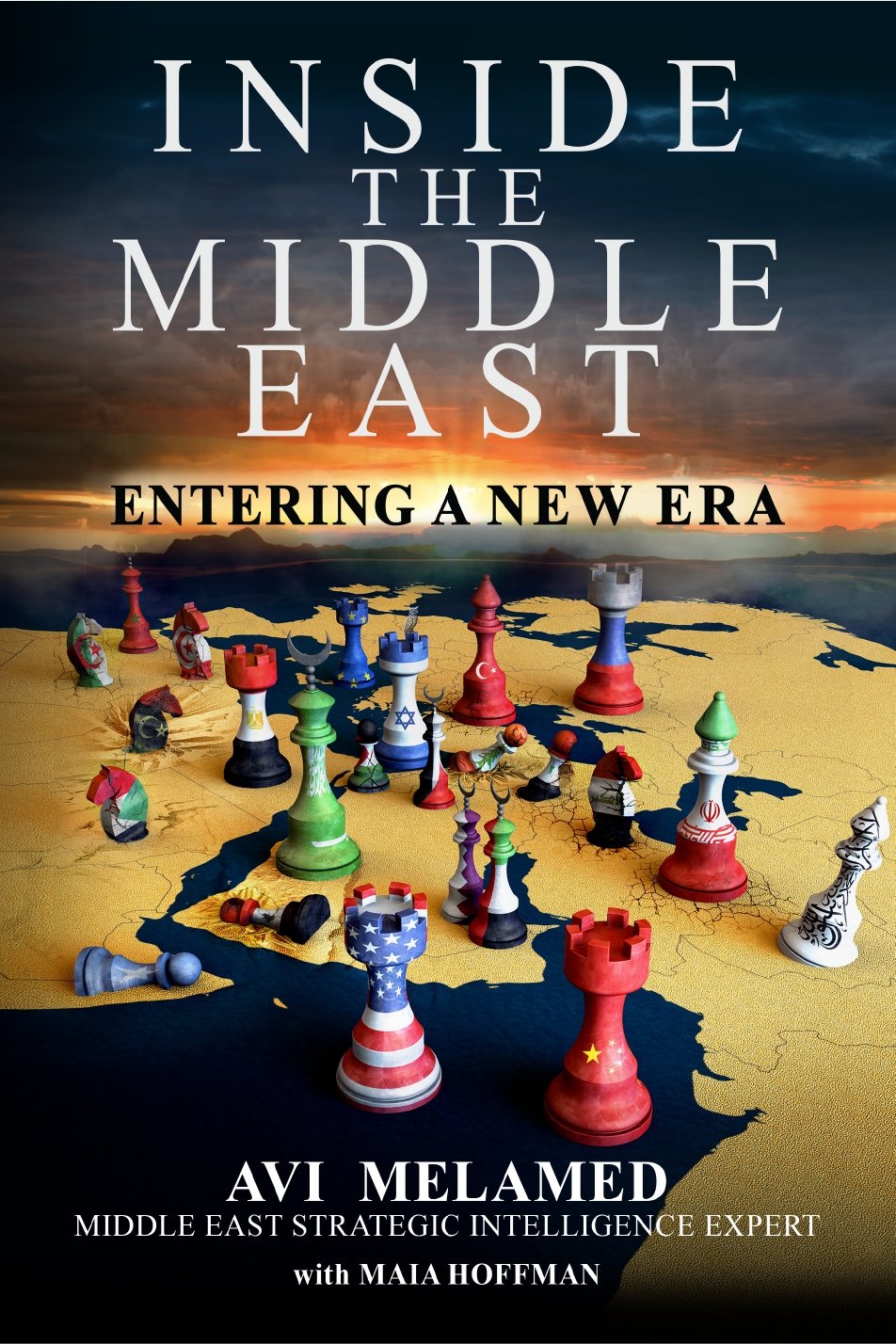
Avi Melamed is a former Israeli intelligence official who went on to serve as deputy and then as senior Arab affairs adviser to Jerusalem Mayors Teddy Kollek and Ehud Olmert, operating as a negotiator during the first and second intifadas. He is the author of “Inside The Middle East: Entering A New Era,” and his latest docuseries, “The Seam Line,” available on the Izzy streaming platform, focuses on Jerusalem’s flashpoints and his work during the intifadas.
Exempting Palestinians from accountability perpetuates a hopeless future | Avi Melamed special to the USA TODAY Network | This article has already published in more that 227 other media and newspapers.
If you want to have a better understanding of the news and what really drives the unfolding events… Read the latest book of Avi Melamed,
INSIDE THE MIDDLE EAST | ENTERING A NEW ERA, available now >>>
Follow me on Twitter @AviMelamed; Facebook @InsideTheMiddleEast; for more Videos on YouTube https://www.youtube.com/c/AviMelamed
I can always be reached at Av*@********ed.com