



























































|
Getting your Trinity Audio player ready...
|
Will Syria Fight Hezbollah? | #AiTME Ep34 | An article by Avi Melamed | Podcast version powered by Ai.
Recent remarks by U.S. President Donald Trump suggesting that Syria could be entrusted with dealing with Hezbollah have generated considerable discussion across the Middle East. While the idea of Syrian military intervention against Hezbollah may seem far-fetched, the reactions it triggered reveal important shifts in the regional landscape and shed light on the evolving balance of power in Lebanon.
Syrian commentator Dr. Basel al-Hajj Jassem argues that, at first glance, there appears to be a temporary convergence of interests among Syria, Israel, and the United States regarding the containment of Hezbollah. Washington views Hezbollah as a key Iranian instrument for sustaining regional instability. For Syria, a confrontation with Hezbollah could theoretically strengthen ties with the United States and potentially restore some of the influence Damascus once enjoyed in Lebanon.
Yet the obstacles to such a scenario are overwhelming.
Syria remains devastated by years of civil war and is focused on reconstruction. Its military is still undergoing a lengthy rebuilding process. Any attempt to confront Hezbollah would likely require the mobilization of jihadist elements, a dangerous gamble that could ultimately threaten Syria itself. Moreover, a war between Sunni Islamist forces and Hezbollah would almost certainly be perceived in Lebanon not as an operation against Hezbollah, but as an assault on Lebanon itself.
Nor would Iran remain on the sidelines. Tehran would likely intervene, directly or indirectly, not only in Lebanon but throughout the wider region. Even Israel, despite its desire to see Hezbollah weakened, would be unlikely to welcome the emergence of a newly empowered Syria reestablishing itself as a dominant force in Lebanon.
For these reasons, the prospect of direct Syrian military intervention appears highly improbable.
This assessment is echoed by prominent Arab commentators. Saudi columnist Khaled al-Malik described such a move as strategically foolish, while Egyptian analyst Sameh Shaker argued that both Turkey and Qatar would oppose Syrian military involvement. According to Shaker, Syrian President Ahmad al-Sharaa’s primary objective remains the stabilization of Syria and the consolidation of his rule.
The controversy generated by Trump’s remarks prompted al-Sharaa himself to address the issue directly in a recent interview. His comments deserve close attention.
On the surface, al-Sharaa emphasized dialogue, political solutions, and Lebanon’s stability. He stressed that Syria seeks the well-being of all Lebanese communities and does not view Hezbollah as synonymous with Lebanon’s Shiite population. He acknowledged the hardships facing Lebanese Shiites and expressed support for a political consensus that could bring an end to Lebanon’s prolonged crisis.
At the same time, he made clear that Syria has “a serious problem with Hezbollah.”
For Western audiences, these remarks may appear contradictory. For Middle Eastern audiences, however, they contain several important implicit messages.
This is where Avi Melamed’s analysis offers a valuable perspective. As he often notes, much of Middle Eastern political discourse operates on multiple levels, with critical messages conveyed indirectly through nuance, symbolism, and carefully chosen language. These layers of meaning are frequently overlooked by Western audiences accustomed to more direct forms of political communication.
According to Melamed, beneath al-Sharaa’s public call for dialogue lies a clear warning to Hezbollah. The Syrian leader is signaling that Hezbollah’s strategic environment has changed dramatically. Lebanon’s current leadership is no longer the political ally Hezbollah once relied upon. To Hezbollah’s east now stands a Syrian regime that has not forgotten Hezbollah’s role in Syria’s destruction. Meanwhile, growing numbers of Lebanese Shiites are openly criticizing Hezbollah for the hardships facing their community.
Melamed also points to another important subtext. When al-Sharaa emphasizes that Syria possesses both the capability and determination to act, he is not necessarily threatening war. Rather, he is reminding Hezbollah that Syria can impose meaningful pressure without crossing the threshold into direct military confrontation. Tightening control of the Syrian-Lebanese border and disrupting weapons smuggling routes could significantly constrain Hezbollah’s operational freedom.
Finally, Melamed assesses that al-Sharaa’s remarks were almost certainly coordinated with key regional actors, particularly Saudi Arabia and Turkey.
The bottom line is that Syria is unlikely to launch a military campaign against Hezbollah. Yet Hezbollah and Iran are undoubtedly hearing the messages embedded in al-Sharaa’s words. Al Shara’s messages communicate a broader regional reality: the era of uncontested Iranian dominance in Lebanon is increasingly being challenged, and regional powers are signaling that the previous status quo can no longer be taken for granted.
This article is also available as a Podcast: the AiTME Podcast. This Podcast was written and created by Avi Melamed, Middle East Intelligence Analyst and Founder of Inside The Middle East [ITME], an institute dedicated to apolitical, non-partisan education about the Middle East.
“This podcast is made possible by supporters like you. ITME is an independent, nonprofit institute committed to apolitical, intelligence-based Middle East education.
To support our work, visit >> https://www.paypal.com/donate/
Will Syria Fight Hezbollah? | #AiTME Ep34 | An article by Avi Melamed | Podcast version powered by Ai.
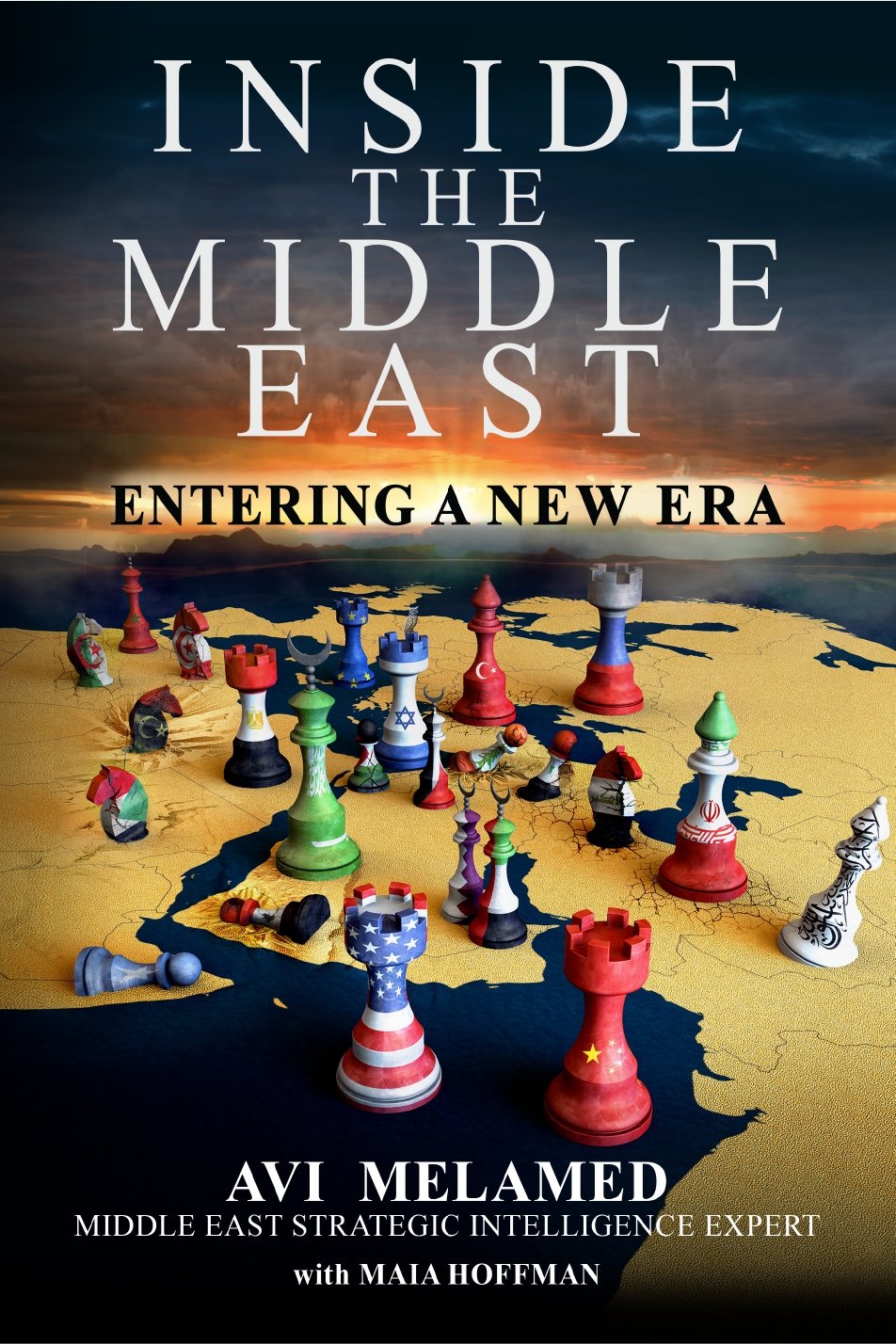
If you want to have a better understanding of the news and what really drives the unfolding events… Read the latest book of Avi Melamed, INSIDE THE MIDDLE EAST | ENTERING A NEW ERA, available now >>>
Follow me on Twitter @AviMelamed; Facebook @InsideTheMiddleEast; for more Videos on YouTube https://www.youtube.com/c/AviMelamed
I can always be reached at Av*@********ed.com