
































|
Getting your Trinity Audio player ready...
|
Beyond Translation: Understanding the Hidden Language of Arab Politics | AiTME #12 | An article by Avi Melamed | Podcast version powered by Ai.
Arabic is a remarkably rich and multi-layered language. Combined with cultural codes that dictate politeness rooted in caution, suspicion, and restraint, it requires the reader to identify and decipher implicit messages. At times, those messages are explicit. In many cases, however, they are deliberately implicit.
The following article titled ‘The Blood Maps’ illustrates this dynamic well.
The author points to the weakness of Arab states—an observation that is fundamentally accurate. However, the attentive reader will notice that the author does not clearly spell out the reasons behind this reality. The explanation does exist in the article, but on a submerged layer, embedded in two key sentences. What are those sentences, and what explanation do they imply?
One sentence reads “The reality is that the creation of a border-crossing groups and organizations at the heart of the Arab region has played a prominent role in the rapid political decline of the region.”
The reader may naturally wonder what exactly is meant.
The answer is that the author is alluding to two central phenomena that have shaped the weakness of Arab states over recent decades. The first is the rise of radical ideologies—originating in both Sunni and Shiite Islam—that seek to dismantle the nation-state framework. These ideologies constitute the ideological and operational breeding ground for militant Islamist organizations that function as semi-state actors.
On the Sunni side, these include organizations such as al-Qaeda, Hamas, the Islamic State (ISIS), Palestinian Islamic Jihad, and others. On the Shiite side, they include Hezbollah, Iraqi Shiite militias, and similar actors. These organizations play a decisive role in deepening the fragility of Arab states.
The second key sentence in the article reads ” Here is a polished, nuanced English translation, preserving the rhetorical and analytical tone of the Arabic:
“Let’s look at Lebanon. That once vibrant state, often described as the Arabs’ creative lung, was effectively turned into a stage for civil and sectarian war.”
The second key sentence raises another implicit question: who exactly turned Lebanon into a stage for inter-sectarian civil conflict? The answer is multifaceted. One factor is the presence of semi-state organizations (in Lebanon’s case, Hezbollah). Another is the rivalry and hostility characterizing relations among different sects operating within the framework of the Arab nation-state.
The Western audience, most of whom do not speak Arabic—must ask itself to what extent the intermediaries supplying them with knowledge about the Middle East, such as media and academia, are truly capable of reflecting the complexity of the discourse. This is a rhetorical question, because the answer is straightforward: they are not.
Why? Because most Western knowledge-brokers about the Middle East do not speak Arabic.
Food for thought.
This article is also available as a Podcast: the AiTME Podcast. This Podcast was written and created by Avi Melamed, Middle East Intelligence Analyst and Founder of Inside The Middle East [ITME], an institute dedicated to apolitical, non-partisan education about the Middle East.
“This podcast is made possible by supporters like you. ITME is an independent, nonprofit institute committed to apolitical, intelligence-based Middle East education.
To support our work, visit >> https://www.paypal.com/donate/
Beyond Translation: Understanding the Hidden Language of Arab Politics | AiTME #12 | An article by Avi Melamed | Podcast version powered by Ai.
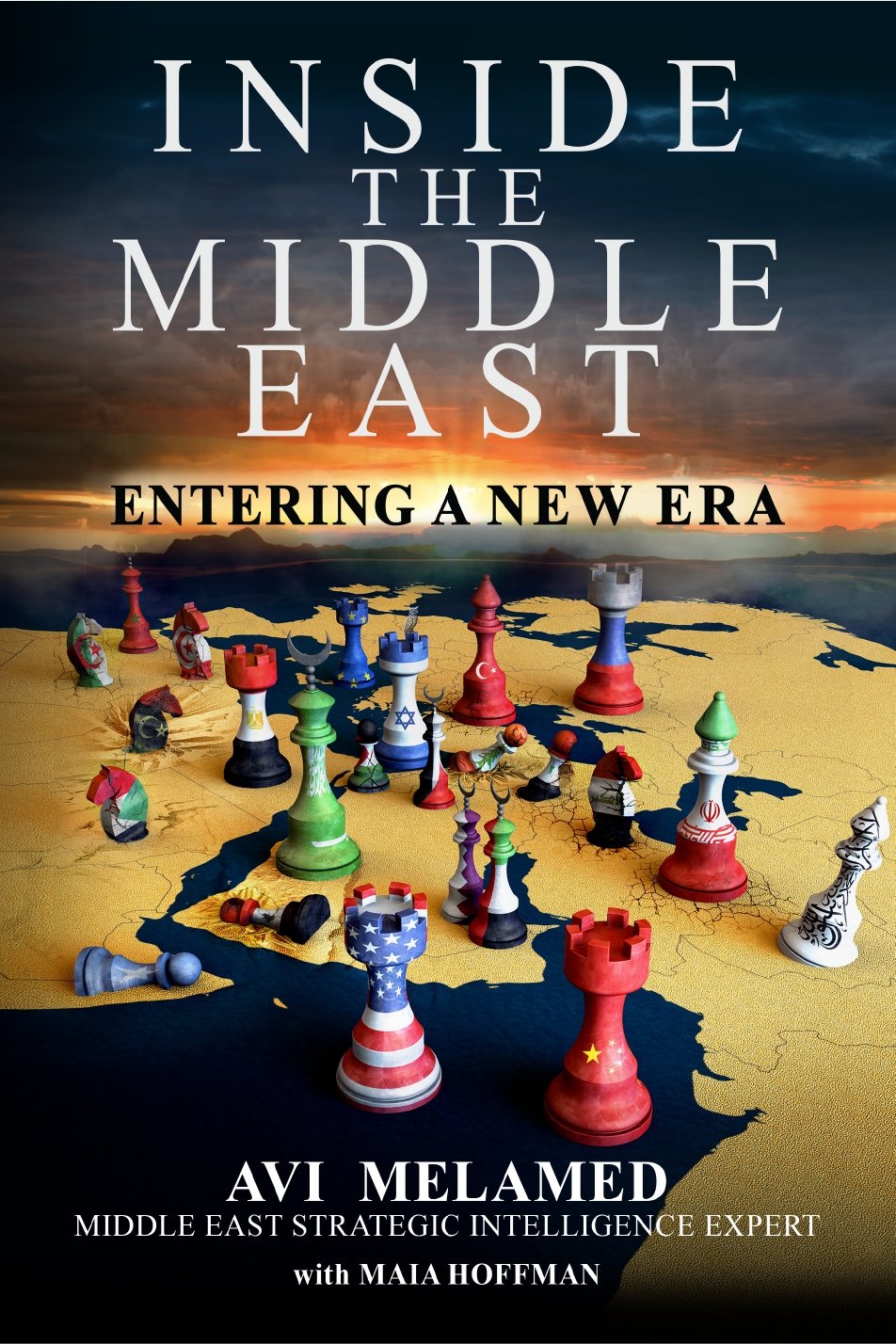
If you want to have a better understanding of the news and what really drives the unfolding events… Read the latest book of Avi Melamed, INSIDE THE MIDDLE EAST | ENTERING A NEW ERA, available now >>>
Follow me on Twitter @AviMelamed; Facebook @InsideTheMiddleEast; for more Videos on YouTube https://www.youtube.com/c/AviMelamed
I can always be reached at Av*@********ed.com