






























































|
Getting your Trinity Audio player ready...
|
Gaza Begins To Reopen to the World, Testing Israel’s Postwar Strategy | THE MEDIA LINE | Find Avi Melamed’s insights quoted by Keren Setton in this article for the THE MEDIA LINE.
“Rafah is important for all sides – for Hamas, for the mediators, for the US and for Israel, which wants to make sure that there is no way to use Rafah against Israeli interests,” Eldad Shavit, INSS researcher, tells The Media Line
The Rafah crossing, Gaza’s border with Egypt, will reopen on Sunday after being shut down by Israel for nearly two years.
Rafah is one of the sticking points in the ongoing conflict between Israel and Hamas and was often the focal point of the war that began in October 2023.
Israel is caught between international pressure to open the crossing and to gradually begin the process of Gaza’s rehabilitation after a lengthy and costly war, and its security concerns.
For Palestinians, Rafah is the only exit from Gaza not controlled by Israel. In the past, it supplied a rare conduit for medical treatment abroad, family reunifications, and relief from the territory’s isolation and dire conditions.
Last week, a statement released by the office of Israeli Prime Minister Benjamin Netanyahu said the opening of the crossing was part of the implementation of US President Donald Trump’s 20-point peace plan. “The crossing will be limited solely to people with a full Israeli oversight mechanism,” the statement read.
Quotes by unnamed officials in Israeli media gave different numbers of Palestinians that will be allowed through the crossing, both in and out of Gaza. The number of Palestinians ranged from 50 to 150.
Foreign journalists are still not allowed to enter the territory.
Data released by the Hamas-run Gaza Ministry of Health suggest at least 16,500 patients are in need of medical evacuation.
International humanitarian organizations believe the reopening of the crossing is critical not only for medical cases but also for restoring the limited civilian movement that existed prior to the war, after months of near-total isolation, even though access will remain highly restricted and subject to Israeli approval.
According to the Coordinator of Government Activities in the Territories, the European Union will also be part of the oversight mechanism. Only Gaza residents who left the territory during the war will be allowed to return, subject to advance Israeli approval.
The opening of the crossing, Gaza’s main opening to the world, comes days after the remains of the last Israeli hostage were recovered by the Israeli military, marking the end of the first phase of the Trump peace plan.
“Rafah is the only point in Gaza which allows for movement to another country,” Col. (res.) Eldad Shavit, a senior researcher at the Institute for National Security Studies and a former senior intelligence officer, told The Media Line. “Its high sensitivity is the reason why Israel is putting emphasis on the matter.”
“Rafah is important for all sides – for Hamas, for the mediators, for the US and for Israel, which wants to make sure that there is no way to use Rafah against Israeli interests,” Shavit added.
Rafah is the only point in Gaza which allows for movement to another country. Its high sensitivity is the reason why Israel is putting emphasis on the matter.
One of Israel’s objectives during the war was to establish control over a narrow strip of land called the Philadelphi Corridor, which is approximately 13 kilometers (8 miles) long and located along Gaza’s southern border with Egypt.
As part of the peace agreement between Israel and Egypt in 1979, the area was designated as a buffer zone that was monitored by Israeli forces.
Coined the “Philadelphi Corridor,” Israel maintained control of it until its disengagement from the Gaza Strip in 2005. Egypt then deployed troops on its side of the border, with the Palestinian Authority taking over control of the Gaza side. In 2007, the Hamas terrorist organization violently overthrew the PA, seizing control of Gaza and the Philadelphi Corridor.
Both Israel and Egypt imposed major restrictions on the Palestinians in Gaza, with Egypt restricting the flow of goods to and from the crossing, especially after Hamas took over in 2007.
Egypt reopened the crossing after the 2011 revolution, but closed it in 2013 when President Mohamed Morsi was ousted. Morsi was a leader of the Muslim Brotherhood, the Islamist movement from which Hamas stemmed.
Before the war, Rafah served as Hamas’ main armament lifeline, in addition to being where much of the humanitarian aid entered the Gaza Strip. According to the Israel Defense Forces (IDF) and the Israeli defense establishment, Rafah was the hub of Hamas’ intricate tunnel network that allowed its members to move freely throughout the Gaza Strip.
Last week, Israeli defense officials quoted in the media said Hamas was already making headway in its rehabilitation efforts, using the humanitarian aid to make money from goods being sold in local markets.
“Hamas is making efforts to rehabilitate,” said Shavit. “The question is how successful it will be, and it largely depends on how much the Americans will hold Hamas to its promise to disarm.”
Hamas is making efforts to rehabilitate. The question is how successful it will be, and it largely depends on how much the Americans will hold Hamas to its promise to disarm.
Under the terms of the ceasefire, the IDF will control the area between the Rafah crossing and the zone where most Palestinians live. During the second phase of the peace plan, Hamas is supposed to give up its weapons and control of Gaza, letting a government of technocrats rule the territory. The Israeli military is also supposed to withdraw from most of the Gaza Strip.
President Trump’s newly established Board of Peace and the proposed Gaza Stabilization Force are intended to oversee the implementation of the 20-point peace plan, aimed at sidelining Hamas and shaping Gaza’s postwar future.
According to American officials, the Board of Peace will coordinate diplomatic efforts, oversee security arrangements, and promote economic incentives intended to weaken Hamas’ grip on Gaza. The Gaza Stabilization Force is supposed to oversee disarmament and prevent the rehabilitation of the terrorist group. Together, both are intended to create the conditions for a transitional administration in Gaza, reduce Israel’s direct involvement, and open the door to reconstruction efforts.
Rafah is a major part of the puzzle.
Many Israelis are skeptical that Hamas will willingly disarm. With the Rafah crossing now open, Hamas may be able to speed up its efforts to regroup.
“Trump may have established the Board of Peace, but Israel needs to establish the Board of War,” Israeli Cabinet Minister Avi Dichter said in a radio interview on Sunday morning. “There are zero chances of Hamas disarming. No one seriously thinks an international force will do the job for Israel.”
Avi Melamed, founder of Inside the Middle East Institute and a former intelligence official, believes that two and a half years after the war between Israel and Hamas began, the terrorist organization is far from being sidelined.
There are zero chances of Hamas disarming. No one seriously thinks an international force will do the job for Israel
“What we are seeing is international involvement in Gaza,” Melamed told The Media Line. “Theoretically, the control of the Rafah crossing is no longer in the hands of Hamas, but on the ground, Hamas still has control of the territory.”
Throughout the war, Israeli forces uncovered and destroyed Hamas tunnel shafts and underground infrastructure in Rafah. It is unclear how much of the infrastructure remains and whether Hamas is already rebuilding it.
“The reality on the ground is stronger than any speech or declaration,” said Melamed. “Israel cannot be calm. Hamas hasn’t disappeared; it remains steadfast and is rebuilding, in addition to seeing Turkey and Qatar as major players in Gaza. Israel’s ability to control the area is getting smaller.”
Israel cannot be calm. Hamas hasn’t disappeared; it remains steadfast and is rebuilding, in addition to seeing Turkey and Qatar as major players in Gaza. Israel’s ability to control the area is getting smaller
Israel’s concern is compounded by the growing involvement of Turkey and Qatar, both of which seek to solidify their influence in Gaza through political mediation, financial support, and intense involvement in the reconstruction efforts of the territory.
Since Qatar has long served as a key financial backer of Hamas and of Gaza, Israeli officials say Qatari funds and diplomatic cover have helped sustain the group’s grip on the territory. Turkey, meanwhile, has increased its regional footprint through outspoken and often controversial political support for Hamas, while simultaneously engaging in Gaza-related initiatives. This has raised fears in Israel that external actors will assist in Hamas’ recovery while limiting Israel’s ability to shape postwar security arrangements.
With eyes on the delicate setup in Rafah that could quickly become a reality over which Israel has no control, the central question for the Jewish state remains whether Gaza’s future will be shaped by a weakened Hamas or by an international framework that, intentionally or not, allows the terrorist group to survive, regroup and continue exerting control both beneath and above the ground.
If you want to have a better understanding of the news and what really drives the unfolding events…
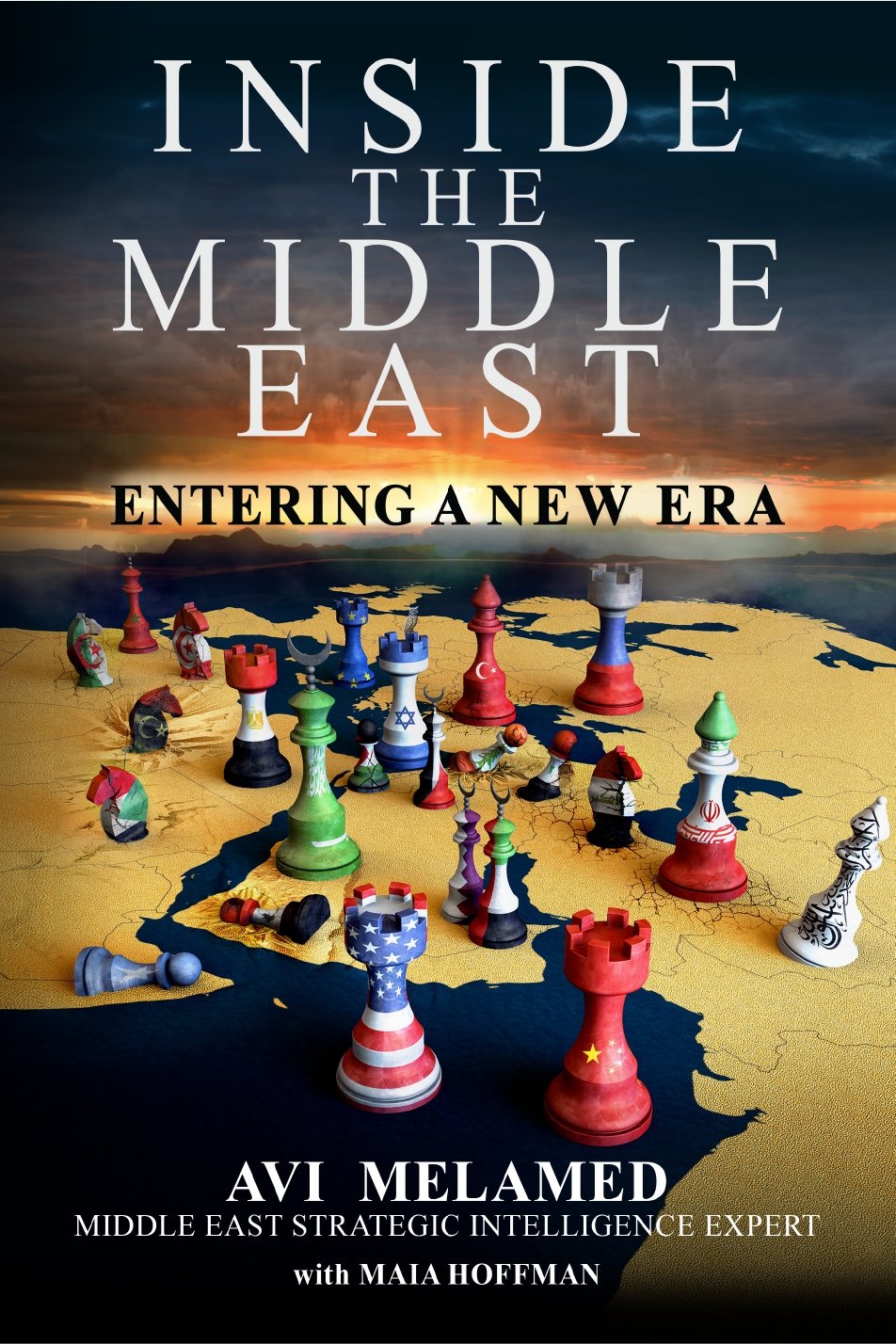
Read the latest book of Avi Melamed,
INSIDE THE MIDDLE EAST | ENTERING A NEW ERA, available now >>>
Follow me on Twitter @AviMelamed; Facebook @InsideTheMiddleEast; for more Videos on YouTube https://www.youtube.com/c/AviMelamed
I can always be reached at Av*@********ed.com