
























































|
Getting your Trinity Audio player ready...
|
The Ledger Is Open: The War Reveals Fractures in the Arab World | #AiTME Ep27 | An article by Avi Melamed | Podcast version powered by Ai.
Avi Melamed highlights another important dimension of the war: intra-Arab discourse.
The war has once again exposed the fractured and cynical nature of inter-Arab politics. It has brought to the surface—forcefully—what many already know: Arab unity and solidarity largely exist in rhetoric and slogans. In practice, the reality is one of competition, rivalries, resentment, and score-keeping.
The Gulf monarchies, which have been under Iranian attack since the first day of the war, feel that the Arab world has largely left them to face the confrontation alone. Rather than standing firmly by their side in practical terms, many Arab actors have limited themselves to routine condemnations and empty slogans. Much of the criticism appears directed primarily at Egypt—the largest Arab state and one with significant military weight. Egypt did officially align itself with the Gulf monarchies, but only after nearly two weeks of war.
Moreover, former Egyptian officials who once held senior government positions voiced views that conveyed understanding—bordering on justification—of Iranian aggression against the Gulf states. For example, Egypt’s former ambassador to Iran echoed Tehran’s misleading claim that Iranian strikes were aimed at U.S. bases and that damage to civilian infrastructure resulted from “mistakes.” Egypt’s former foreign minister promoted another Iranian narrative, arguing that the war was imposed on Iran as part of an Israeli-American plot to dominate the region. These statements fueled growing resentment in the Gulf.
This sentiment translated into increasing criticism from Gulf social media users, directed primarily at Egypt. In response, Egyptian users echoed the slogan: “This war is not Egypt’s problem.” That narrative further angered Gulf audiences, who countered with their own slogan: “Egypt’s failing economy is not the Gulf’s problem.”
The confrontation that began on social media spilled over into broader Arab commentary, fueling heated debates—sometimes bordering on personal attacks—among prominent opinion leaders. Addressing the claim that the war is an Israeli-American conspiracy, leading Saudi commentators such as Abdulrahman Al-Rashed and Dawood Al-Shirian argued that, regardless of that claim, it is important to remember that Israel did not attack Arab states, whereas the Iranian regime has brought destruction and death to Arab countries for decades. Al-Rashed summed it up dramatically: “Half of the Arab world lives under a constant Iranian threat.”
Al-Rashed also offered another critical perspective, arguing that the Israeli-American conspiracy narrative is used primarily to cover up the embarrassing silence of some Arab states in the face of Iranian aggression.
Kuwaiti columnist Khaled Al-Tarrah presented criticism from another angle, saying that the Israeli-American conspiracy narrative stems from the old pan-Arab ideology—an ideology historically championed by Egypt. He described pan-Arabism as outdated, one that repeatedly ignored facts and avoided confronting reality.
This charged Arab discourse is not limited to online exchanges or columnist debates. The sense of disappointment and criticism emerging from Gulf monarchies is accompanied by hints of deeper reassessment. This reaction is understandable, particularly given that Gulf states—especially Saudi Arabia, the UAE, and Qatar—have provided substantial support to Egypt’s struggling economy. The UAE signed a massive $25 billion agreement to develop a tourism city in Egypt. Qatar transferred $3.5 billion in emergency assistance. Saudi Arabia provided loans and loan guarantees. Millions of Egyptians are employed in Gulf countries.
Avi Melamed shares with us an Arab proverb that says: “What you thought had passed will appear in the ledger.” In other words, actions—or inaction—will be accounted for in the future.
Signals coming from some Gulf states suggest that they are indeed keeping score regarding the positions taken by Arab countries—and that, eventually, the bill may come due.
This article is also available as a Podcast: the AiTME Podcast. This Podcast was written and created by Avi Melamed, Middle East Intelligence Analyst and Founder of Inside The Middle East [ITME], an institute dedicated to apolitical, non-partisan education about the Middle East.
“This podcast is made possible by supporters like you. ITME is an independent, nonprofit institute committed to apolitical, intelligence-based Middle East education.
To support our work, visit >> https://www.paypal.com/donate/
The Ledger Is Open: The War Reveals Fractures in the Arab World | #AiTME Ep27 | An article by Avi Melamed | Podcast version powered by Ai.
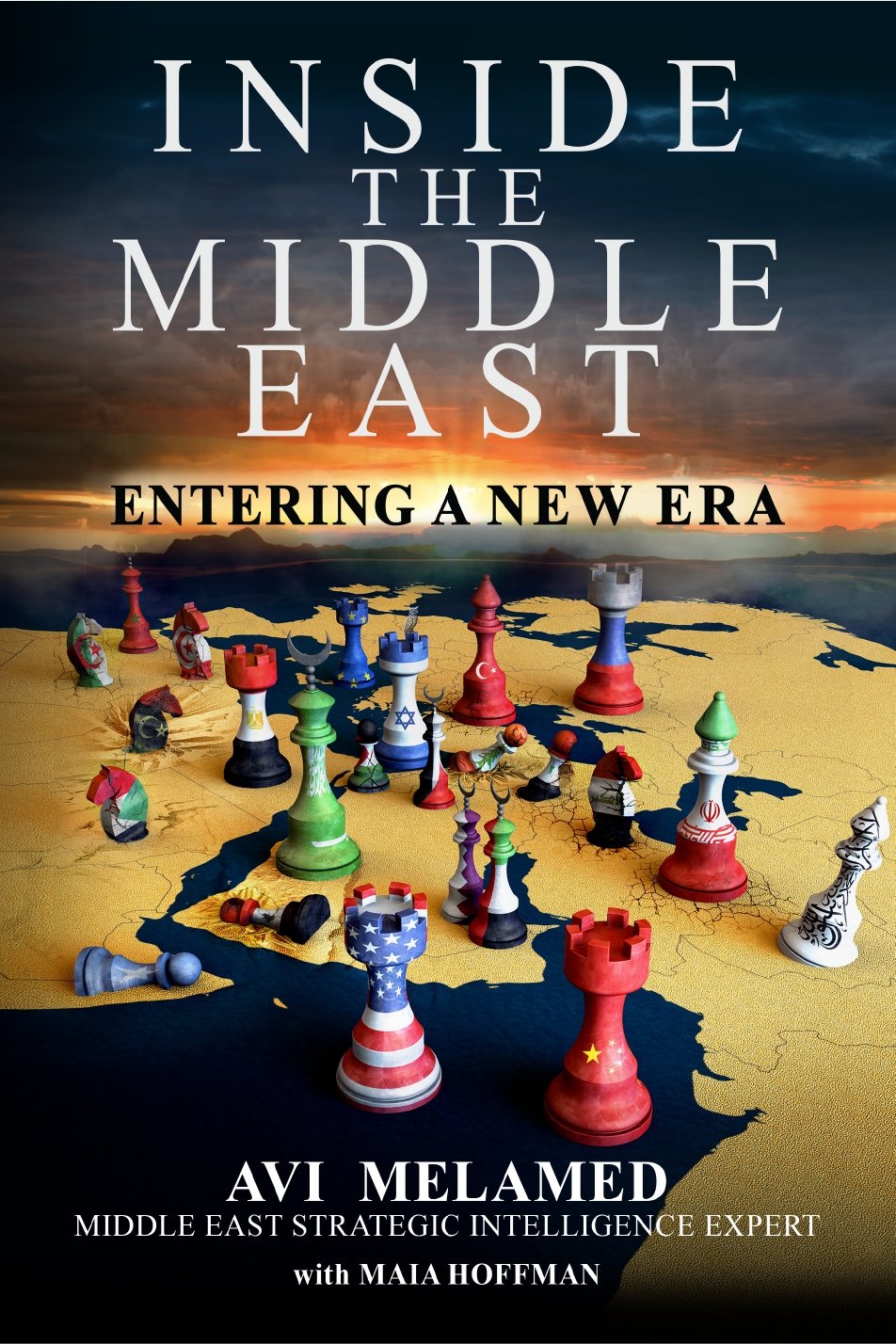
If you want to have a better understanding of the news and what really drives the unfolding events… Read the latest book of Avi Melamed, INSIDE THE MIDDLE EAST | ENTERING A NEW ERA, available now >>>
Follow me on Twitter @AviMelamed; Facebook @InsideTheMiddleEast; for more Videos on YouTube https://www.youtube.com/c/AviMelamed
I can always be reached at Av*@********ed.com