

























































|
Getting your Trinity Audio player ready...
|
A Diplomatic Incident and the Middle East Chain of Links – Analysis | AiTME #10 | An article by Avi Melamed | Podcast version powered by Ai.
Avi Melamed draws our attention to a diplomatic incident that shed light on the complex layers of Middle Eastern politics.
Hakan Fidan, Turkey’s foreign minister, paid an official visit to Syria and, at the conclusion of the visit, held a joint press conference with his Syrian counterpart. The Turkish minister spoke in Turkish, with his remarks translated simultaneously into Arabic.
During the Q&A session, the Turkish foreign minister was asked about the Palestinian issue. At that precise moment, the press conference was abruptly cut short.
A few days later, the Syrian Foreign Ministry issued an apology to Turkey, claiming the interruption was caused by a technical failure in the translation system.
The strange nature of the incident immediately sparked speculation and competing interpretations. There is good reason to assume that the Syrian explanation was merely a pretext, and that the interruption was deliberate. This naturally raises the question: why did the Syrians halt the press conference exactly when the Palestinian issue was raised?
To answer the questions ,Ai Melamed point out two aspects. One is the Broader context and the other is the Palestinian aspect.
The Broader Context
Since the fall of the Assad regime, the struggle for influence in Syria has intensified—primarily between Arab states, especially Saudi Arabia and the United Arab Emirates on one side, and Turkey on the other.
Syria is a central Arab nation-state. Recep Tayyip Erdoğan’s ambition to position Turkey as the dominant power in Syria taps into a deep historical tension between Arab and Turkish civilizations. The Syrian regime must therefore maneuver carefully between these rival camps, as its survival depends on maintaining workable relations with both.
Turkey is assisting in rebuilding the Syrian military. At the same time, the Gulf states represent the Syrian regime’s primary hope for financing the enormous costs of reconstructing its cities and infrastructure. For now, Gulf financial assistance remains limited—an intentional signal. This is the Gulf states’ way of indicating that substantial aid will come only if Syria reduces the scope of Turkish influence on its soil.
So why did the Syrians interrupt the press conference precisely when the Palestinian question arose—and how does this connect to the Arab–Turkish power struggle? Here is the explanation Avi Melamed suggests.
President Erdoğan, who seeks to position himself as the leader of the Sunni camp in the Middle East, supports Hamas and leverages the Palestinian cause to score points in his competition with leading Arab powers.
In contrast, Saudi Arabia, Egypt, and the United Arab Emirates view Hamas with deep suspicion and designate its parent movement—the Muslim Brotherhood—as a terrorist organization.
The new Syrian regime also has an unresolved grievance with Hamas, which openly aligned itself with the Assad regime. Consequently, on the Palestinian issue, Syria clearly identifies its interests with the Arab camp.
The timing of the press conference interruption was therefore likely intentional—a subtle but unmistakable message to Erdoğan about where Syria stands.
This article is also available as a Podcast: the AiTME Podcast. This Podcast was written and created by Avi Melamed, Middle East Intelligence Analyst and Founder of Inside The Middle East [ITME], an institute dedicated to apolitical, non-partisan education about the Middle East.
“This podcast is made possible by supporters like you. ITME is an independent, nonprofit institute committed to apolitical, intelligence-based Middle East education.
To support our work, visit >> https://www.paypal.com/donate/
A Diplomatic Incident and the Middle East Chain of Links – Analysis | AiTME #10 | An article by Avi Melamed | Podcast version powered by Ai.
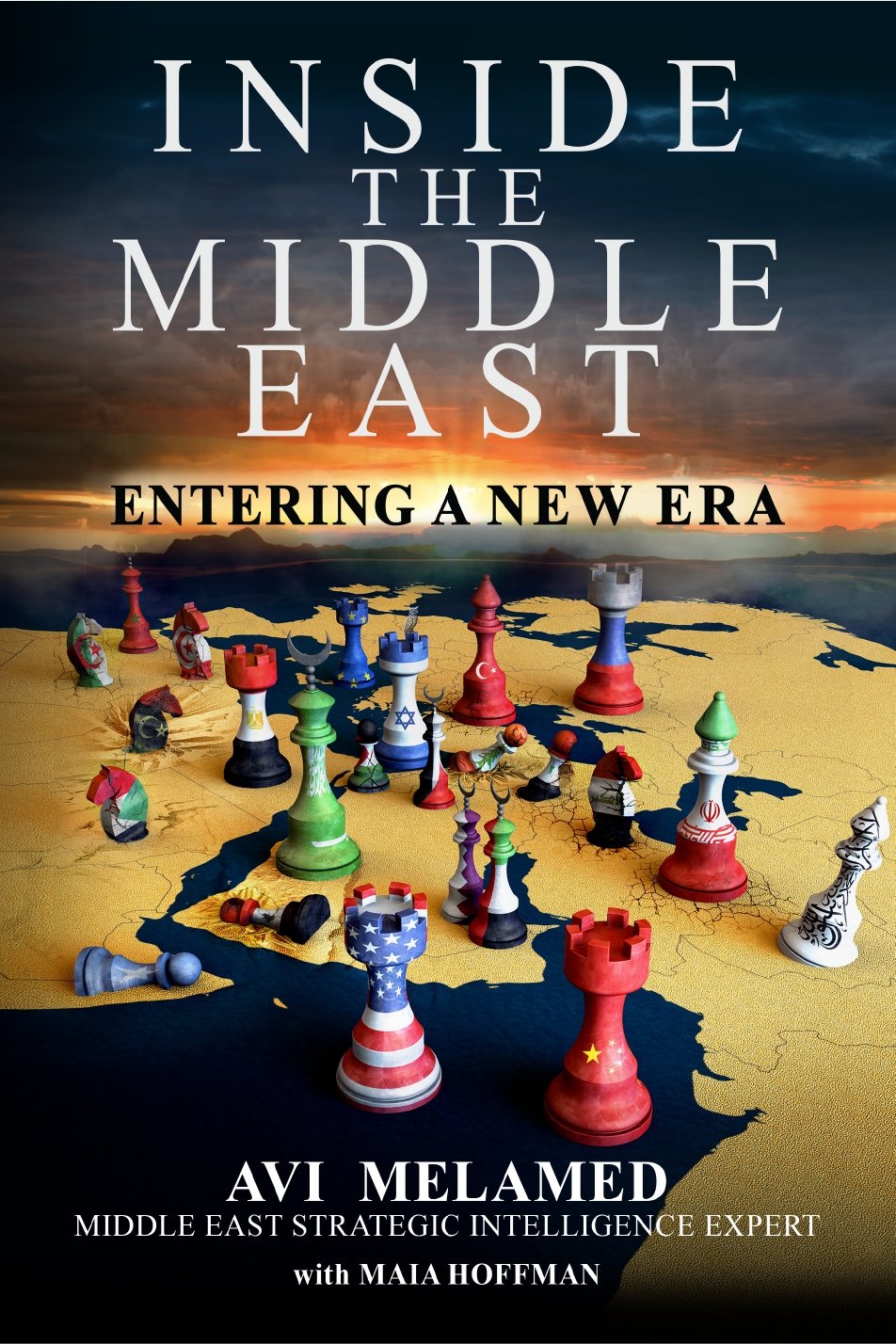
If you want to have a better understanding of the news and what really drives the unfolding events… Read the latest book of Avi Melamed, INSIDE THE MIDDLE EAST | ENTERING A NEW ERA, available now >>>
Follow me on Twitter @AviMelamed; Facebook @InsideTheMiddleEast; for more Videos on YouTube https://www.youtube.com/c/AviMelamed
I can always be reached at Av*@********ed.com