




























































|
Getting your Trinity Audio player ready...
|
Beneath the Surface: Egypt, the Gulf, and the War with Iran | #AiTME Ep26 | An article by Avi Melamed | Podcast version powered by Ai.
Avi Melamed shares an incident in Egypt that reverberated across the Arab discourse and fueled tensions that recently developed—against the backdrop of the war with Iran—between Egypt and the Arab Gulf monarchies. What happened? What is the background to the tensions? And how are the two connected?
During the central sermon in Cairo marking the 1st day of Eid al Fiter attended by senior Egyptian leadership including Egypt’s president Abdul Fatah al-Sisi, the preacher declared:
“By the name of Fatima, her husband, her sons, and the secret within her, may God ensure that Egypt will not need any morally corrupt being among His creation.”
This statement caused an uproar because it touches directly on one of the most sensitive fault lines in the region: the Sunni–Shiite divide. The overwhelming majority of Egyptians—like most Arabs—are Sunni Muslims. What particularly angered many Sunnis was the phrase “the secret within her.”
Why? Fatima was the daughter of the Prophet Muhammad and the first wife of Ali ibn Abi Talib, the fourth caliph of Islam, who in Twelver Shiite tradition is considered the first Imam in a chain of twelve Imams. The concept of “the secret within Fatima” originates in Shiite Islamic theology. The fact that a senior Sunni preacher in the largest Arab country chose, in a festive sermon, to echo a Shiite concept—identified with the Shiite Iranian regime that at that very time was attacking mostly Sunni Arab states—angered many across the Arab world, particularly in Egypt.
The reactions also reveal tensions that recently emerged between Egypt and the Gulf states in the context of the war.
From the outbreak of the war, it was clear that Egypt was making a significant effort to remain on the sidelines. Only about two weeks after the war began did Egypt officially declare its full alignment with the Arab Gulf states. This delay created a sense of unease among Gulf countries, which expected Egypt to stand clearly by their side from the outset. Even after Egypt’s formal declaration, Gulf frustration did not subside, because alongside the official Egyptian stance, Egyptian narratives began appearing that implicitly conveyed a degree of “understanding” for Iran’s attacks on the Gulf.
A former Egyptian ambassador to Iran echoed Tehran’s claim that Iran’s strikes on Gulf states were an act of “self-defense,” and repeated the (misleading) argument that the attacks were directed at U.S. bases in those countries. Egypt’s former foreign minister wrote that the war against Iran was an Israeli plot that dragged the United States into conflict in service of a vision of Israeli dominance. In Egyptian public discourse, another narrative gained traction: this is not Egypt’s war.
These narratives fueled growing frustration and anger in the Gulf. This reaction is understandable, particularly given that Gulf states—especially Saudi Arabia, the UAE, and Qatar—have provided substantial support to Egypt’s struggling economy. The UAE signed a massive $25 billion agreement to develop a tourism city in Egypt. Qatar transferred $3.5 billion in emergency assistance. Saudi Arabia provided loans and loan guarantees. Millions of Egyptians are employed in Gulf countries.
In Gulf public discourse, criticism of Egypt’s stance intensified, with some describing it as ingratitude. As a counter to Egyptian narratives, another message emerged in Gulf discussions: Egypt’s struggling economy is not the Gulf’s responsibility. Egyptian leadership was aware of these voices and moved quickly to contain the damage. President Abdel Fattah el-Sisi conducted a rapid tour of Qatar, the UAE, and Saudi Arabia, declaring that the security of the Gulf states is part of Egypt’s national security.
So what is the possible connection between the sermon and the tensions between Egypt and the Gulf states? In Arab discourse, it has been suggested that the preacher’s statement was not accidental, but delivered with prior approval from Egyptian authorities, intended as a message of displeasure toward the Gulf monarchies under Iranian attack. Here, chronology becomes particularly intriguing.
The Egyptian presidency announced on Thursday, March 19, that the Egyptian president had conducted his tour—apparently that same day. The Sunni preacher delivered the sermon the following morning, Friday, March 20, the first day of Eid al-Fitr. This suggests that the wording of the sermon may have been formulated and coordinated after el-Sisi’s visit.
This raises a key question: did the sermon—echoing a Shiite concept—hint that Egypt’s president heard sharp, perhaps even insulting criticism from his Gulf hosts? Was the sermon a way for el-Sisi to respond to harsh messages conveyed during the visit?
The answer may lie in a central insight that Avi Melamed often emphasizes about the Middle East: in complex inter-Arab politics, nothing is impossible.
This article is also available as a Podcast: the AiTME Podcast. This Podcast was written and created by Avi Melamed, Middle East Intelligence Analyst and Founder of Inside The Middle East [ITME], an institute dedicated to apolitical, non-partisan education about the Middle East.
“This podcast is made possible by supporters like you. ITME is an independent, nonprofit institute committed to apolitical, intelligence-based Middle East education.
To support our work, visit >> https://www.paypal.com/donate/
Beneath the Surface: Egypt, the Gulf, and the War with Iran | #AiTME Ep26 | An article by Avi Melamed | Podcast version powered by Ai.
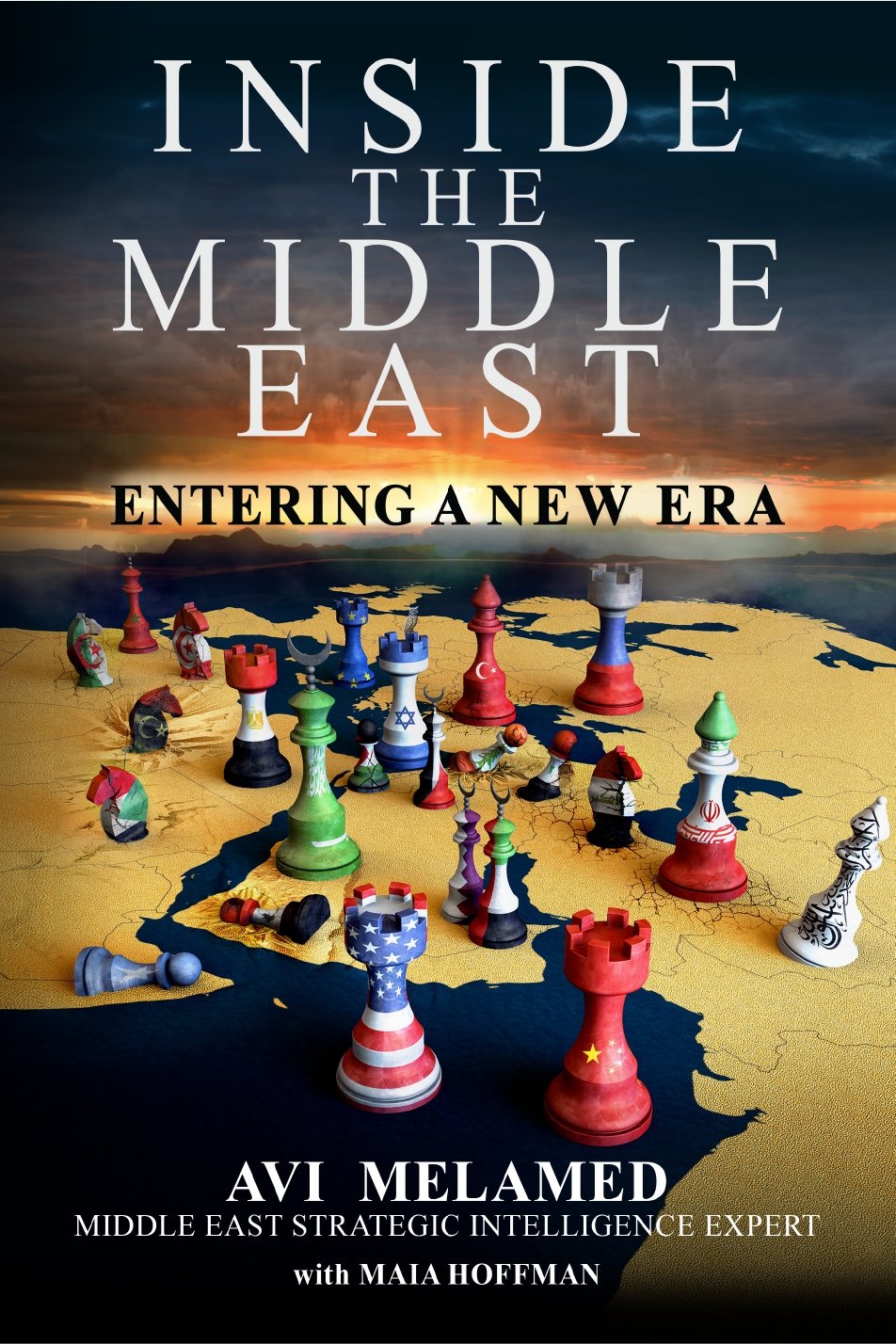
If you want to have a better understanding of the news and what really drives the unfolding events… Read the latest book of Avi Melamed, INSIDE THE MIDDLE EAST | ENTERING A NEW ERA, available now >>>
Follow me on Twitter @AviMelamed; Facebook @InsideTheMiddleEast; for more Videos on YouTube https://www.youtube.com/c/AviMelamed
I can always be reached at Av*@********ed.com