


























































|
Getting your Trinity Audio player ready...
|
Buried Symbols Don’t Die: a struggle over national memory, identity, ethos, and symbolism | AiTME #14 | An article by Avi Melamed | Podcast version powered by Ai.
Avi Melamed shares another compelling story from within the Arab world. As with many of the stories Avi brings to light, this one unfolds across several layers that are essential for understanding the Middle East—history, symbolism, identity, and power.
At the heart of Damascus stands one of the most important sites in Arab and Islamic history: the Umayyad Mosque. Built in the early 8th century, the mosque symbolizes Damascus’s role as the capital of the Umayyad Caliphate. From Damascus, the Umayyads ruled an empire stretching from Spain to Central Asia, transforming Islam from a regional faith into a global imperial civilization. To this day, the city carries deep symbolic weight as a historic center of Islamic power and legitimacy.
Adjacent to the Umayyad Mosque lies the mausoleum of Salah al-Din al-Ayyubi, one of the most revered figures in Islamic history. Salah al-Din—known in the West as Saladin—is considered an Islamic icon primarily because he defeated the Crusaders and recaptured Jerusalem in 1187. Beyond military success, he is celebrated in Muslim historiography for restoring Islamic sovereignty over Jerusalem, defending Islamic holy sites, and embodying ideals of leadership, piety, and restraint. Over time, Salah al-Din became a unifying symbol of Islamic resistance, dignity, and revival—far exceeding his historical lifetime and turning into a civilizational myth.
Yet this story is not about Salah al-Din himself, but about another man buried nearby—whose grave has ignited a fierce debate across Arab social media.
This is the grave of Muhammad Saʿid Ramadan al-Bouti, a prominent Syrian religious scholar who enjoyed immense influence in Syria and across the Arab world. Al-Bouti was assassinated in 2013, and the identity of his killers remains unknown. Why, then, does his burial site provoke such controversy? Avi Melamed provides the explanation.
In 2011, Syria descended into civil war—a conflict that would last more than a decade, claim roughly half a million lives, and devastate the country. During the war, al-Bouti, leveraging his standing as a respected religious authority, granted religious legitimacy to the regime of Syrian ruler Bashar al-Assad. After al-Bouti’s assassination in 2013, the Assad regime chose to bury him in a mausoleum adjacent to Salah al-Din’s tomb. The apparent motivation was symbolic: to preserve the regime’s legitimacy by placing al-Bouti alongside one of Islam’s most revered figures.
The controversy surrounding al-Bouti’s grave operates on two levels. The first is immediate and visible. One camp demands relocating the grave, arguing that its proximity to Salah al-Din’s tomb constitutes a double insult—both to Salah al-Din’s legacy and to the victims of Assad’s regime. They further stress that Islamic law poses no obstacle to relocating graves. Opponents counter that moving the grave would dishonor a respected religious authority and erase the legacy of a central figure in modern Syrian religious life.
Avi Melamed draws attention to the deeper, more revealing layer of the debate. At its core, this is a struggle over national memory, identity, ethos, and symbolism. Those advocating relocation see it as part of reshaping Syria’s national symbols in a post-Assad era. Those opposing it argue that such a move constitutes an attempt to erase Syria’s past and rewrite history under a new narrative—what they describe as a “cleansing of symbols.”
A further dimension adds complexity. Syria is often referred to in Arab discourse as the citadel of Arabism. Both camps emphasize that Salah al-Din is buried in Damascus, implicitly linking his legacy to Syria’s Arab identity. But the connection is rarely stated outright. The reason is well known to both sides: Salah al-Din, despite being one of Islam’s greatest commanders, was not Arab. He was Kurdish, born in Tikrit in present-day Iraq. As is often the case in the Middle East, historical figures and symbols are selectively framed—or quietly muted—to serve broader goals of nation-building, collective memory, and identity construction.
As Bob Marley famously sang, “In this great future, you can’t forget your past.”
In the Middle East, as Avi Melamed frequently notes, the past is the present.
This article is also available as a Podcast: the AiTME Podcast. This Podcast was written and created by Avi Melamed, Middle East Intelligence Analyst and Founder of Inside The Middle East [ITME], an institute dedicated to apolitical, non-partisan education about the Middle East.
“This podcast is made possible by supporters like you. ITME is an independent, nonprofit institute committed to apolitical, intelligence-based Middle East education.
To support our work, visit >> https://www.paypal.com/donate/
Buried Symbols Don’t Die: a struggle over national memory, identity, ethos, and symbolism | AiTME #14 | An article by Avi Melamed | Podcast version powered by Ai.
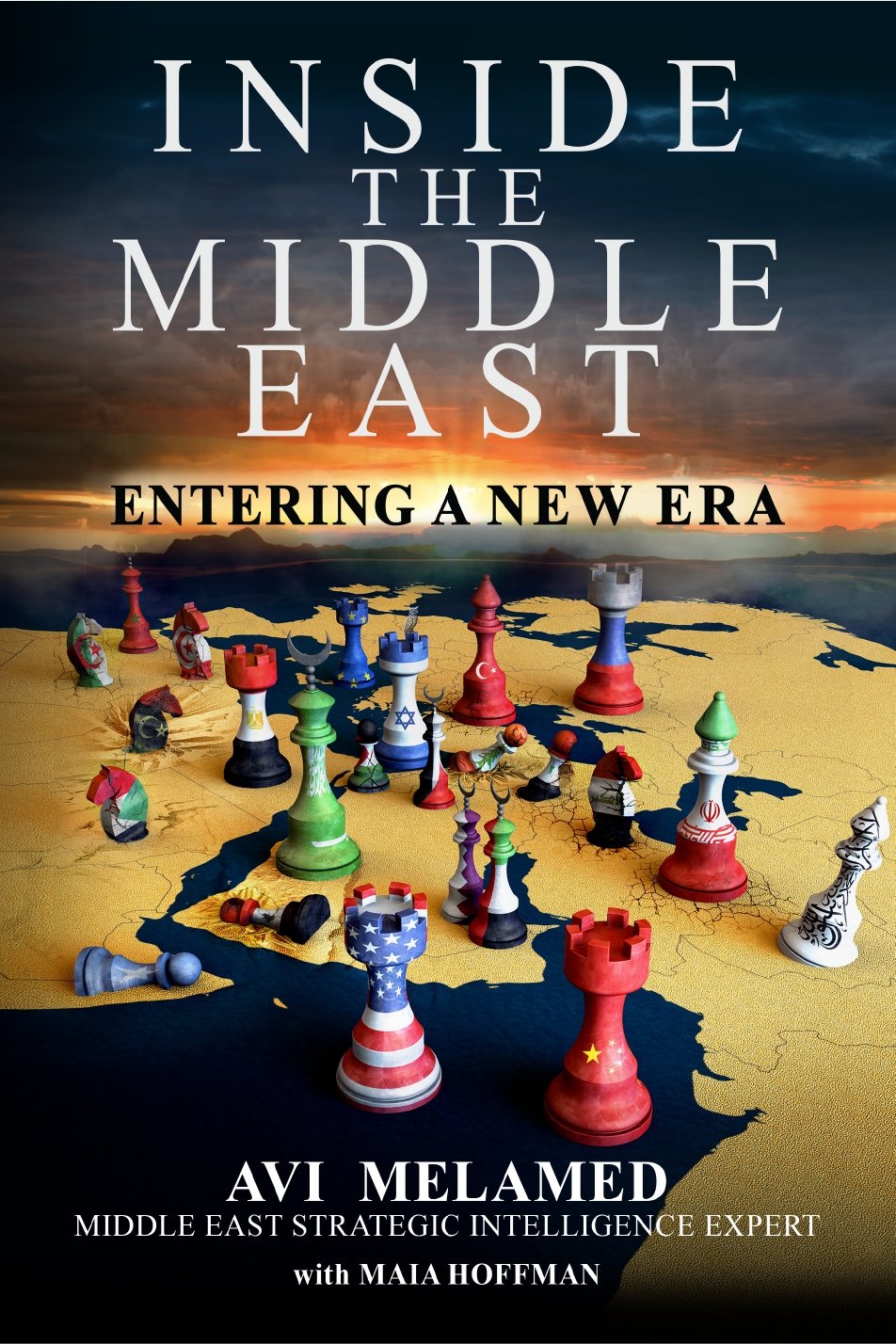
If you want to have a better understanding of the news and what really drives the unfolding events… Read the latest book of Avi Melamed, INSIDE THE MIDDLE EAST | ENTERING A NEW ERA, available now >>>
Follow me on Twitter @AviMelamed; Facebook @InsideTheMiddleEast; for more Videos on YouTube https://www.youtube.com/c/AviMelamed
I can always be reached at Av*@********ed.com