






























































|
Getting your Trinity Audio player ready...
|
Yemen – A Portrait of Chaos – Analysis | An article by Avi Melamed | Podcast version powered by Ai.
When people hear the word Yemen, they usually think of a distant, endless civil war—tragic, confusing, and far away.
But Yemen’s story isn’t random chaos. It’s a slow, predictable unraveling.
Yemen today has a population of about 30 million people. Roughly two-thirds are Sunni Muslims, and about one-third are Shiite, mostly from the Zaydi tradition in the north.
But demographics alone don’t explain Yemen. What truly matters is that Yemen is one of the most tribal societies in the Middle East. There are hundreds of tribes, and for many Yemenis, loyalty to the tribe outweighs loyalty to the state, the army, or political institutions.
That brings us to a key point: Yemen is not a state built from the top down. It is a society built from the tribe upward.
Tribal affiliation has long mattered more than ideology, party politics, or even the state itself. This has consistently limited the power of any Yemeni government, no matter who ruled in Sana’a.
Until 1990, Yemen wasn’t even one country. It was two Yemens—north and south. They unified on paper, but political, tribal, and economic divides never disappeared. The state existed, but it was shallow.
The Arab Spring in 2011 was meant to reset the system. Instead, it broke it. The longtime ruler was removed, but the transition collapsed. In a country where the state was weak and tribes were strong, that collapse created a vacuum.
In 2014, the Houthis—a Shiite movement rooted in northern tribal networks—seized the capital, Sana’a, and much of the northwest. Their success was not only military; it was social and local. They understood how to dominate existing power structures.
That takeover triggered regional alarm.
In 2015, Saudi Arabia and the United Arab Emirates intervened militarily. At first, they were partners. Both wanted to block the Houthis and curb Iranian influence. But what looked like a unified coalition was actually two different strategies under one roof.
Saudi Arabia focused on border security and restoring central authority. The UAE took a different view. It understood that local forces—not a fragile central government—held real power, and it focused on ports, coastlines, and southern actors.
That difference mattered most in southern Yemen.
The south has a long history of marginalization since unification. With Emirati backing, southern factions formed the Southern Transitional Council, or STC. In 2018, STC forces seized Aden, the government’s interim capital.
At that moment, the war changed.
Saudi Arabia found itself backing the Yemeni government, while its coalition partner—the UAE—was backing a rival force. The conflict was no longer just about the Houthis. It had become a multi-sided war.
Already in 2022, Middle East analyst Avi Melamed warned that Yemen was not heading toward reunification, but toward fragmentation.
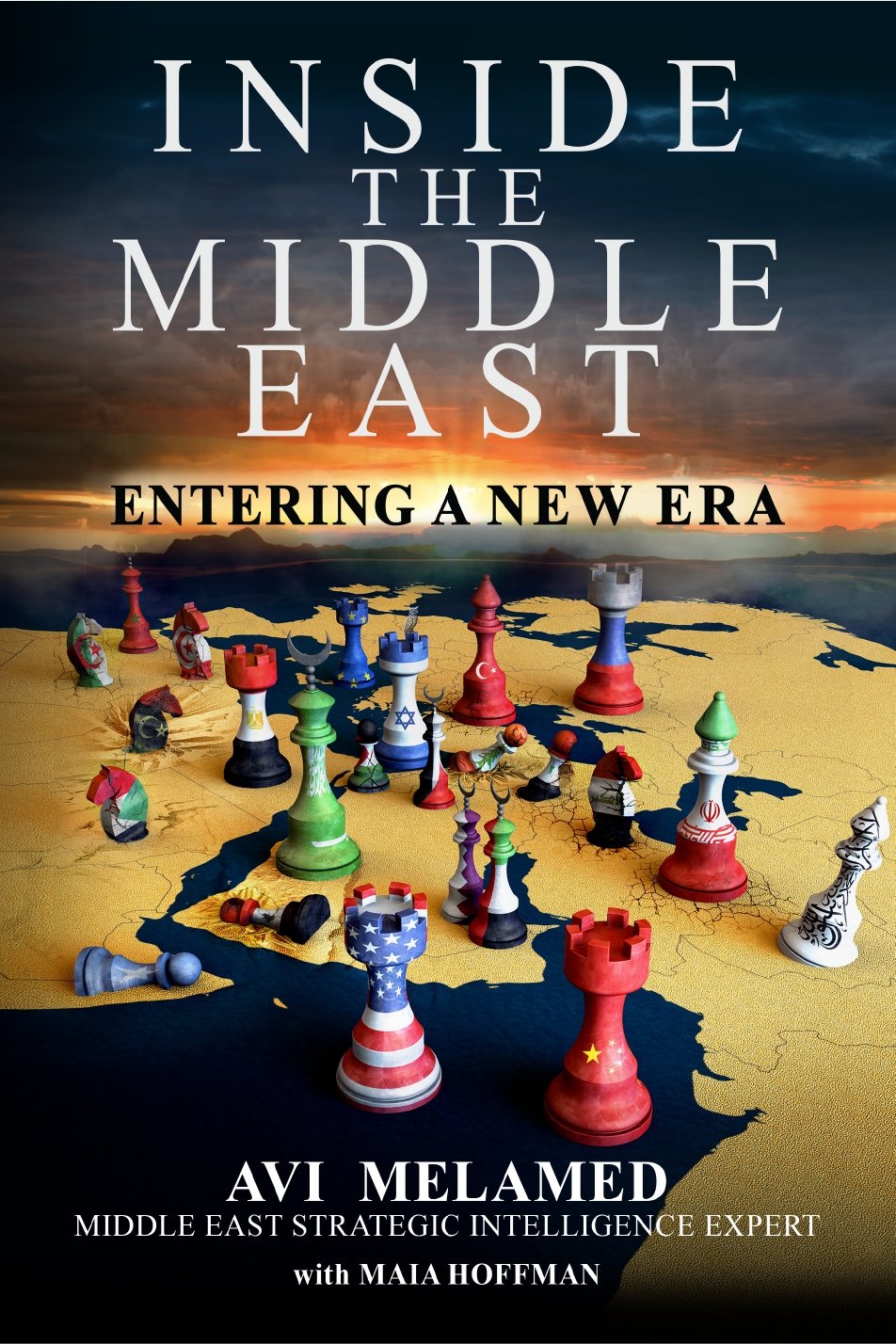
In his book Inside the Middle East: Entering a New Era, he predicted Yemen would split into three parts:
a Houthi-controlled north,
a southern entity backed by the UAE,
and a Saudi-backed government based in the southern port city of Aden with limited authority
Since then, events have only pushed Yemen further in that direction. The idea of restoring a single, unified Yemeni state continues to slip further out of reach.
This article is also available as a Podcast: the AiTME Podcast. This Podcast was written and created by Avi Melamed, Middle East Intelligence Analyst and Founder of Inside The Middle East [ITME], an institute dedicated to apolitical, non-partisan education about the Middle East.
“This podcast is made possible by supporters like you. ITME is an independent, nonprofit institute committed to apolitical, intelligence-based Middle East education.
To support our work, visit >> https://www.paypal.com/donate/
Yemen – A Portrait of Chaos – Analysis | An article by Avi Melamed | Podcast version powered by Ai.
If you want to have a better understanding of the news and what really drives the unfolding events… Read the latest book of Avi Melamed, INSIDE THE MIDDLE EAST | ENTERING A NEW ERA, available now >>>
Follow me on Twitter @AviMelamed; Facebook @InsideTheMiddleEast; for more Videos on YouTube https://www.youtube.com/c/AviMelamed
I can always be reached at Av*@********ed.com