






























































|
Getting your Trinity Audio player ready...
|
Turkey, Gaza, and the Risk of Strategic Ambiguity | AiTME #16 | An article by Avi Melamed | Podcast version powered by Ai.
As discussions advance about post-war arrangements in Gaza, Turkey’s potential role is increasingly raised as a pragmatic option—given Ankara’s regional reach, humanitarian capacity, and political weight. Yet a closer look at President Recep Tayyip Erdoğan’s record and incentives suggests that granting Turkey a proactive role in Gaza should raise serious concerns.
The issue is not Turkey’s ability to contribute, but the leverage it would gain.
Gaza as a Bargaining Card
For Erdoğan, the Palestinian cause—and Gaza in particular—has long functioned as a strategic bargaining chip, not a humanitarian mission. Time and again, he has demonstrated a willingness to instrumentalize regional crises to advance Turkey’s ambitions for leadership in the Sunni and broader Islamic world.
Past experience shows that Erdoğan has no principled aversion to instability when instability serves his interests. On the contrary, moments of escalation often allow him to posture as the self-appointed defender of Palestinians and Jerusalem, undermine rival Arab actors—especially Egypt—and project neo-Ottoman, pan-Islamic influence.
Granting Turkey a formal role in post-war Gaza would therefore hand Erdoğan yet another pressure lever—one he could activate or withhold depending on his needs, calculations, and bargaining priorities vis-à-vis Israel, Egypt, the Gulf states, and the West.
A Machiavellian Pattern
Erdoğan’s foreign policy record is notably transactional and Machiavellian. His dramatic reversals in relations with Egypt and Saudi Arabia—from harsh confrontation to pragmatic reconciliation—were not driven by ideology or values, but by shifting interests and costs. When isolation became inconvenient, Erdoğan recalibrated; when confrontation paid dividends, he embraced it.
This history matters. It suggests that Turkey’s posture in Gaza would not be anchored in long-term stabilization, but in opportunistic flexibility. Today’s stabilizer can become tomorrow’s spoiler—without warning and without contradiction, so long as Ankara’s interests change.
The Hamas Problem
Most critically, Erdoğan’s relationship with Hamas fundamentally undermines Turkey’s credibility as a neutral or stabilizing actor.
Turkey has provided Hamas with ideological, political, and operational backing for years. Ankara has hosted senior Hamas operatives on its soil, offered the organization political legitimacy, and consistently framed it as a “resistance movement” rather than a terrorist group. This is not a marginal detail—it goes to the heart of the Gaza question.
Which raises the unavoidable question:
Is Turkey truly expected to help disarm Hamas—or to dismantle and police a group it has long supported, sheltered, and legitimized?
Expecting Erdoğan to play a decisive role in curbing Hamas’s military power would contradict both his ideological posture and his established behavior. At best, this creates dangerous ambiguity. At worst, it opens the door to a double game—public participation in stabilization frameworks alongside behind-the-scenes maneuvering to preserve Hamas as a strategic asset.
Conclusion: Caution, Not Illusion
The conclusion is not that Turkey must be excluded at all costs, but that enabling Erdoğan with a proactive, influential role in post-war Gaza is fraught with risk. History suggests that Ankara may participate tactically while maneuvering strategically—contributing selectively, hedging constantly, and prioritizing leverage over resolution.
If Turkey is involved at all, its role must be limited, tightly supervised, and strictly functional. Gaza’s future requires discipline, enforcement, and clarity of purpose—not actors whose incentives align with ambiguity, rivalry, and instability.
In a post-war environment where the central challenge is disarming Hamas and preventing renewed militarization, the question is not what Turkey can do—but whether it can be trusted to do what stabilization actually requires.
This article is also available as a Podcast: the AiTME Podcast. This Podcast was written and created by Avi Melamed, Middle East Intelligence Analyst and Founder of Inside The Middle East [ITME], an institute dedicated to apolitical, non-partisan education about the Middle East.
“This podcast is made possible by supporters like you. ITME is an independent, nonprofit institute committed to apolitical, intelligence-based Middle East education.
To support our work, visit >> https://www.paypal.com/donate/
Turkey, Gaza, and the Risk of Strategic Ambiguity | AiTME #16 | An article by Avi Melamed | Podcast version powered by Ai.
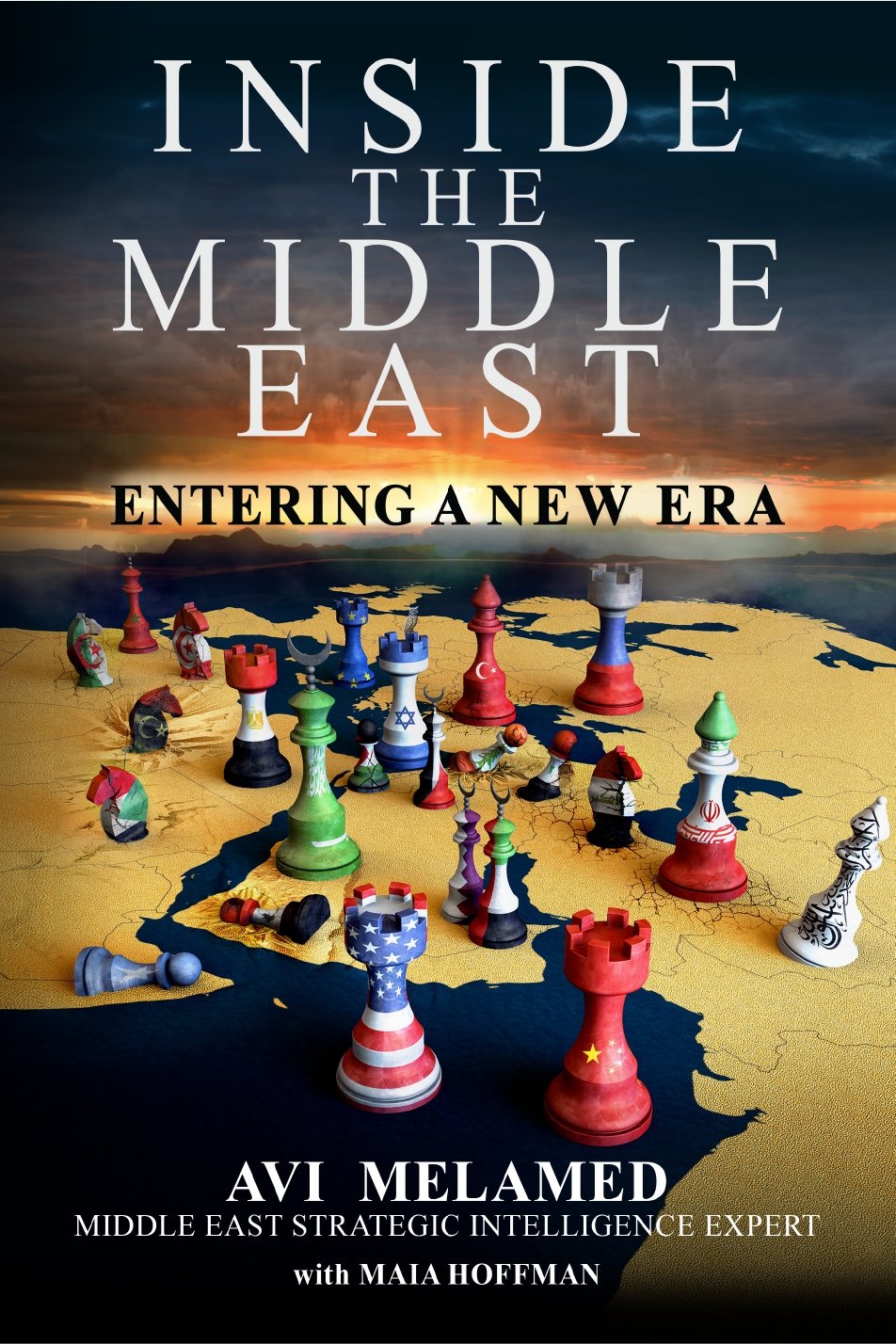
If you want to have a better understanding of the news and what really drives the unfolding events… Read the latest book of Avi Melamed, INSIDE THE MIDDLE EAST | ENTERING A NEW ERA, available now >>>
Follow me on Twitter @AviMelamed; Facebook @InsideTheMiddleEast; for more Videos on YouTube https://www.youtube.com/c/AviMelamed
I can always be reached at Av*@********ed.com