































































|
Getting your Trinity Audio player ready...
|
Avi Melamed quoted in this article by Brad Dress “Why Rafah is a key flashpoint in the Gaza war” | as Originally published in The Hill |February 15, 2024.
But Rafah is strategically valuable in Israel’s effort to completely defeat Hamas, which is using the entire Gaza strip for its operations, said former Israeli Intelligence official Avi Melamed. He said Israel could move into a new phase after Rafah, the last major city that Israeli forces have yet to fight in.
“Hamas projects and views itself as a regional player, [and it] needs to shrink into proportions where it will not be able to continue to play this role,” Melamed said. “And the way to do that actually requires two major elements.
“One is to significantly crush the Hamas military spine, which is exactly what Israel has been doing. And the other thing is [to reduce] its role in Gaza, which is actually the final phase.”
That phase would include developing a regional “scaffolding” for the postwar rule of Gaza, involving the Arab world and the international community, but this strategy would also likely involve an enduring Israeli military presence for the time being, Melamed added.
Estimated reading time: 9 minutes
Israel’s war in Gaza is approaching a new inflection point as forces prepare to enter the southern Gaza city of Rafah, which is temporarily home to some 1.5 million Palestinians sheltering from the war.
The Biden administration has delivered increasingly forceful warnings to ensure Israel comes up with an adequate safety plan for keeping citizens safe in Rafah, as concerns grow of a potentially huge loss of life in the city that could spark a new wave of pressure and condemnation of Israel’s war against the Palestinian militant group Hamas.
The pressure over Rafah is also leading to major tensions with Israel’s neighbors, as Jordan issued a stern warning against an attack there and Egypt said it will not allow the displacement of Palestinians over the border.
Khaled Elgindy, the Palestine program director at the Middle East Institute, said he fears Rafah will become another dark milestone for the U.S. and Israel to move past.
“Could this be an inflection point? Yes. But if the past four months are any indication, it’s probably not,” he said. “It will be just one more layer that’s been added of atrocity that we say, ‘Oh, that was awful.’”
“And then it just sort of grinds on because nobody knows how this is supposed to end,” he added.
Israel says it must move into Rafah, the last remaining safe zone in Gaza, because Hamas militant fighters are hiding battalions there.
Despite a death toll that has soared past 28,000 in Gaza, the military has vowed to crush Hamas in response to the deadly Oct. 7 attacks in southern Israel that killed some 1,200 people and saw the taking of 240 hostages, about 130 of whom still remain in Gaza.
Israeli Prime Minister Benjamin Netanyahu has ordered his military to draft a plan to evacuate civilians before moving into the Rafah refugee camp. He has insisted an evacuation plan is possible and that Rafah is a military necessity to dismantle Hamas.
“Victory is within reach,” Netanyahu said on Fox News this week, claiming that three-quarters of Hamas battalions have been destroyed in the war. “We’re not going to leave the other six [battalions].
“That’s like you leaving a quarter of ISIS in Iraq in place and say, ‘Well they can have their little territory, it’s okay,’” he added. “Obviously, ISIS would reestablish itself. Hamas will reestablish itself too.”
A Rafah invasion has been brewing for weeks as Israel wraps up operations in the central part of southern Gaza, including Khan Yunis.
With the fighting imminent, human rights groups are sounding the alarm over a catastrophe on a never-before-seen scale if fighting spreads to Gaza’s last refugee camp, which is the only place for humanitarian aid to enter Gaza.
Omar Shakir, the Israel and Palestine director at Human Rights Watch, said a Rafah raid would “jeopardize aid distribution” and imperil emergency responders helping Palestinians access basic necessities including food, water and medicine, which are reaching alarmingly low rates.
“In every facet, there are significant risks,” Shakir said. “Any ground incursion in Gaza would be unlawful and catastrophic: the international community needs to act to prevent further atrocities.”
Amanda Klasing, national director for government relations at Amnesty International, said she has “significant concerns” about Israeli military activities that have already killed civilians in Gaza.
That “doesn’t instill faith that a more concerted effort would not also result in [an] untold number of civilian killings,” she said.
But Rafah is strategically valuable in Israel’s effort to completely defeat Hamas, which is using the entire Gaza strip for its operations, said former Israeli Intelligence official Avi Melamed. He said Israel could move into a new phase after Rafah, the last major city that Israeli forces have yet to fight in.
“Hamas projects and views itself as a regional player, [and it] needs to shrink into proportions where it will not be able to continue to play this role,” Melamed said. “And the way to do that actually requires two major elements.
“One is to significantly crush the Hamas military spine, which is exactly what Israel has been doing. And the other thing is [to reduce] its role in Gaza, which is actually the final phase.”
That phase would include developing a regional “scaffolding” for the postwar rule of Gaza, involving the Arab world and the international community, but this strategy would also likely involve an enduring Israeli military presence for the time being, Melamed added.
But critics say that Rafah is only strategic in the sense of degrading Hamas’s military power.
And they say it won’t solve the overriding issue of freeing hostages and stamping out the militant group’s political ideology and influence, both of which have proved elusive throughout the war.
Hussein Ibish, senior resident scholar at the Arab Gulf States Institute, said destroying Hamas is a “pipe dream” because they promote a political ideology, and that won’t change even after Rafah.
“Hamas will crawl out of the rubble and declare victory,” he said. “They will say we have survived, therefore we won.”
It’s also not clear how Israel will evacuate civilians to keep them safe from the fighting, a major point of contention with the U.S.
Before moving into southern Gaza, Israel faced pressure from the Biden administration to not repeat the large devastation it sowed in the northern part of the strip in the early days of the war.
While the death toll declined in January when forces shifted toward a scaled-down strategy, the United Nations and human rights groups have warned there is no safe place in Gaza, and the safe zones have frequently been hit by Israeli strikes, including Rafah.
After initially saying it would not support a mission in Rafah, the U.S. is now urging Israel to come up with a strong safety plan instead.
White House national security spokesperson John Kirby emphasized this week that Israel must draft a clear plan to protect civilians but reiterated that forces must be able to take out the security threat of Hamas.
“We don’t believe that it’s advisable to go in in a major way in Rafah without a proper, executable, effective, and credible plan for the safety of the more than a million Palestinians that are taking refuge in Rafah,” Kirby told reporters.
The emphasis on an evacuation plan rather than urging Israel not to go into Rafah has sparked fears that a U.S. endorsement of an evacuation plan will simply provide cover for Israel.
The Democratic Front for the Liberation of Palestine — a group that broke off from the Palestine Liberation Organization and has called for a two-state solution — said in a public statement that the Biden administration’s calls for a plan in Rafah are “nothing but an attempt to absolve the occupation army from committing new massacres in its invasion.”
There are limited options to handle an evacuation of more than a million people. In one scenario, the Palestinians could temporarily shelter in southern Israel, but that’s likely to be rejected by Israeli officials, analysts say.
Another could involve shuffling civilians around Gaza into safe zones. Netanyahu said this week he was open to moving them north, but much of northern Gaza has been destroyed with little infrastructure in place, and critics say previous safe zones have not actually been safe.
There is also a real fear that heavy fighting will force civilians out of the territory and into Egypt, which borders Rafah at the Sinai Peninsula, possibly never to return. Under international law, the permanent displacement of civilians is unlawful.
Elgindy, from the Middle East Insititute, said Egypt is unlikely to fire on Palestinian civilians if they run for the border.
“What happens if a stray missile hits the border fence and opens up a big hole?” he said. “People are starving, they’re literally starving. You’re going to see a huge influx. You’re going to see an exodus of people through that breach.”
Neighboring Arab nations are laying down a hard line about Rafah. While they have been critical of Israel’s war, they could ratchet up the pressure on Netanyahu in the event of a humanitarian plight.
Jordan’s King Abdullah II, in remarks calling for a cease-fire, said the international community “cannot stand by and let this continue.”
“We cannot afford an Israeli attack on Rafah,” he said during a press conference with President Biden last week. “It is certain to produce another humanitarian catastrophe.”
Egypt is promising a more vigorous response to any displacement of Palestinians at Rafah, vowing to shatter a peace treaty with Israel if civilians are sent over into the Sinai Peninsula, according to The Associated Press. Egyptian President Abdel Fattah al-Sisi and Turkish President Recep Tayyip Erdoğan held a joint press conference Wednesday urging Israel not to invade Rafah.
The situation in Rafah could quickly unspool, leading to a humanitarian disaster that could further damage Biden’s political standing over his support for Israel. Biden has slowly grown more critical of Israel, saying last week that the military operation in Gaza was “over the top,” but he has yet to call for a cease-fire.
Jeremy Ben-Ami, president of J Street, a nonprofit liberal advocacy group pushing for peace in the Middle East, said the U.S. must do more than deliver timid messages to protect civilians.
“It’s important for the president to reiterate that the United States will not and should not provide Israel with blanket immunity,” he said.
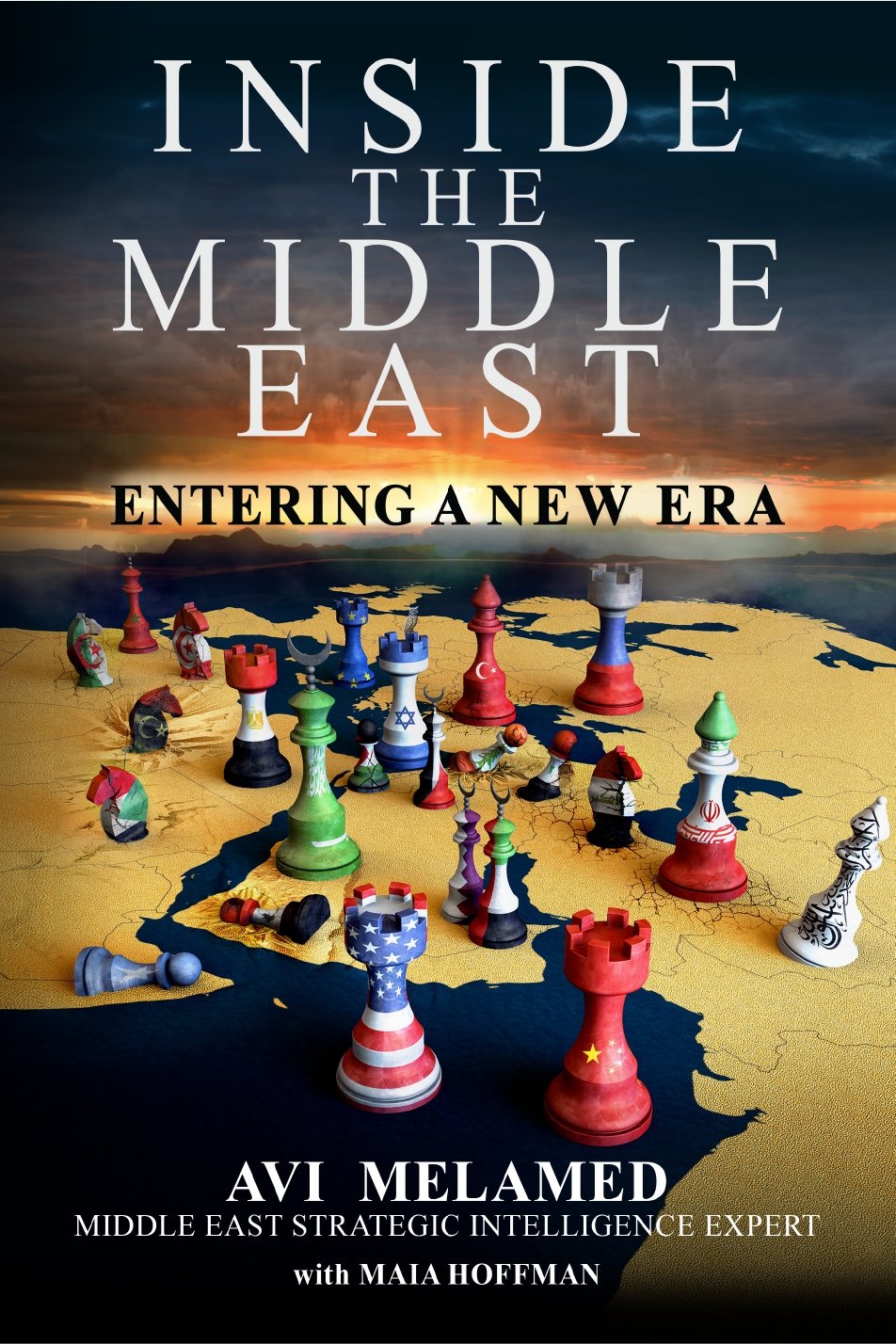
Avi Melamed is a former Israeli intelligence official who went on to serve as deputy and then as senior Arab affairs adviser to Jerusalem Mayors Teddy Kollek and Ehud Olmert, operating as a negotiator during the first and second intifadas. He is the author of “Inside The Middle East — Entering A New Era,” and his latest docuseries, “The Seam Line,” available on the Izzy streaming platform, focuses on Jerusalem’s flashpoints and his work during the intifadas.
Avi Melamed quoted in this article by Brad Dress “Why Rafah is a key flashpoint in the Gaza war” | as Originally published in The Hill |February 15, 2024.
If you want to have a better understanding of the news and what really drives the unfolding events… Read the latest book of Avi Melamed,
INSIDE THE MIDDLE EAST | ENTERING A NEW ERA, available now >>>

Follow me on Twitter @AviMelamed; Facebook @InsideTheMiddleEast; for more Videos on YouTube https://www.youtube.com/c/AviMelamed
I can always be reached at Av*@********ed.com