






























































|
Getting your Trinity Audio player ready...
|
The mountains are our only friends: The story of the Kurds | AiTME #18 | An article by Avi Melamed | Podcast version powered by Ai.
The burst of clashes between Syrian Kurds and the Syrian government in the beginning of 2026 are a reminder of a deeper Kurdish reality. Time and again, the Kurds have been mobilized as partners, allies, or proxies, only to be abandoned when geopolitical interests shift.
This series explores who the Kurds are, why they matter, and why their bitter saying—“the mountains are our only friends”—remains tragically relevant today.
Episode one: Background
Kurdish Demographics
The Kurds are the largest stateless ethnic group in the Middle East, numbering an estimated 30–35 million people. They are concentrated across a contiguous mountainous region often referred to as Kurdistan, spanning eastern Turkey, northern Iraq, northeastern Syria, and western Iran, with smaller communities in Armenia, Azerbaijan, and a sizable global diaspora in Europe and North America.
- Turkey: ~15–18 million Kurds (the largest Kurdish population)
- Iran: ~8–10 million
- Iraq: ~6–7 million
- Syria: ~2–3 million
Kurds speak Kurdish, an Indo-Iranian language with several major dialects. Despite deep internal differences in dialect, religion, and political orientation, Kurds share a strong sense of collective identity, rooted in language, geography, and a shared historical experience of division, marginalization, and repression. This demographic reality—large in number, territorially concentrated, yet politically fragmented—has made the Kurdish question one of the most persistent and unresolved issues in the modern Middle East.
General History
The Kurdish homeland has been shaped by a long succession of invaders and empires. From the east, ancient Persian powers ruled over Kurdish lands; from the west, Alexander the Great swept through the region. In the 7th century, Muslim Arab armies arrived from the south, followed by the Seljuk Turks in the 11th century and the Mongols in the 13th century, both advancing again from the east. In the 16th century, the Ottoman Turks absorbed much of Kurdistan from the north. Most recently, Kurdish lands were once again drawn into great-power conflict during the U.S.-led invasion of Iraq in 2003.
Despite centuries of foreign rule, the Kurds remained a distinct ethnic, linguistic, and cultural group. This continuity fueled persistent aspirations for autonomy and self-rule. Those aspirations, however, repeatedly collided with the interests of surrounding powers—Turks, Arabs, and Iranians—producing a long history of repression, revolt, resilience, and reinvention in the face of existential pressure.
The Kurds After World War I
In the final years of World War I, Britain and France secretly drafted the Sykes–Picot Agreement (1916), dividing the Levant into spheres of influence following the anticipated collapse of the Ottoman Empire. Former Ottoman provinces—Syria and Mesopotamia—were carved into new political entities: Lebanon and Syria under French control, and Palestine, Transjordan, and Iraq (including the Mosul Province) under British control. Kurdish-populated areas were treated not as a national unit, but as strategic real estate.
Following the Ottoman defeat, these arrangements were formalized in the Treaty of Sèvres (August 1920). For the first—and last—time, an international treaty acknowledged the possibility of a Kurdish autonomous region, and even the prospect of eventual independence. This provision was fiercely rejected by Turkish nationalists, who launched a determined campaign to overturn the treaty and consolidate control over Anatolia, including Kurdish-majority areas.
Their success was sealed with the Treaty of Lausanne (1923), which annulled Sèvres and recognized the sovereignty of the new Turkish Republic over the entire Anatolian peninsula—including historic Kurdish lands. The treaty made no provision for Kurdish autonomy, independence, or even a referendum. With Lausanne, Kurdish hopes for an internationally recognized homeland were effectively crushed.
From that moment on, the Kurds entered the modern Middle East divided among four states—Turkey, Iraq, Syria, and Iran—a condition that continues to define their political vulnerability and explains why the Kurdish proverb, “the mountains are our only friends,” has endured across generations.
This article is also available as a Podcast: the AiTME Podcast. This Podcast was written and created by Avi Melamed, Middle East Intelligence Analyst and Founder of Inside The Middle East [ITME], an institute dedicated to apolitical, non-partisan education about the Middle East.
“This podcast is made possible by supporters like you. ITME is an independent, nonprofit institute committed to apolitical, intelligence-based Middle East education.
To support our work, visit >> https://www.paypal.com/donate/
The mountains are our only friends: The story of the Kurds | AiTME #18 | An article by Avi Melamed | Podcast version powered by Ai.
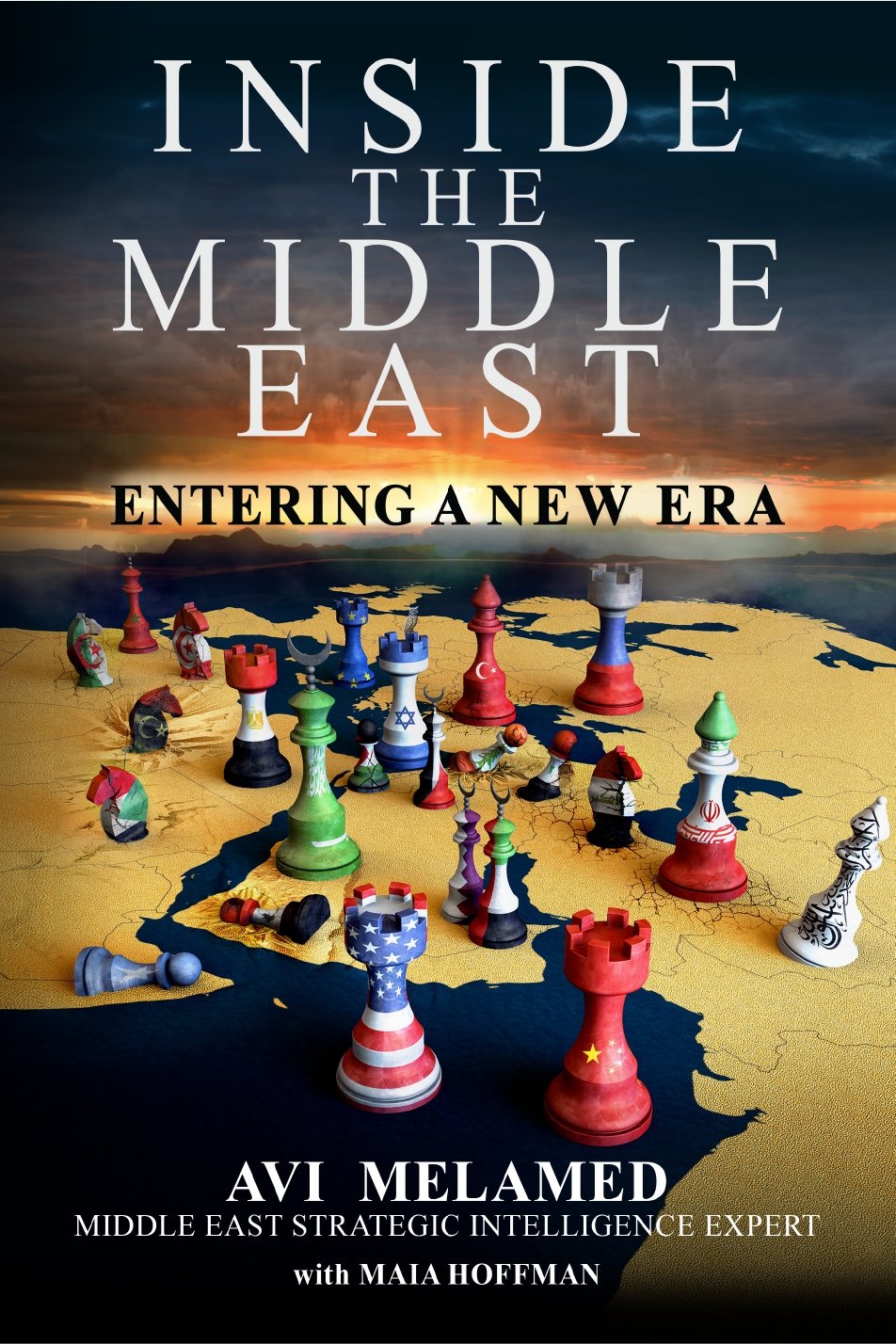
If you want to have a better understanding of the news and what really drives the unfolding events… Read the latest book of Avi Melamed, INSIDE THE MIDDLE EAST | ENTERING A NEW ERA, available now >>>
Follow me on Twitter @AviMelamed; Facebook @InsideTheMiddleEast; for more Videos on YouTube https://www.youtube.com/c/AviMelamed
I can always be reached at Av*@********ed.com