































































|
Getting your Trinity Audio player ready...
|
Western Theory and Middle East Reality: The Consequences of a Flipped Lens | AiTME #17 | An article by Avi Melamed | Podcast version powered by Ai.
One of the issues on which Avi Melamed consistently sheds light in the context of the Middle East is the twisted—at times distorted—mindset that often dominates Arab political and intellectual discourse. The following example illustrates this phenomenon clearly.
Yemeni writer Mohammed Jumeih cites the well-known Orientalist Bernard Lewis, who argued that the Sykes–Picot Agreement was a mistake and the root cause of instability and violence in the Middle East. Lewis, the writer notes, maintained that the nation-state model in the Middle East was doomed to failure, and that stability could only be achieved—and the spillover of violence threatening the West prevented—by dividing the region into autonomous administrative units based on sectarian geography.
Jumeich claims that Lewis’s thesis was not merely an academic argument but an operational blueprint implemented by the West, with Israel serving as the central agent overseeing its execution. According to this argument, it is the West that bears responsibility for the violence and chaos across large parts of the Middle East—in places such as Yemen, Libya, Sudan, Iraq, and Syria—and that this is part of a deliberate plan designed to expand instability into neighboring states.
Yet this position contains a fundamental contradiction. If, as Jumeich argues, the West fears Middle Eastern chaos and violence, why would it implement a strategy that deliberately generates precisely that chaos? The Yemeni writer attempts to resolve this contradiction by claiming that the West actually has an interest in instability, as chaos enables it to preserve its dominance and strategic interests in the region.
In this sense, the argument conducts a kind of implicit dialogue with a narrative prevalent in progressive Western intellectual circles concerning imperialism and colonial responsibility. One of the central standard-bearers of this view was the Arab Christian intellectual Edward Said, who argued in his book Orientalism that the West invented an artificial academic discipline—“Orientalism”—as a tool for controlling the East. According to Said, this invention was rooted in Western cultural arrogance toward Eastern cultures and religions (Islam, Hinduism, and others), portraying the East—and particularly the Islamic world—as inherently inferior and prone to violence.
Said, who passed away in 2003, was professor for comparative English literature at Columbia University. is worth noting that Said had a bitter and highly personal dispute with Bernard Lewis, whom the Yemeni author references. Interestingly, while Said claimed Palestinian origins, a Western researcher later argued in articles published in Commentary magazine and The Wall Street Journal that Said’s family had in fact resided in Egypt.
Said’s intellectual legacy remains highly influential also in Arab discourse. For example, Lebanese scholar Dr. Lina al-Khatib, writing about the war in Syria, argued that “there are those in the West who attribute inferiority and endless violence to the Middle East, which is a distorted representation of reality.”
The problem is that reality contradicts the thesis of Said and his intellectual successors. Bloody clashes between ethnic groups, sects, and tribes across the Middle East were widespread long before the Sykes–Picot Agreement—and during periods when the region was governed by Islamic frameworks such as the Ottoman Empire, not Western imperialism. The very states cited by the Yemeni writer—Yemen, Sudan, Iraq, Somalia, and Syria—are compelling historical examples of this reality. Inter-tribal and inter-sectarian violence existed there long before they became nation-states, long before Sykes–Picot, and largely under Islamic rule rather than Western control.
The unavoidable conclusion is that both Said’s thesis and the Yemeni writer’s argument present a distorted picture of reality. This distortion has serious consequences—first and foremost because it diverts responsibility away from those who are genuinely accountable for the region’s complex realities. And those primarily responsible are, first and foremost, the inhabitants of the region themselves.
One of Avi Melamed’s core messages is that in much of Arab discourse, cause and effect are frequently reversed, and reality is subordinated to narrative. A similar phenomenon exists within certain Western intellectual circles. Melamed repeatedly emphasizes the importance of recognizing this pattern because of its far-reaching negative implications: it distorts historical understanding, limits the ability to engage constructively with complex realities, and ultimately perpetuates the very conditions that demand correction.
This article is also available as a Podcast: the AiTME Podcast. This Podcast was written and created by Avi Melamed, Middle East Intelligence Analyst and Founder of Inside The Middle East [ITME], an institute dedicated to apolitical, non-partisan education about the Middle East.
“This podcast is made possible by supporters like you. ITME is an independent, nonprofit institute committed to apolitical, intelligence-based Middle East education.
To support our work, visit >> https://www.paypal.com/donate/
Western Theory and Middle East Reality: The Consequences of a Flipped Lens | AiTME #17 | An article by Avi Melamed | Podcast version powered by Ai.
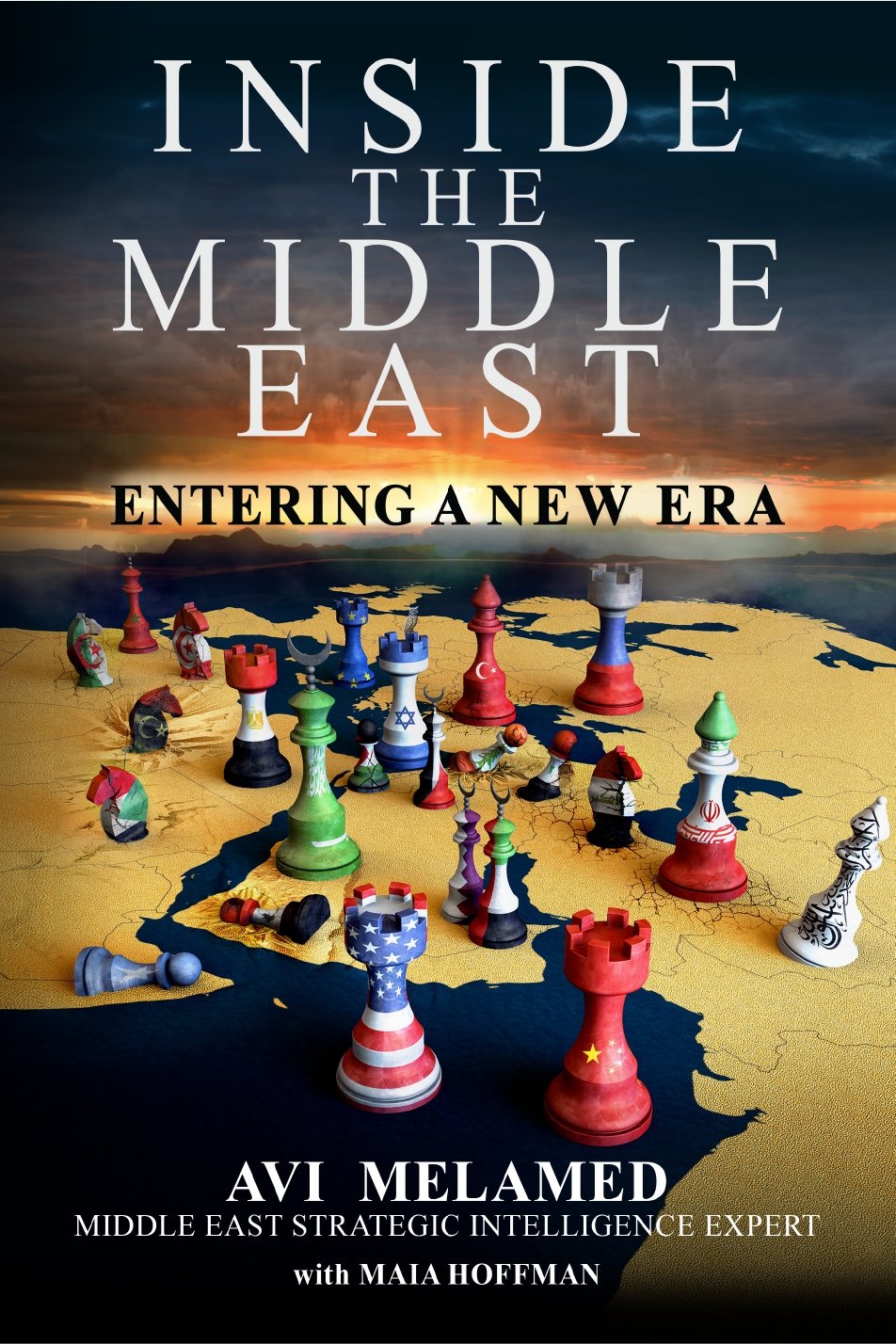
If you want to have a better understanding of the news and what really drives the unfolding events… Read the latest book of Avi Melamed, INSIDE THE MIDDLE EAST | ENTERING A NEW ERA, available now >>>
Follow me on Twitter @AviMelamed; Facebook @InsideTheMiddleEast; for more Videos on YouTube https://www.youtube.com/c/AviMelamed
I can always be reached at Av*@********ed.com